predation
The Burn
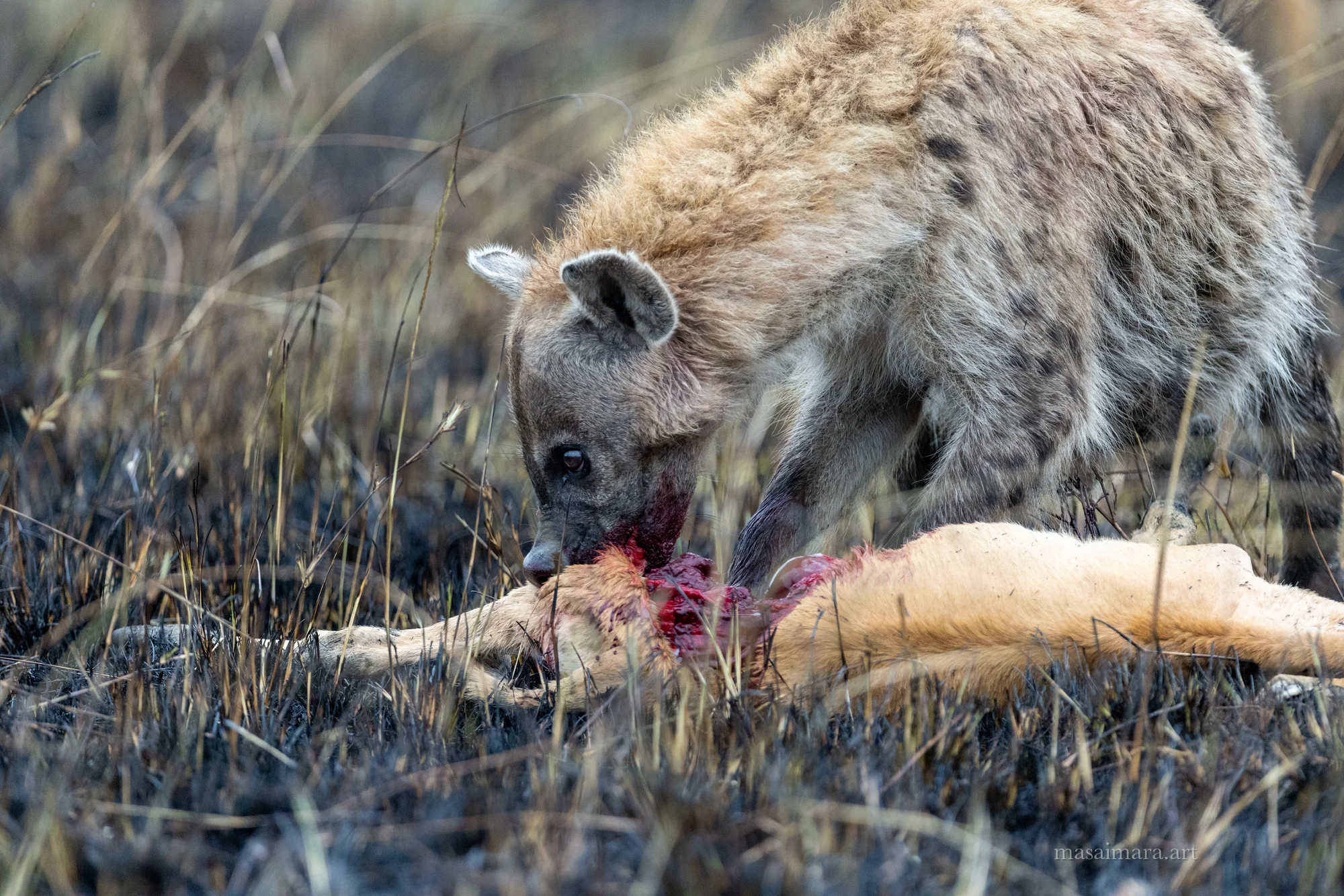
Hyenas working a carcass on a black scar of recently burned plain, jackals trying to pick the edges, then one hyena carrying the largest piece away — across the burn, and beyond.
The picture starts on the burn. The hyena is bent to the carcass, head at the open red, body framed by ground the colour of newsprint left in the rain. No other animal in the frame; no green either. That is going to be the rest of the morning's work.
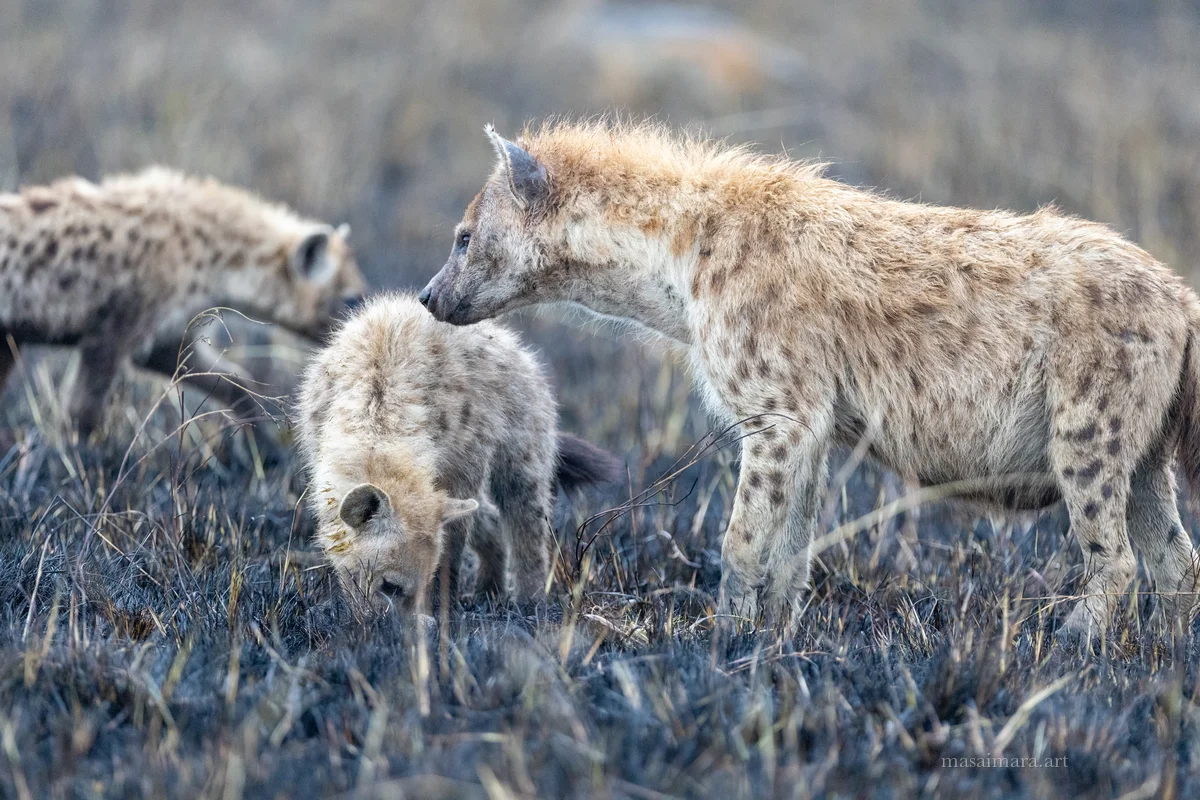
The pack widens. Three hyenas at once — one head-down on the soot at left, two standing close at the centre nose-to-nose, the bloodied muzzle on the right — and the work that was private a moment ago is no longer.
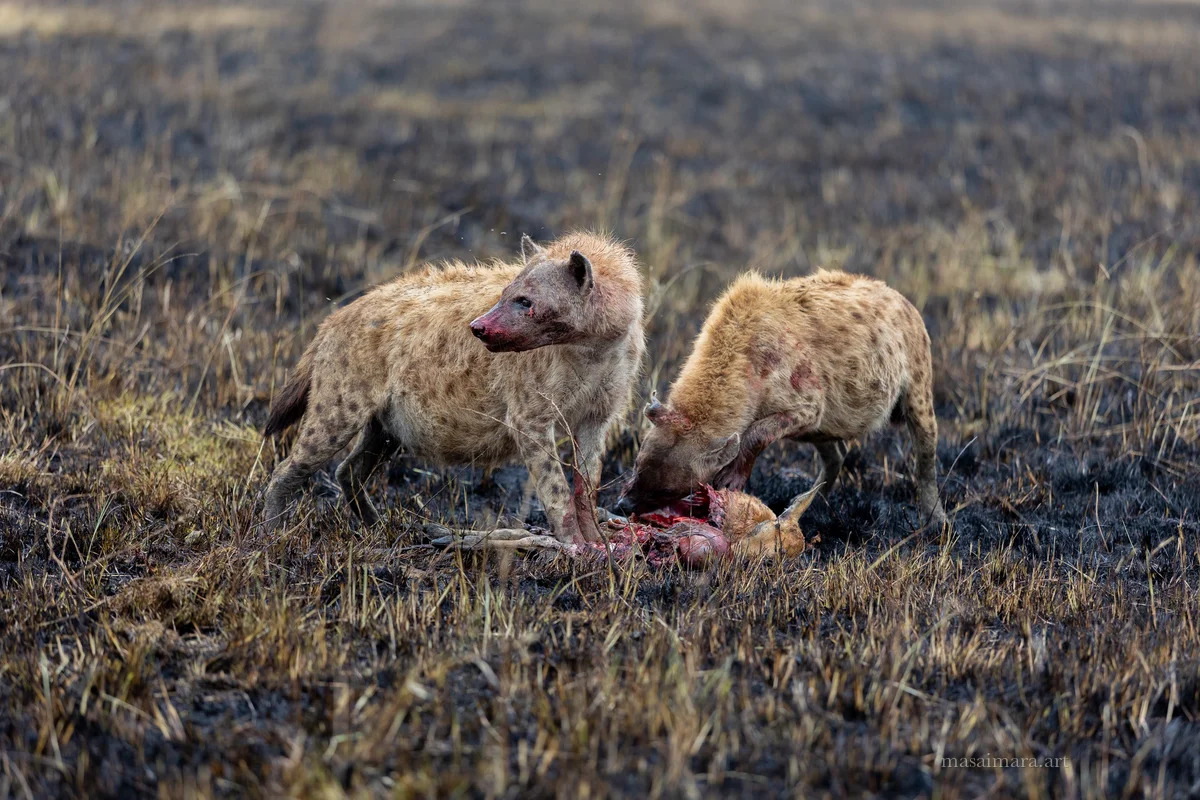
Closer in. Two hyenas pressed at the carcass, heads up, blood at both muzzles — the kill briefly central instead of in a corner. The work the burn is built around, briefly readable as two animals at one body.
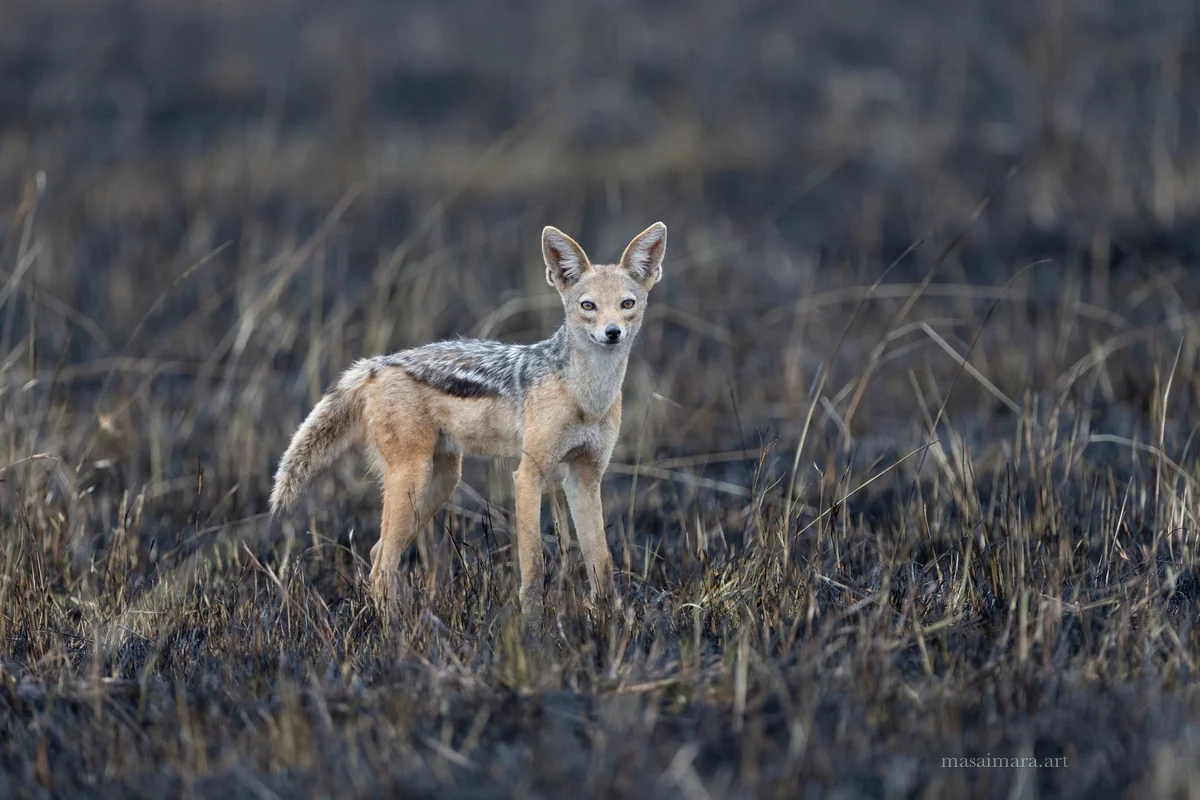
And the other predator. A single jackal stands alert on the burn, silver flank against the soot, ears wide, eyes on the lens — the smaller body the morning has been waiting to admit. Not yet at the carcass. Not yet at the edges. Only watching.
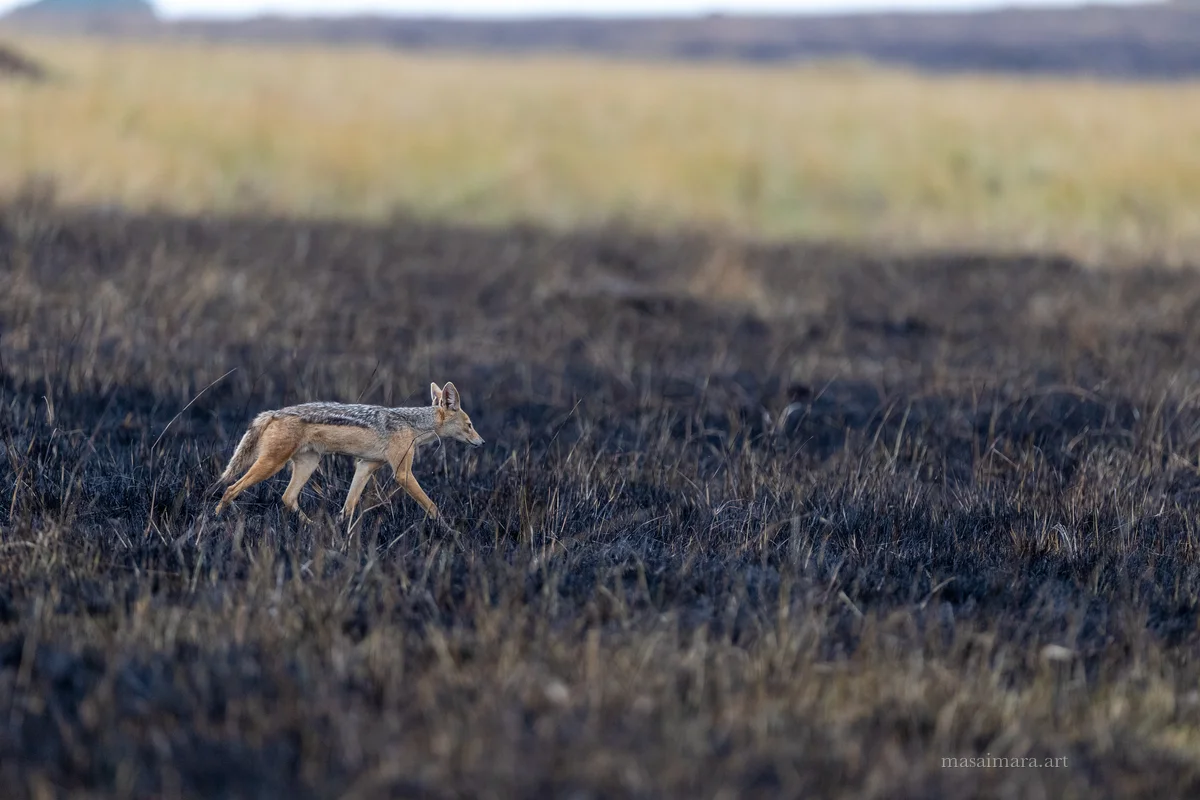
A second look. The jackal moves along the edge of the picture, head turned back toward the kill — trying to read the opening. The pack is busy. The small piece the jackal is hoping for has not yet been left.
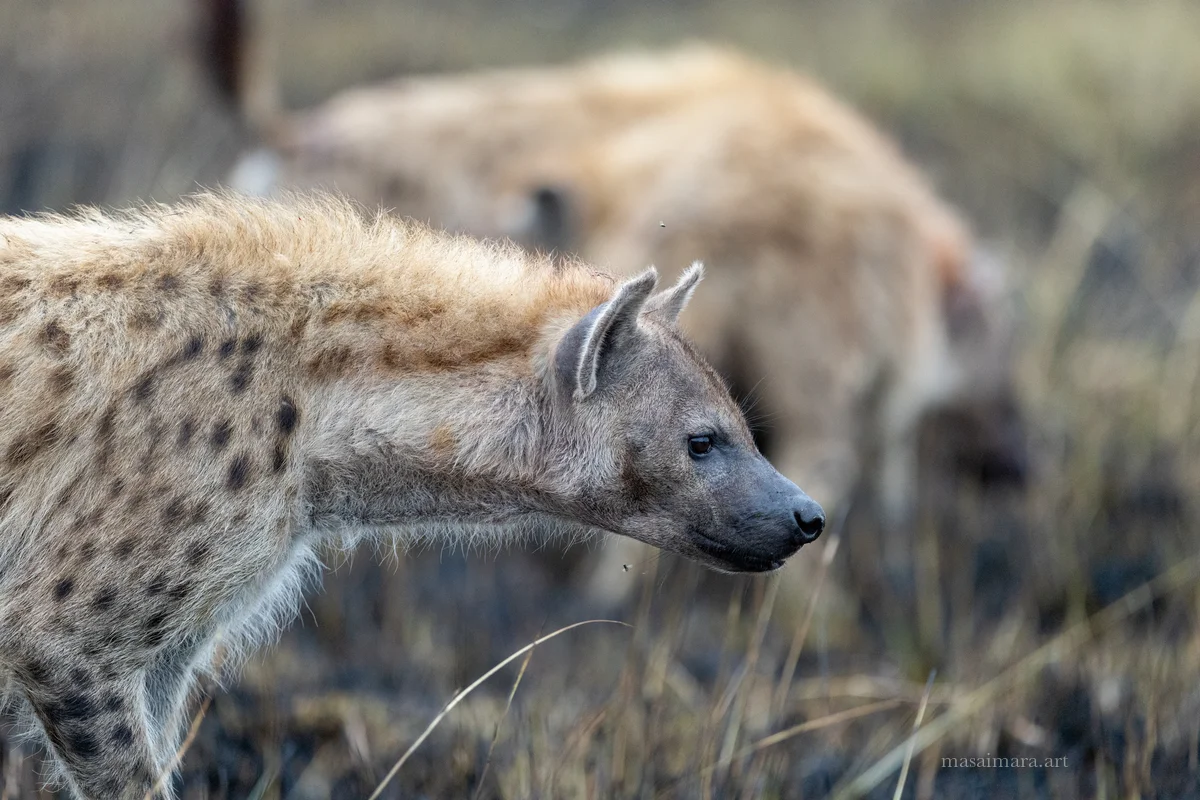
A face from the work. Profile to the camera, ears up, the eye soft, a second hyena resolved only as soft mass behind. The face that, for a moment, looks almost like a dog's.
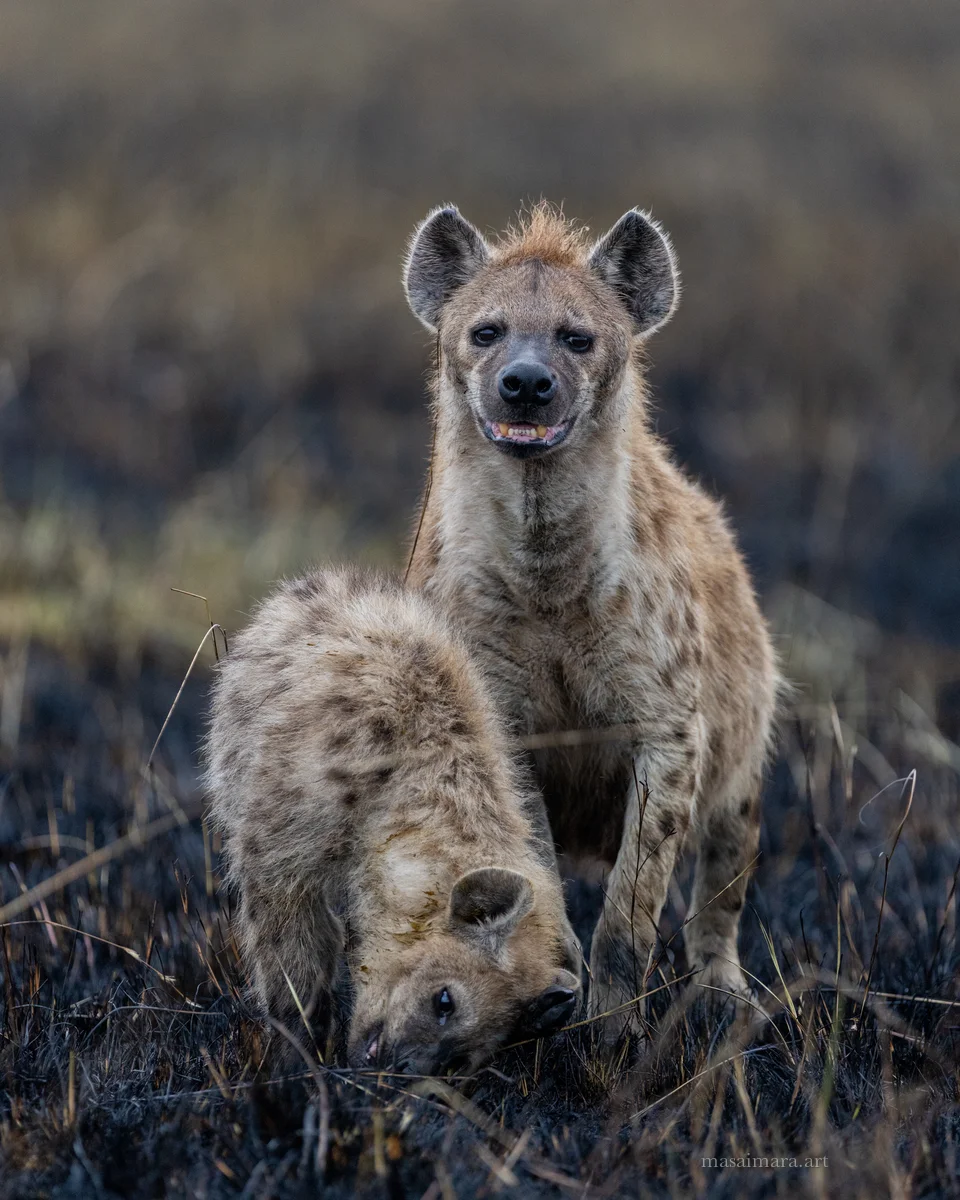
The vertical. Two adults tight in the frame — one sitting upright facing the camera, the other head-down at the carcass below her, the burn dark across the whole picture. The structural image the encounter has been quietly building.
“The pack stays. The piece goes. One hyena, one piece, one walk that does not end.
”
Field note
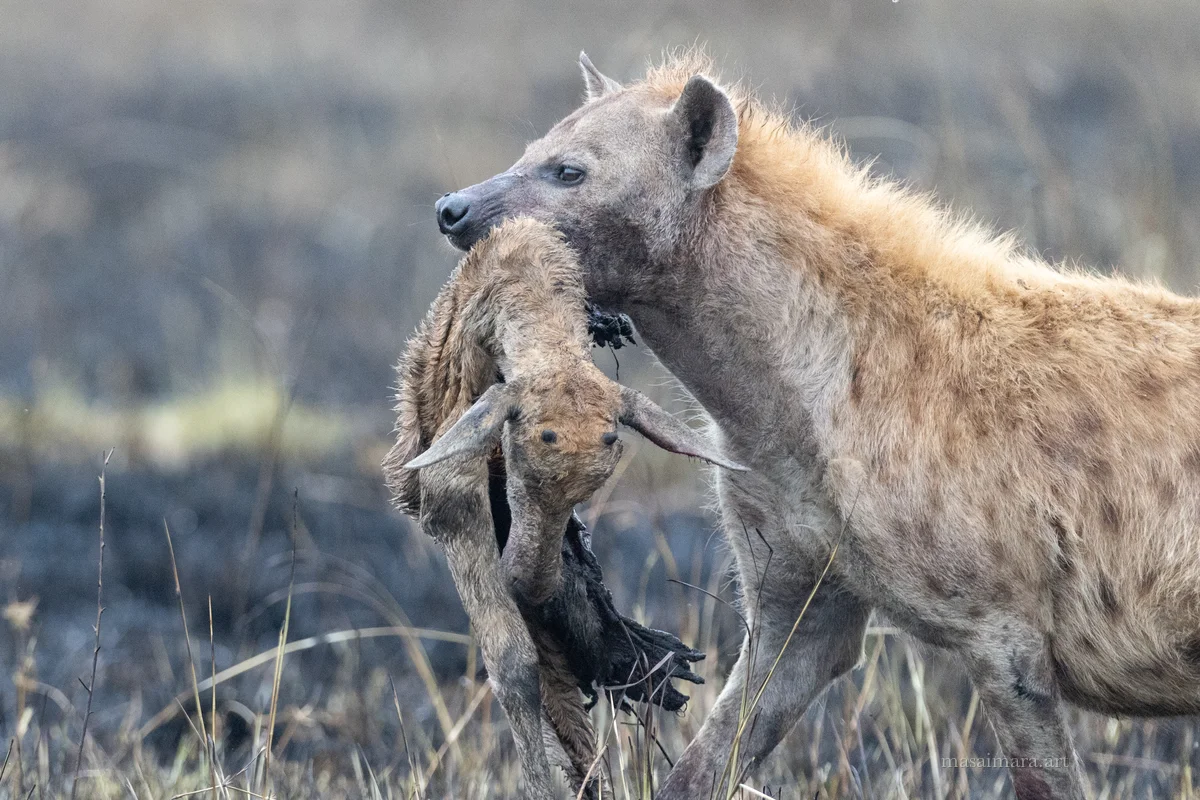
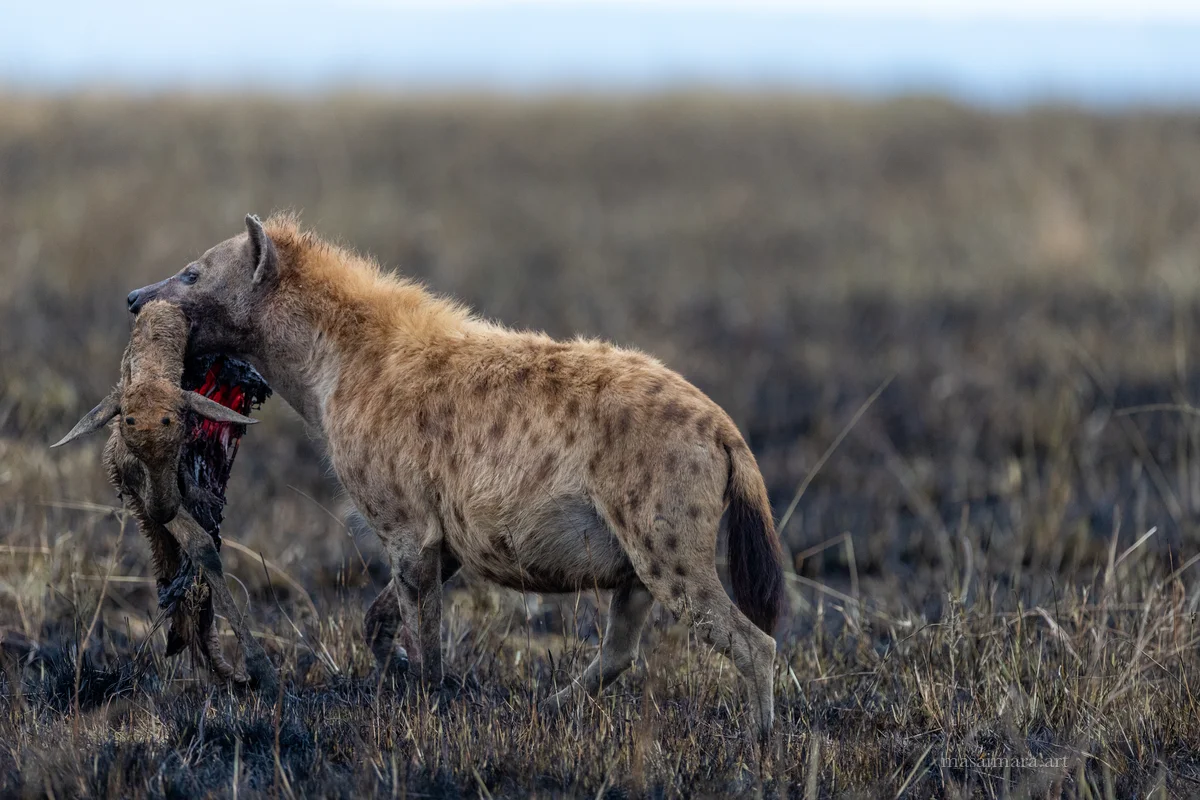
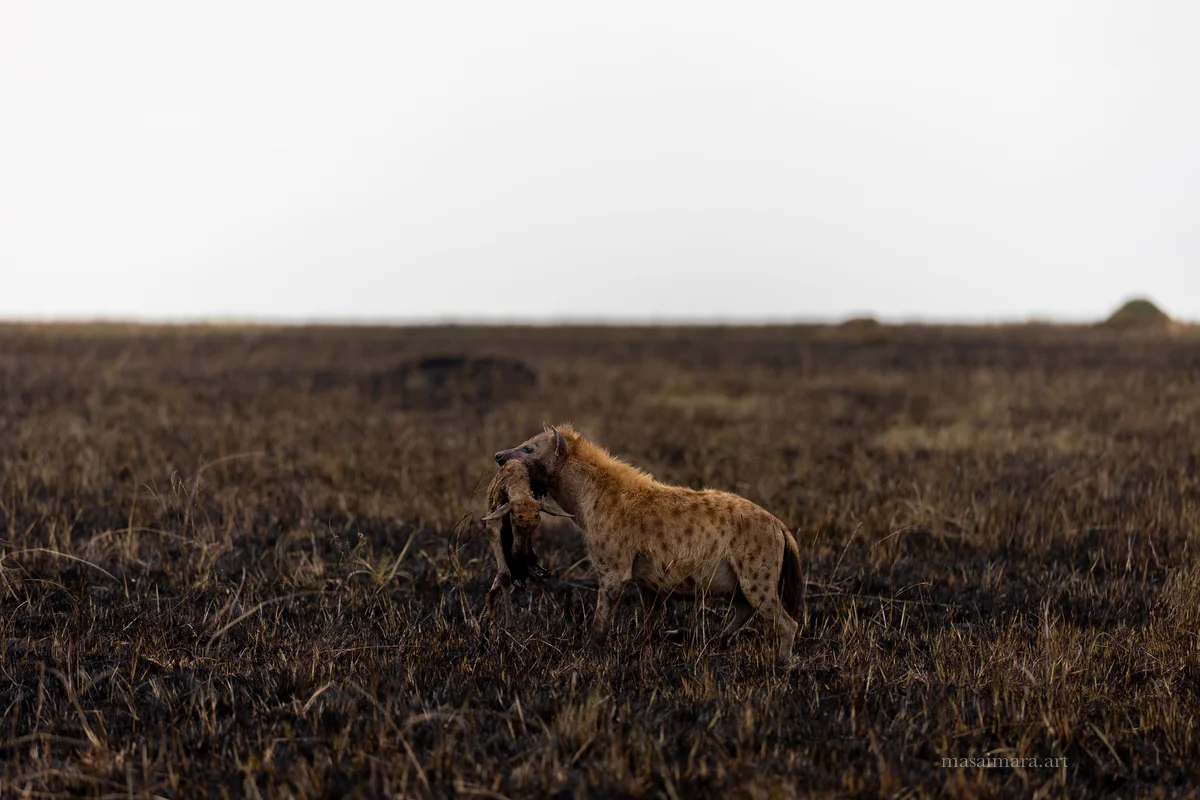
The carry. The same hyena, the same piece — head and forelimbs hanging from her jaws — moving the same direction across the soot. Three frames of one walk, the morning's largest portion taken cleanly off the ground that made it.
The Burn
The Burn
The Burn
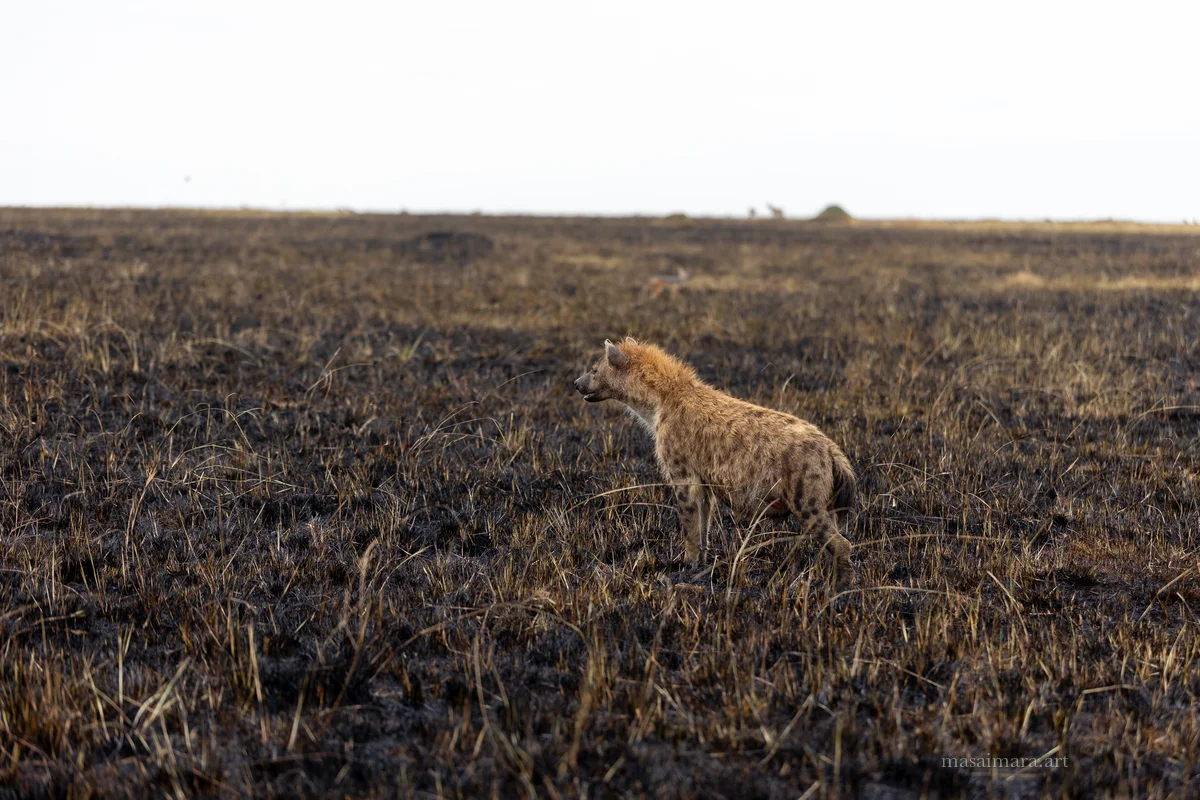
She is still going. The same hyena alone in the vast burn, body in profile, head turned briefly back — the largest piece still in her, the pack far behind, the ground left to cross still ahead. The frame admits how alone the carry has become.
A rest. She has set the piece down in the dry grass and crouched beside it — head up, body lowered, the piece briefly on the ground. The carry has paused. The carry has not ended.
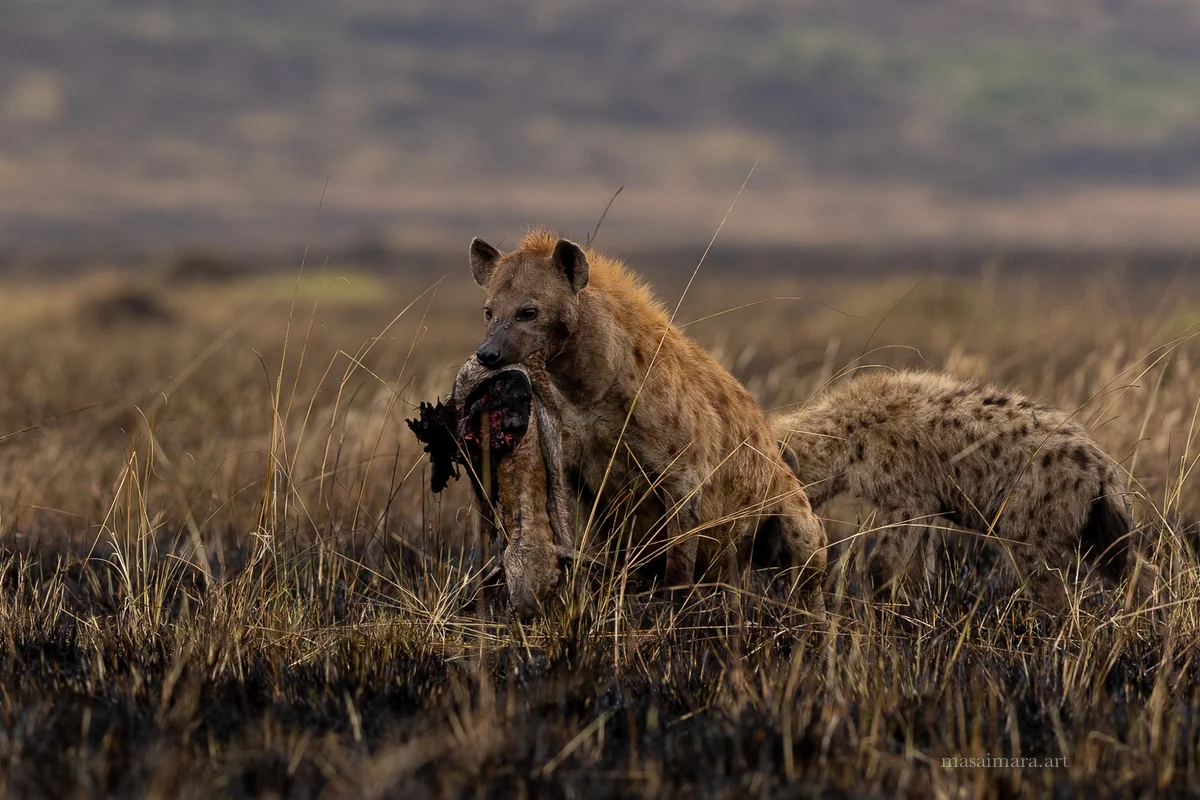
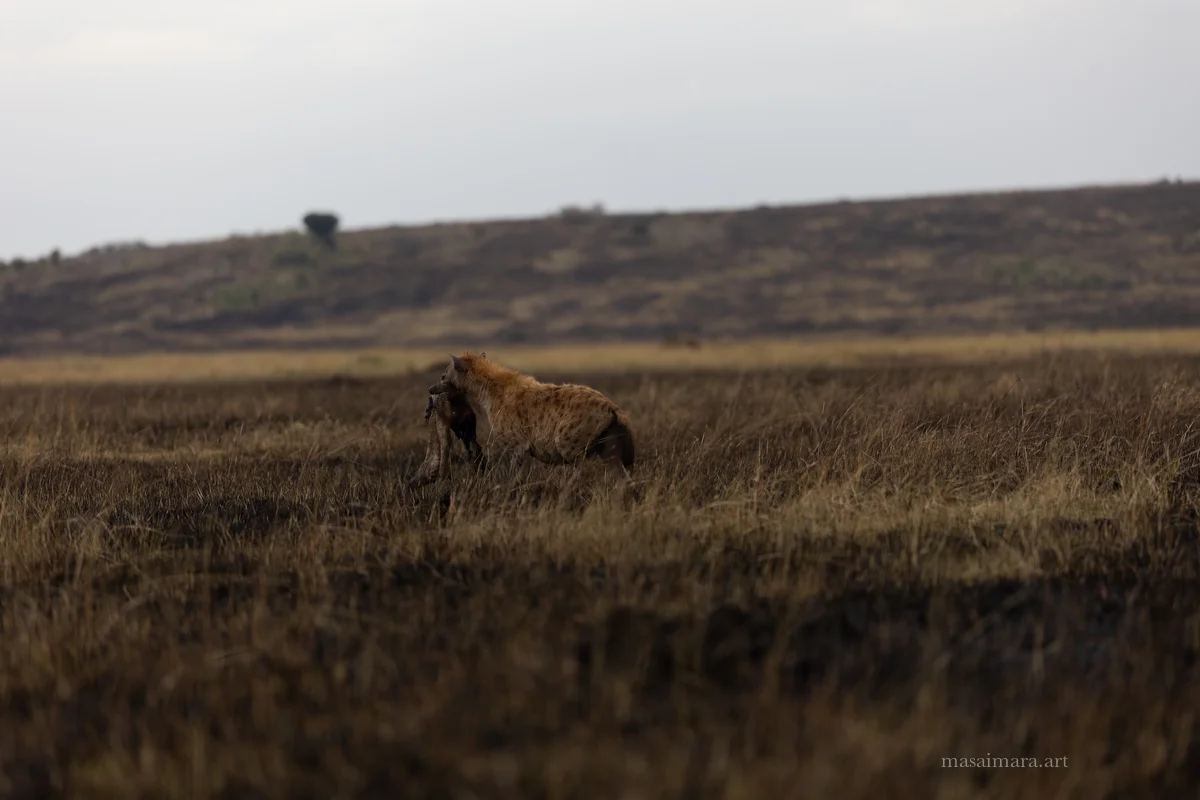
She picks it up again. The piece is back in her jaws; she is walking away across the dry grass, body small against the low ridge — the morning leaving her alone with what she has carried. The frame holds the kind of stillness no kill-frame is allowed to hold.
From the kill outward. The hyenas work the carcass; the jackals work the edges; one hyena takes the largest piece and walks it across the burn and into the dry grass beyond, resting once and going on.
- Camera
- Canon EOS R5 Mark II · Canon EOS R6
- Lens
- Sigma 500mm f/4 DG OS HSM Sports · Canon RF 70–200mm f/2.8 L IS USM Z