predation
Marsh
The marsh does the work. She brings the result onto the bank.
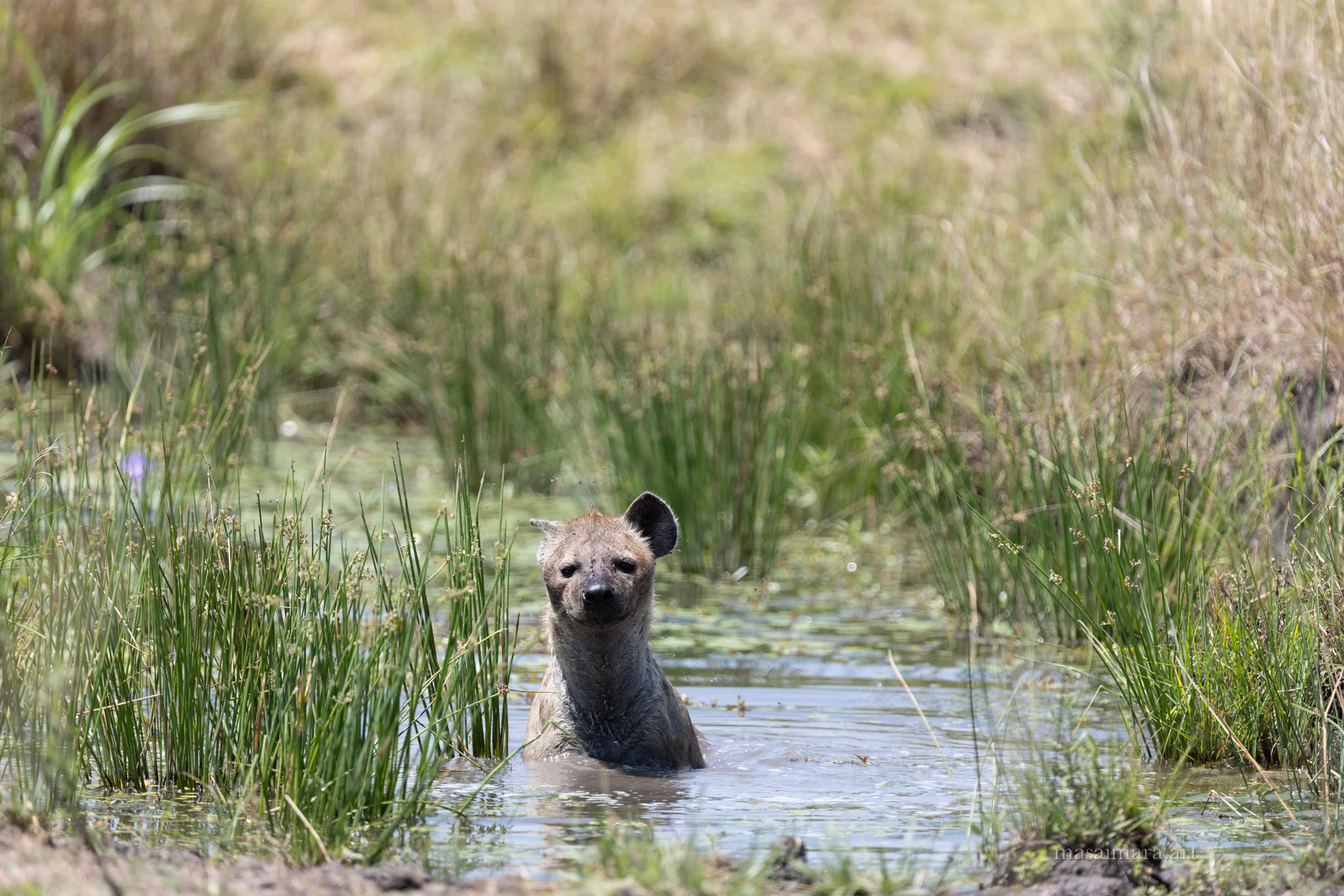
The picture starts already submerged. Only the head and shoulders of the hyena read; the body is the marsh's. She is looking directly at the lens, the water still around her, the reeds rising vertical on either side — the kind of frame that begins by giving the camera less to work with than the body is doing.
The head goes down. She is into the channel now, the work hidden below the surface — whatever she is pulling at down there, the lens does not get to see. For two frames the head is invisible; the marsh is doing all the photography on her behalf.
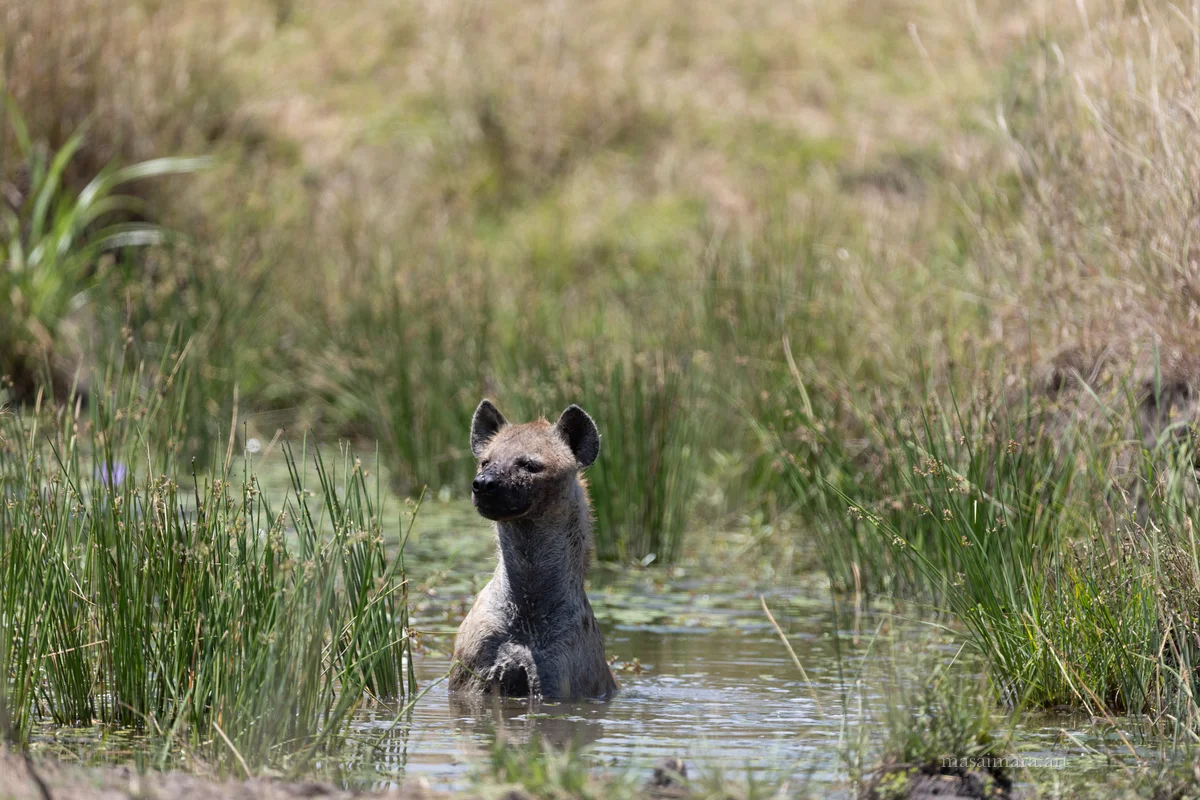
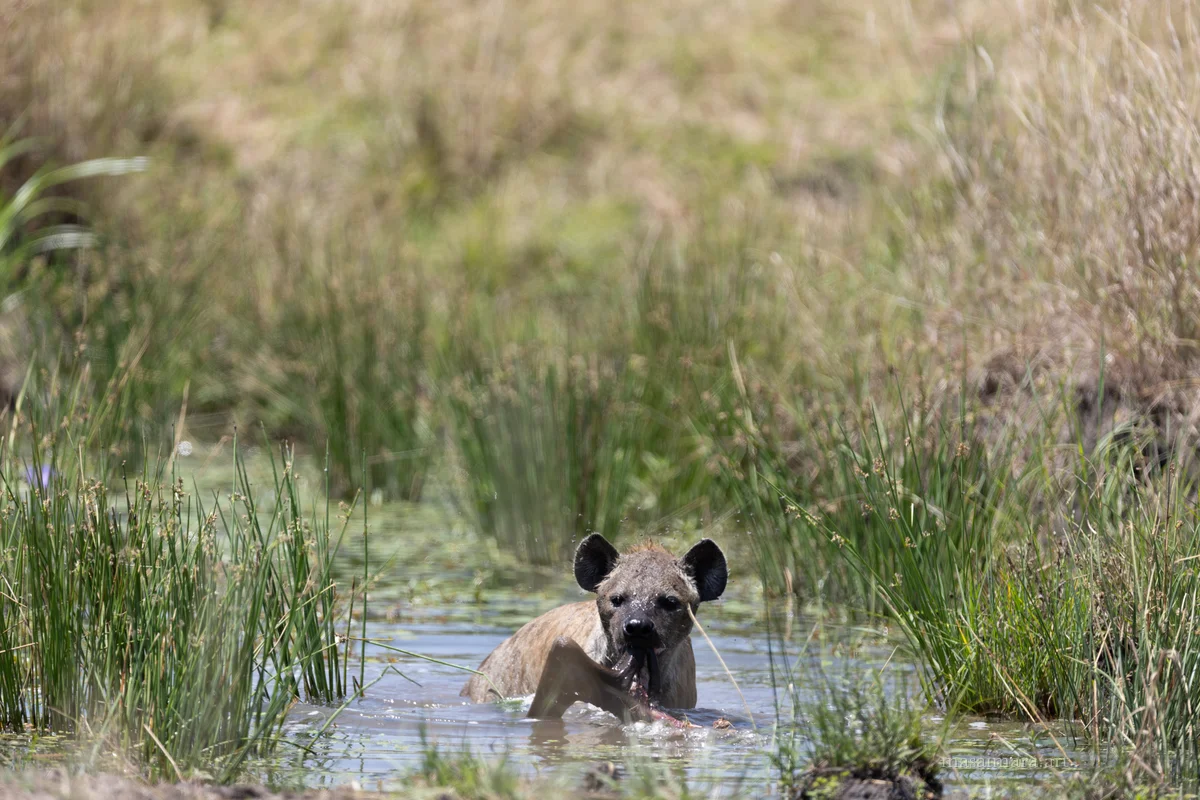
Then the body is suddenly visible. She sits up; the chest comes above the surface; the rushes are still vertical at her sides. The picture finally has a hyena to photograph, not a piece of marsh.
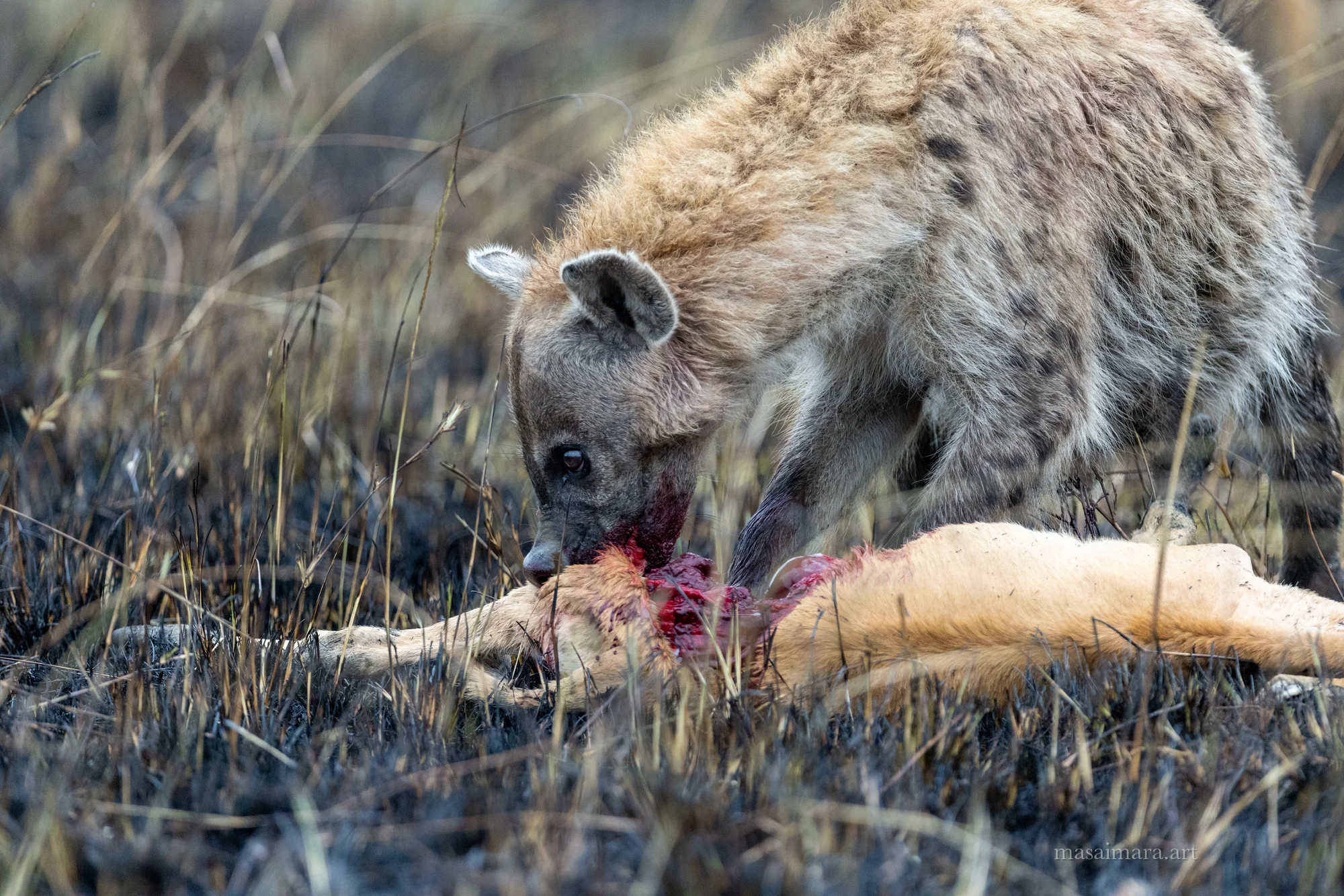
The prey reads. While she is still in the water, the cargo is suddenly in her teeth — a dark knot of carrion, bloody at the jaws, the kind of thing the picture is reluctant to ask too many questions about. The hidden work has produced something.
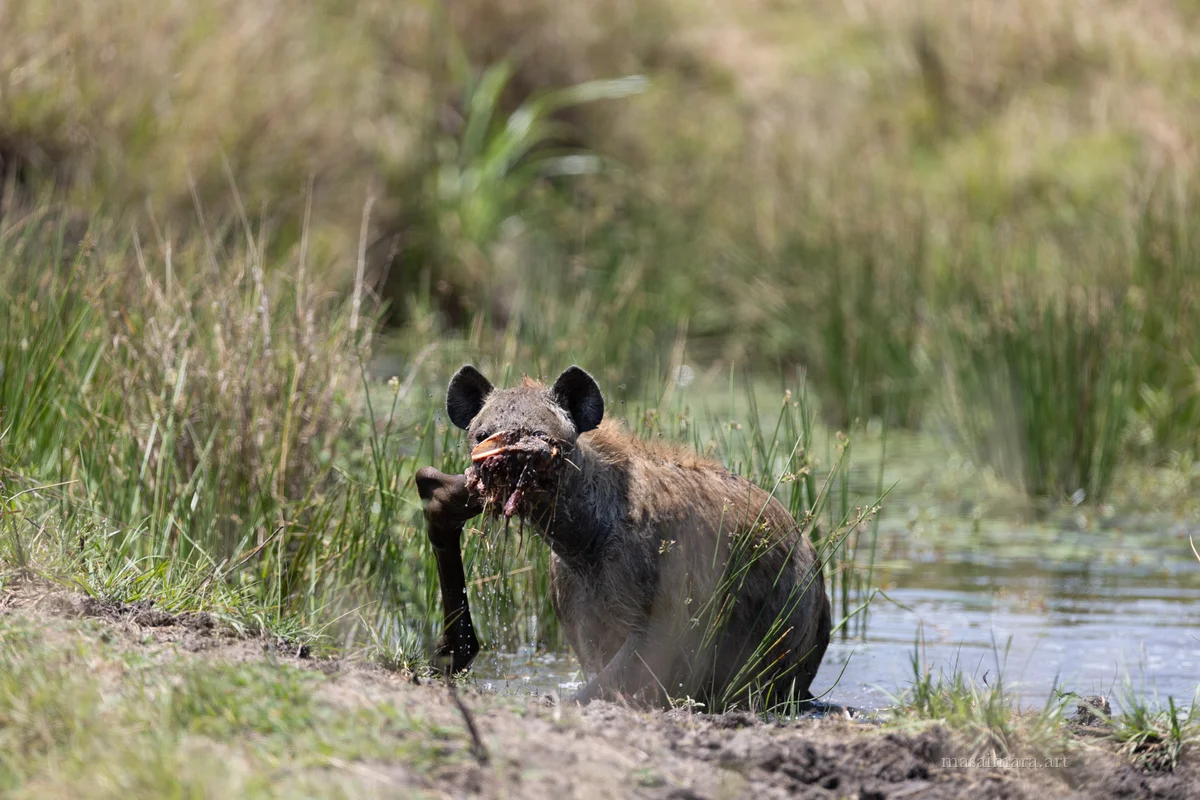
“The marsh has finished with her; the day after the marsh begins.
”
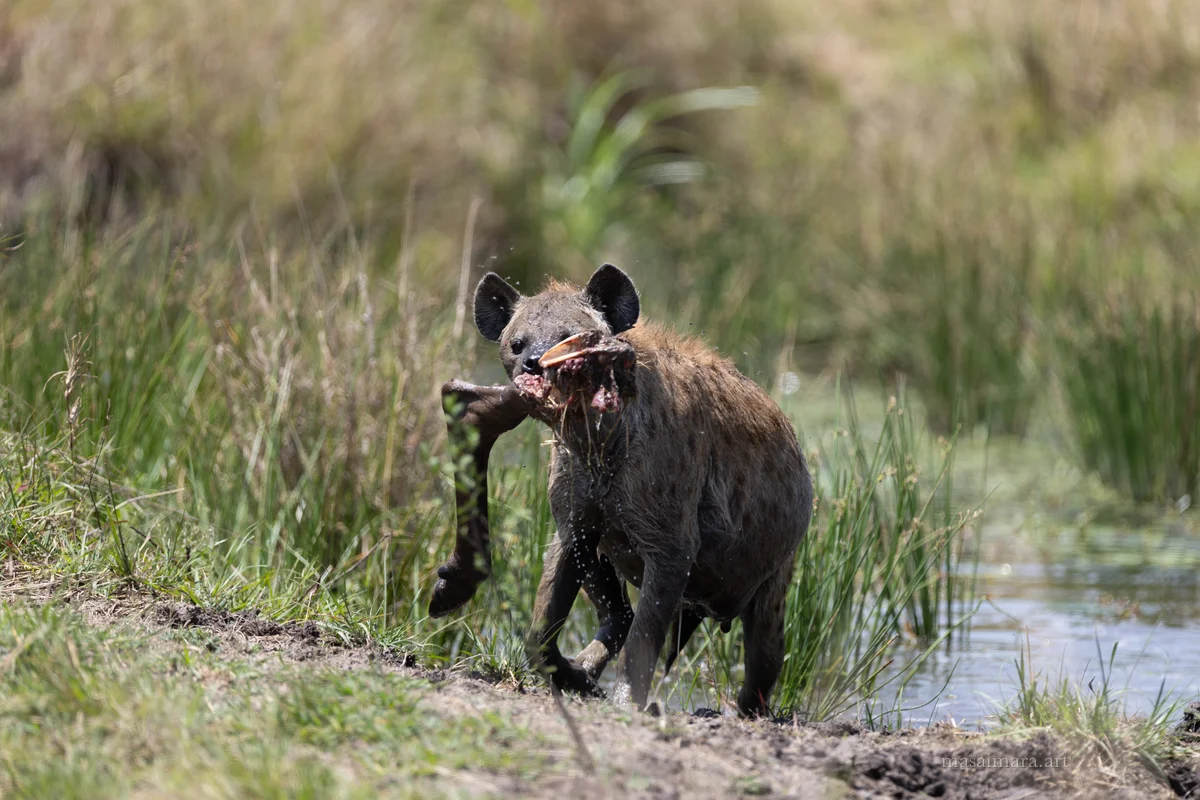
The lift out. She puts paws on the muddy edge and rises off the surface; a mid-stride frame catches her between water and land. Then she is on the bank, the prey held high, alert and almost ungainly out of the marsh's element.
She moves off. Through pale grass with the prey still in her mouth, a turn of the head back toward where she came from, then a pause with the carry held a little higher, then on into the stalks — every frame the same body, the same cargo, the same shoulder-line.
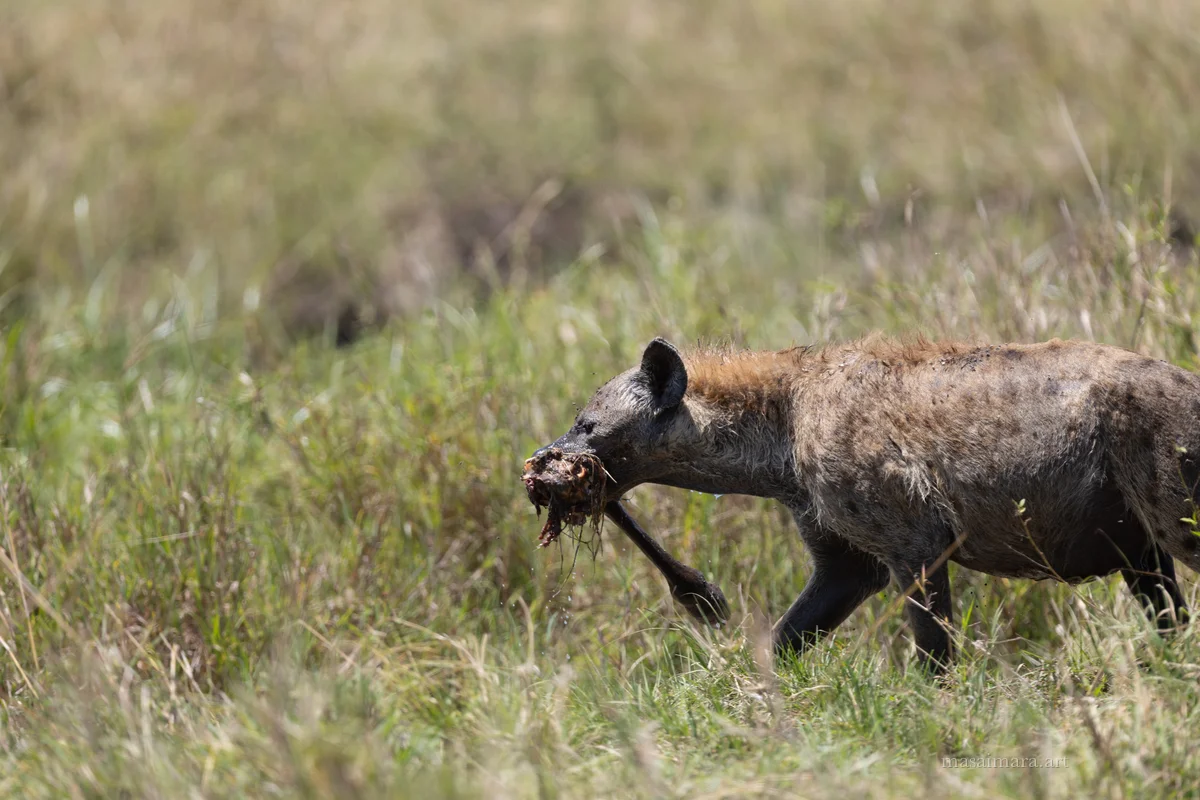
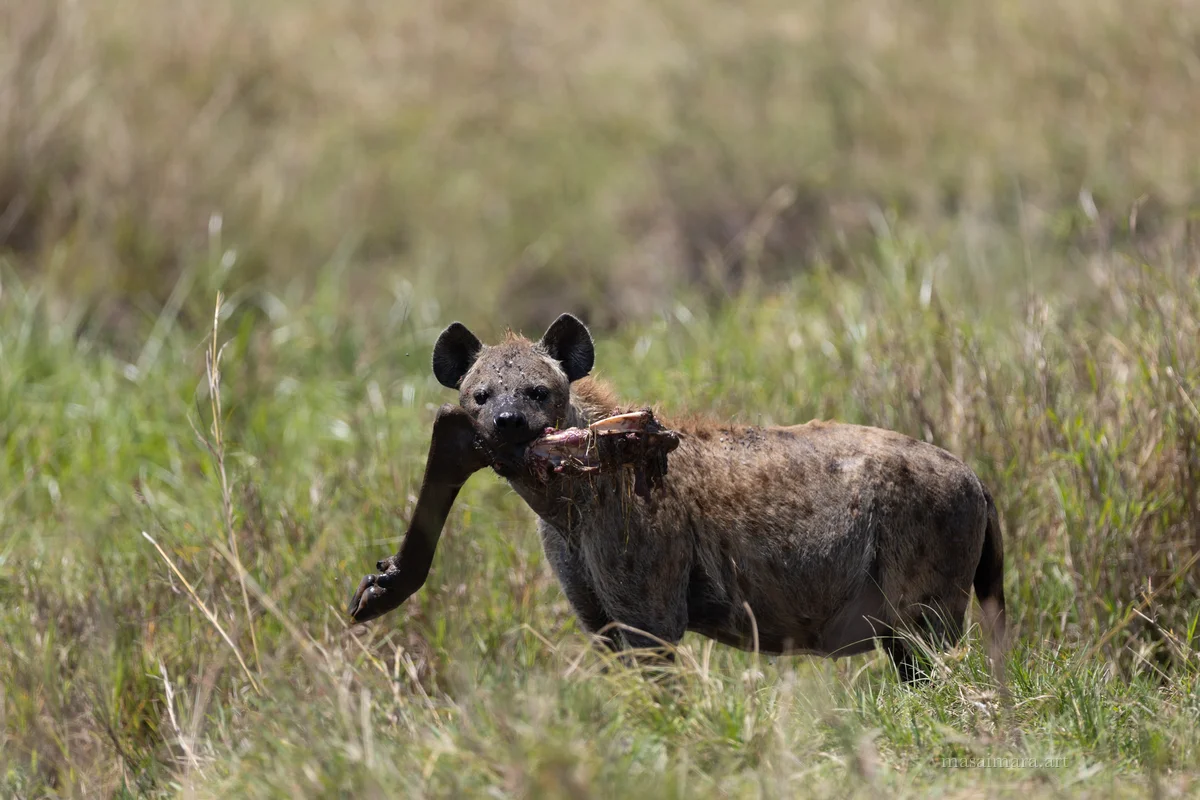
The walk on. She is upright in pale grass, the prey held high in her jaws, a leg dangling — the picture's most upright cargo-frame, the marsh fully behind her now.
The coda. Far out on the plain, the hyena small in the foreground grass with the prey still at her jaws; a herd of zebras grazes in the soft middle distance behind her. The marsh has finished with her; the day after the marsh begins, and the picture quietly admits it.
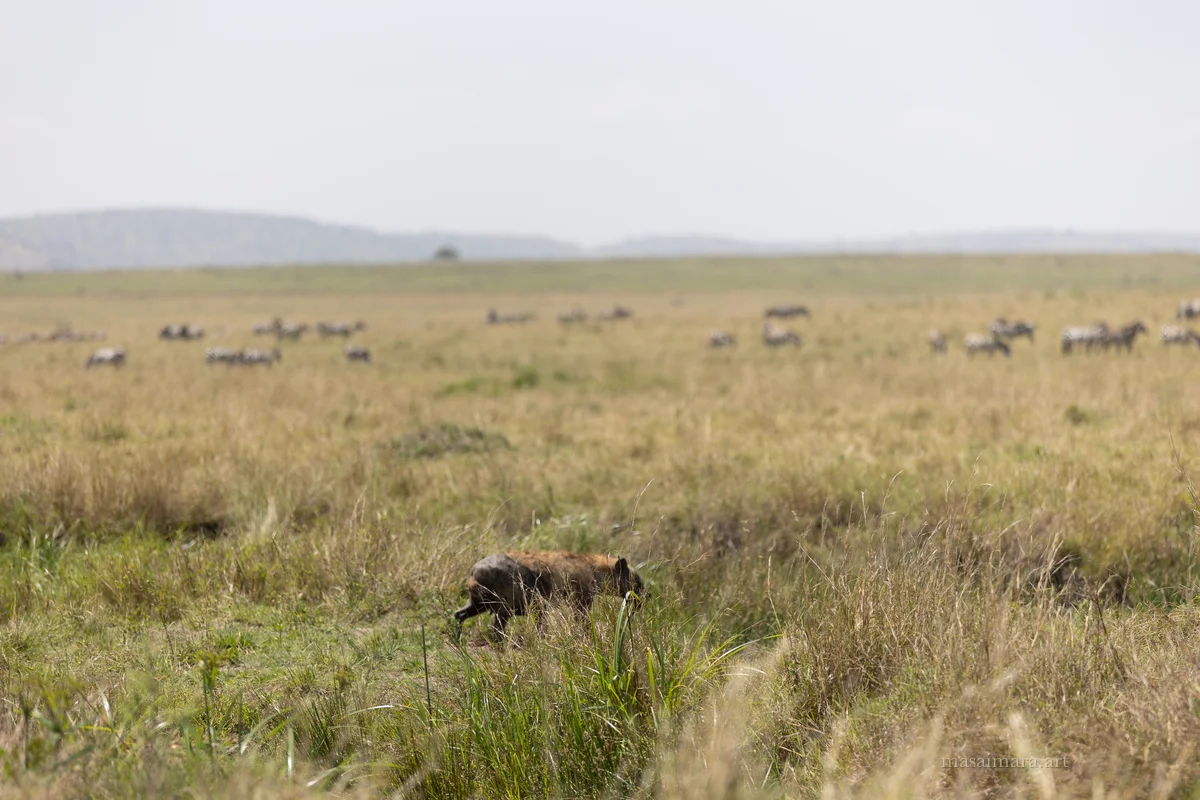
Hot light flattening the reeds, water that has been still long enough to skin over, a body that uses both the cover of the marsh and the openness of the plain across the same short stretch.
- Camera
- Canon EOS R5 Mark II
- Lens
- Sigma 500mm f/4 DG OS HSM Sports