predation
Buffalo
A long afternoon. One fallen body. Sleep, errands, return.
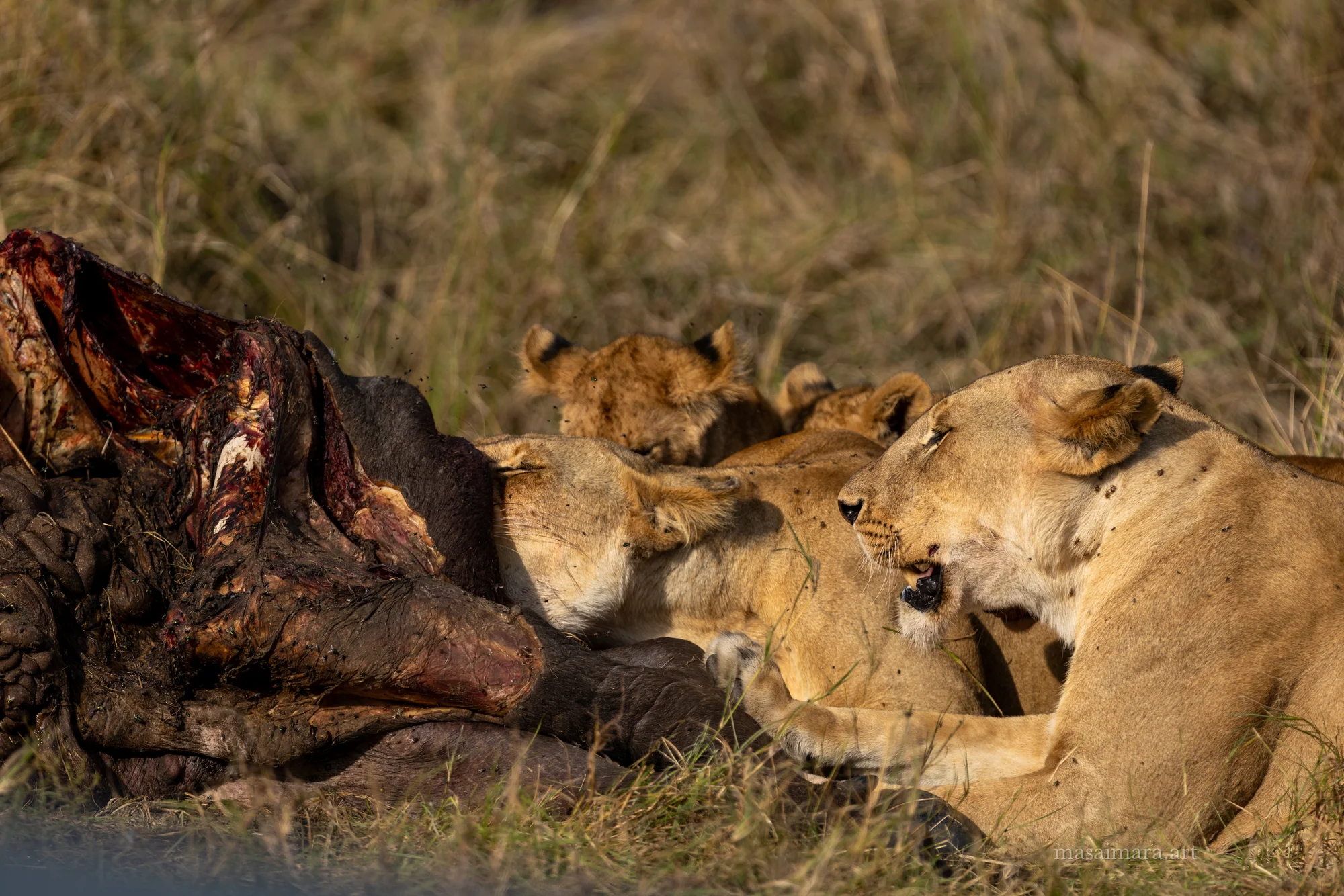
The day's biggest event is already over by the time the photograph arrives. What it finds is the evidence: the open red flank of a buffalo on the left of the frame, a small cub pressed against it from the other side, an adult beside the work with her eyes nearly closed. The kill happened somewhere out of frame, and what is left of the afternoon is the long slow work of being a pride at a body.
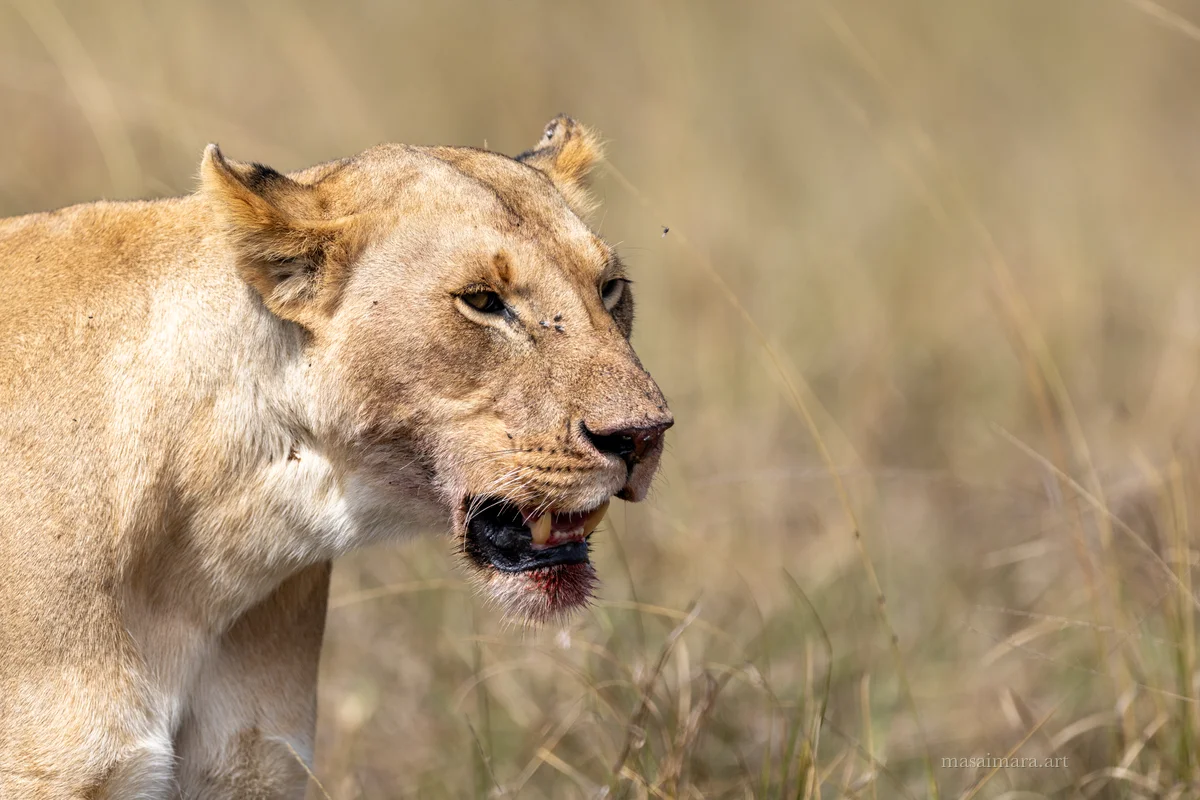
The first portrait is not the kill but its colour. The lioness walks past in profile, the upper half of her face composed, the lower half stained dark — the way an adult lion lets a meal show only in the parts of herself the camera will ask about.
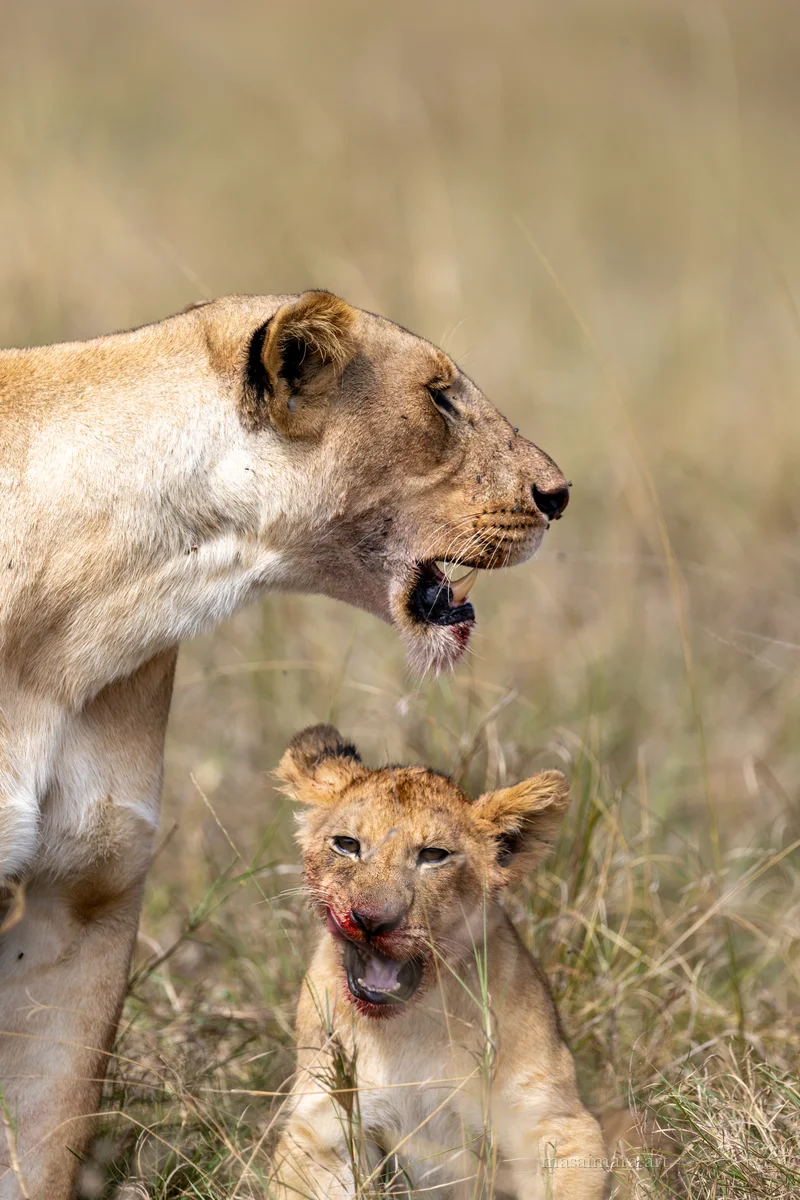
A second portrait, vertical now, and shared. The lioness with her mouth open; her cub below her in the grass with his own small face stained the same colour, the same way. The picture lets the two of them sit inside the same frame without saying anything else about them.
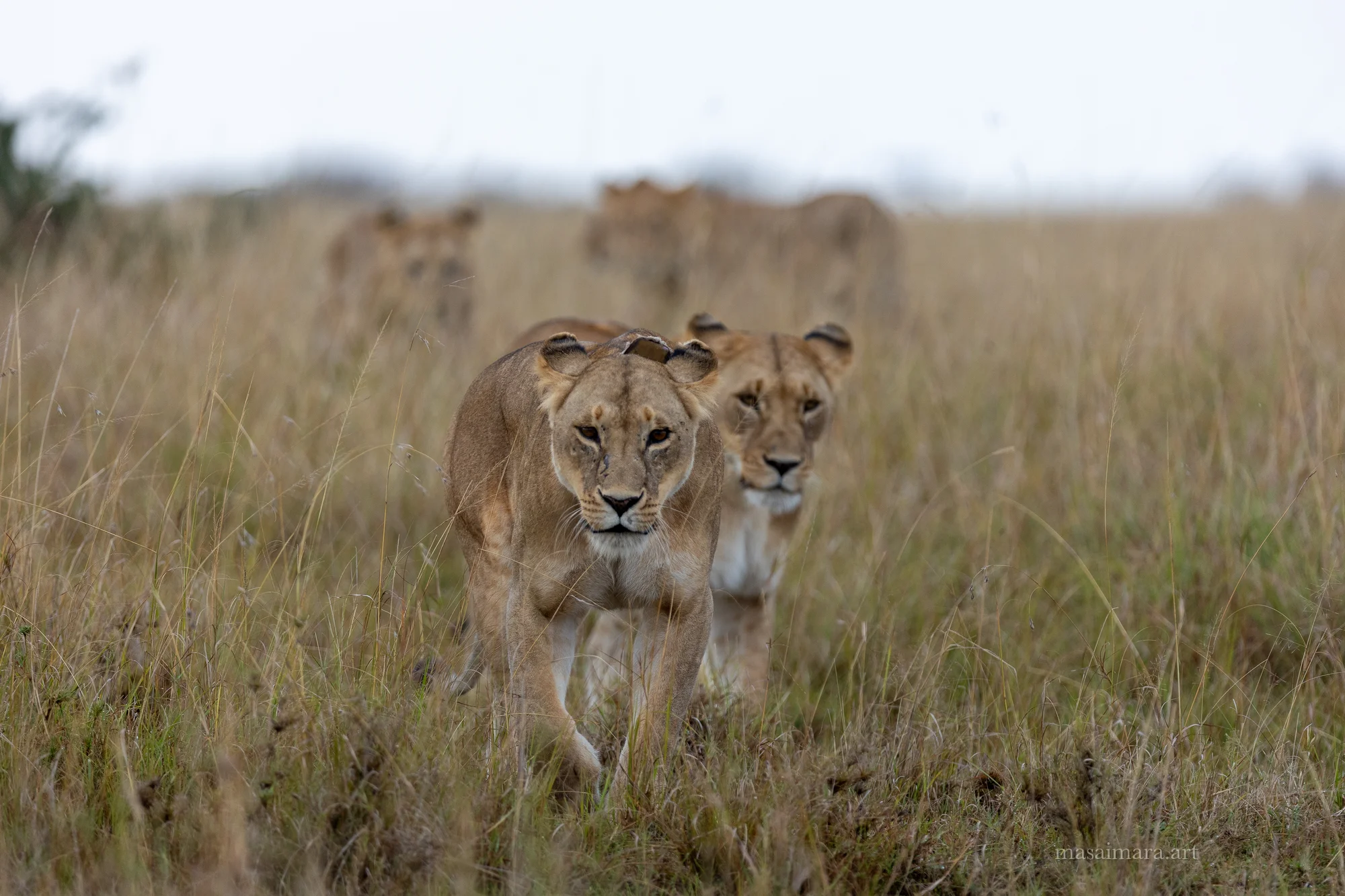
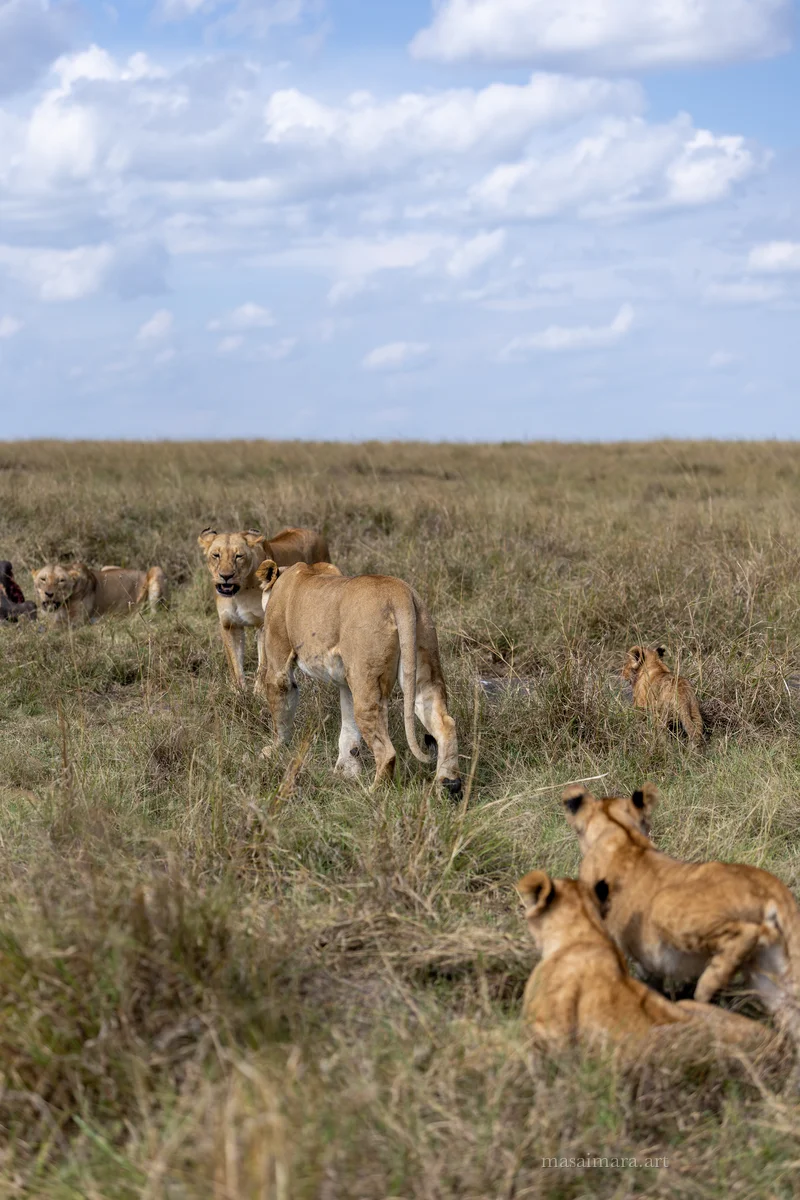
Then the family loosens out onto the plain. A wider, higher frame — one lioness walking forward through low grass, others resting at the edges, the cubs scattered in the foreground. The day pauses for a breath under a high pale sky.
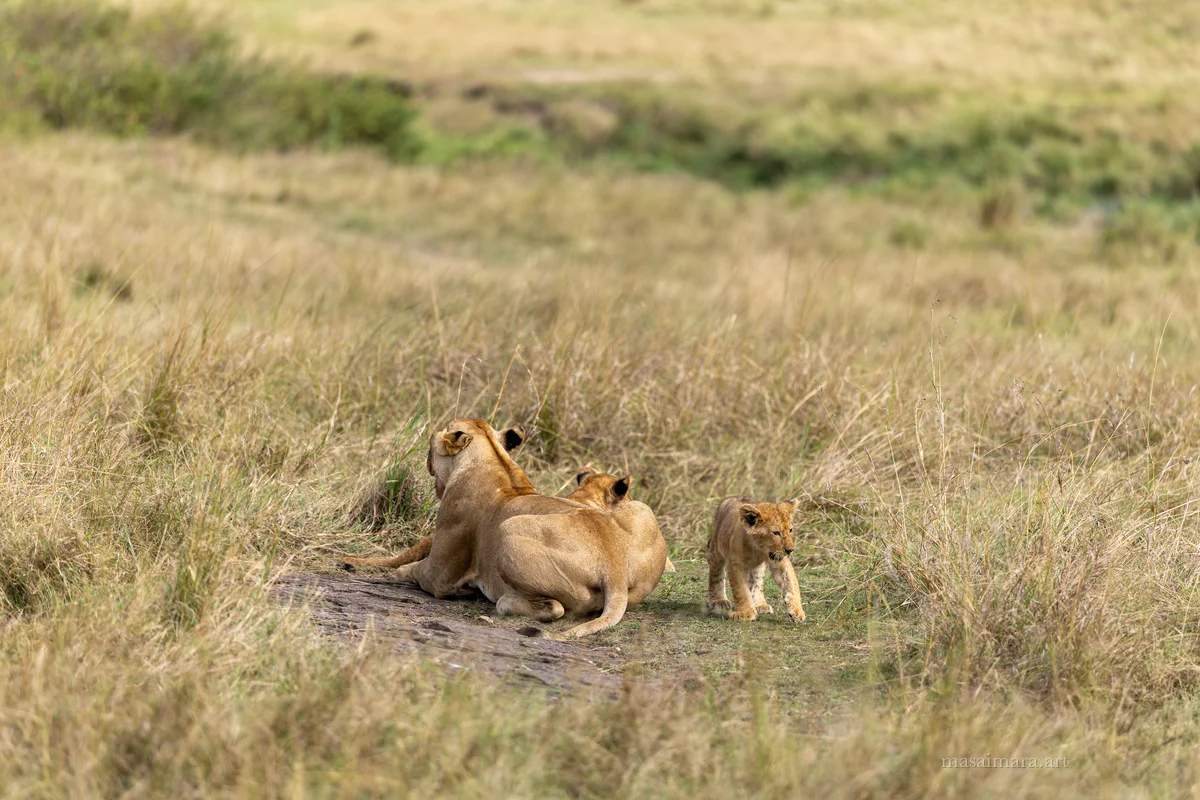
The pride lies down. Two adults take a patch of bare earth, backs to the camera; a cub walks in from the right and admits himself to the geometry. The afternoon is doing the smallest possible work of being daylight.
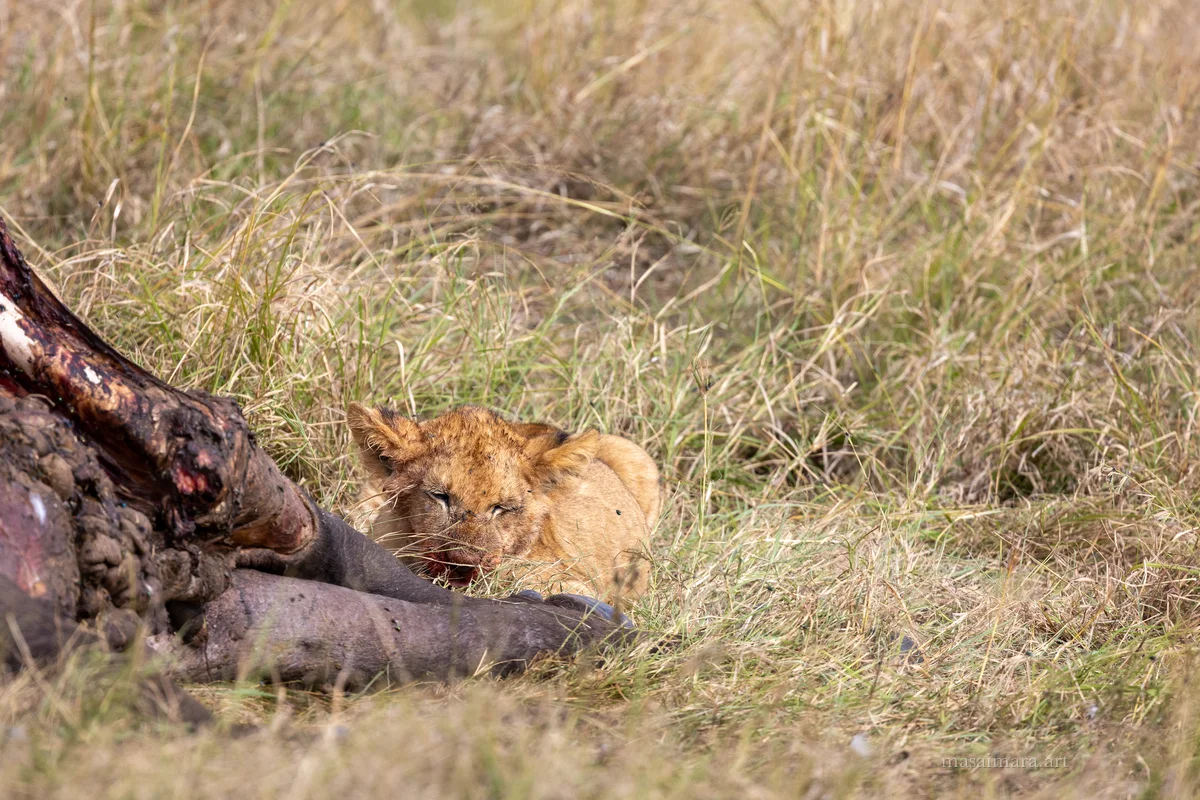
A cub comes back to the body alone. The dark hide of the buffalo fills the left of the picture; the small face and small paws are the only colour that is not the kill. Neither hiding the work nor making it the subject.
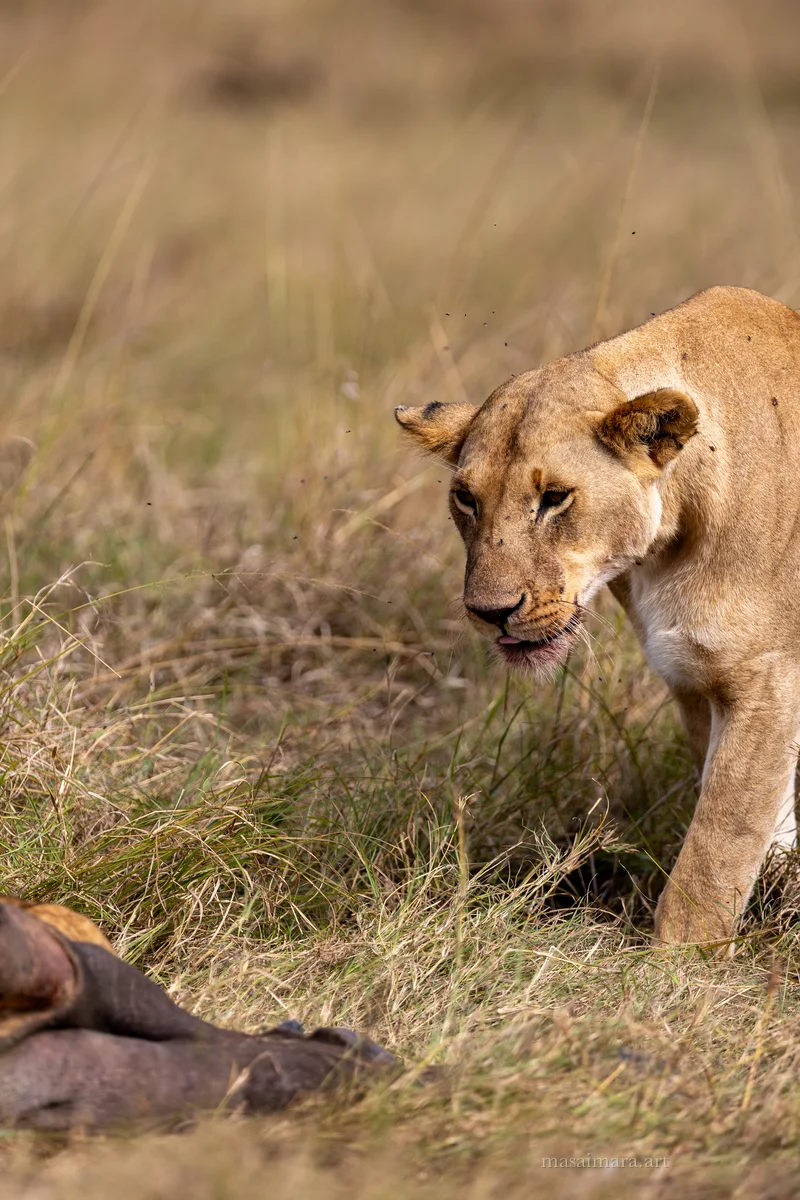
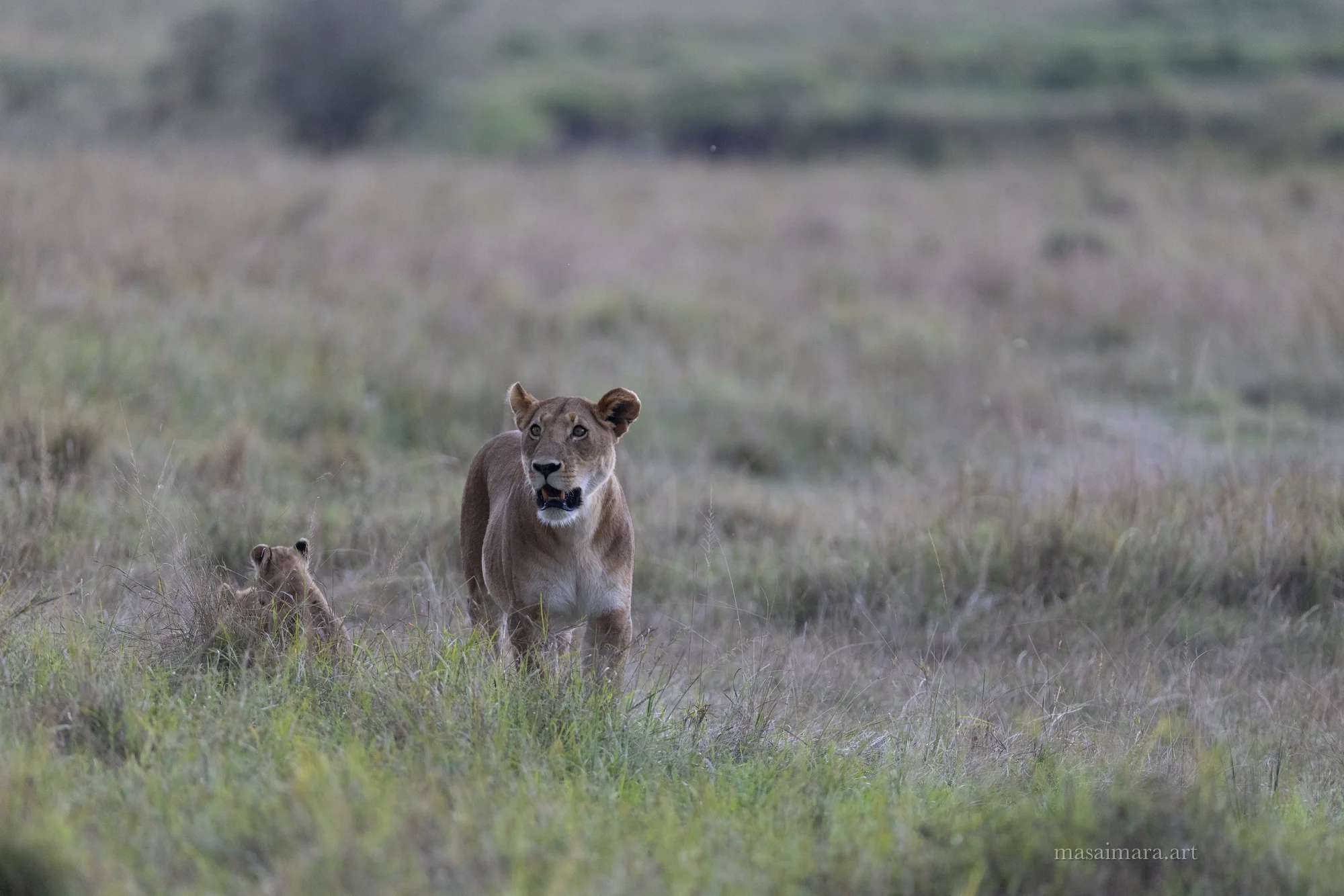
A lioness has come back too. Vertical, alone, a dark mass of carcass at her feet, the late grass behind her. She is not feeding yet. She is only, at the moment of the picture, deciding to.
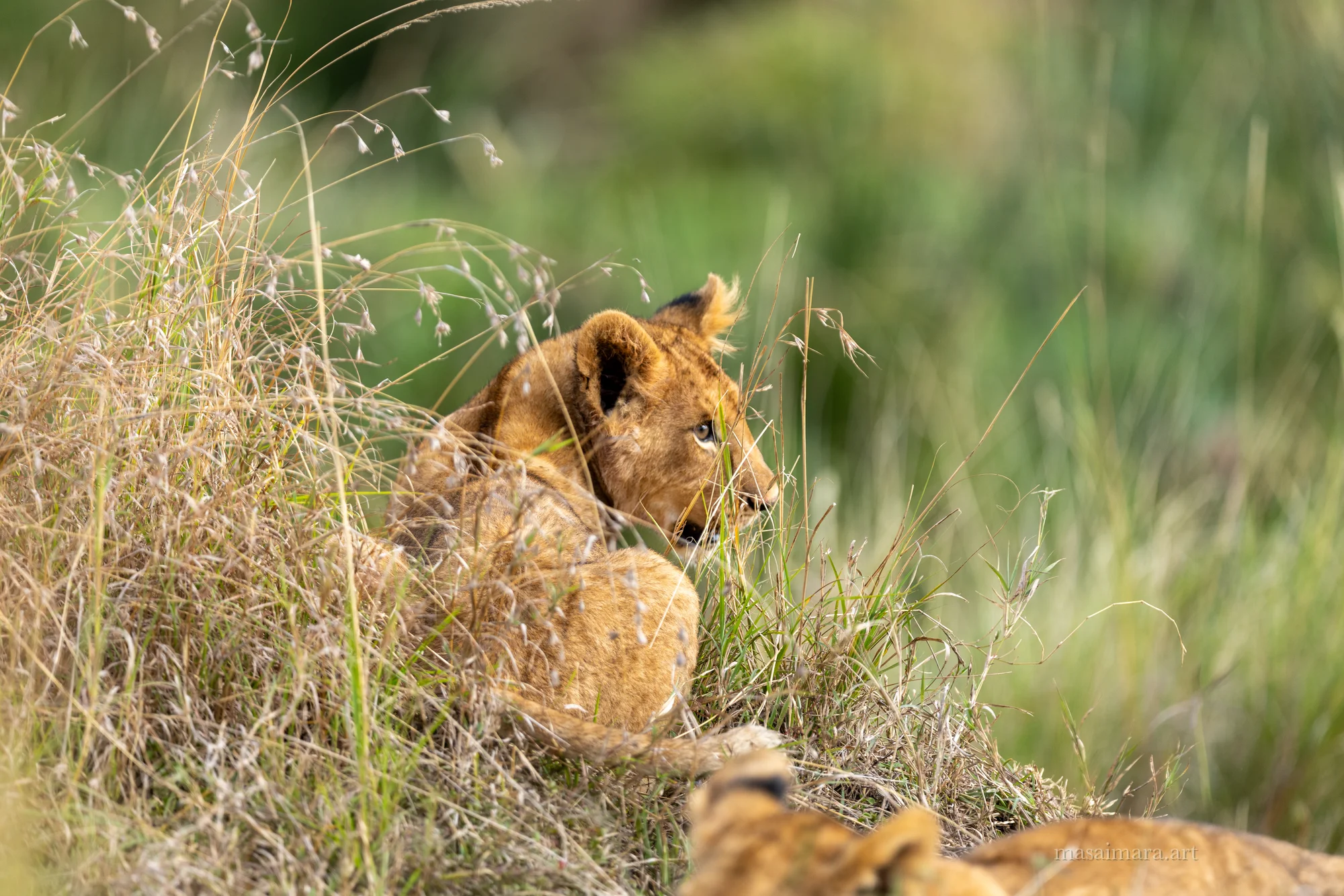
And the closing frame the day allows. Two cubs together on the bare earth, one with head up, one settled beside — turned toward each other, no work in the picture at all. The afternoon has been heavy with one body. The picture closes on two smaller ones, intact.
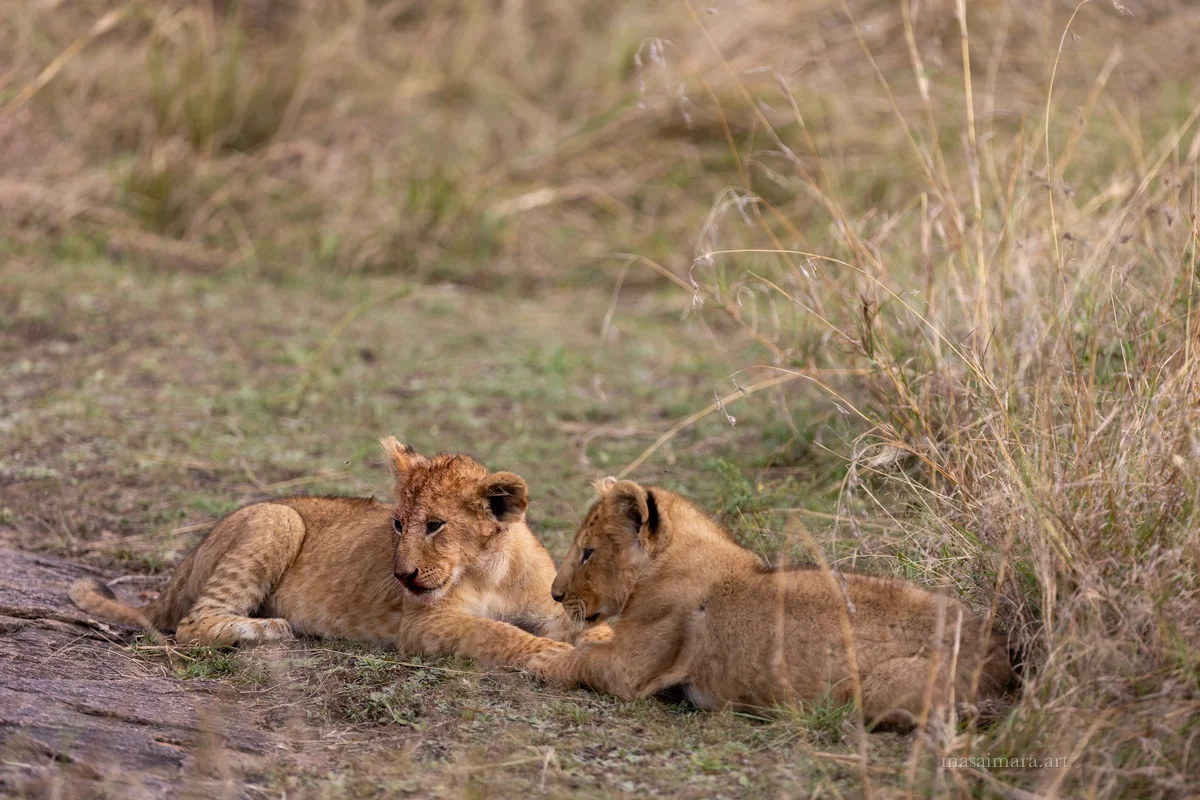
A heavy slow afternoon defined by one fallen body. The work is in the small distance between sleep and feed, and the way the same family fits itself around each. The Topi pride.
- Camera
- Canon EOS R5 Mark II · Canon EOS R6
- Lens
- Sigma 500mm f/4 DG OS HSM Sports · Canon RF 70–200mm f/2.8 L IS USM Z