predation
The Sprint
A long held breath through the hottest hours of one day.
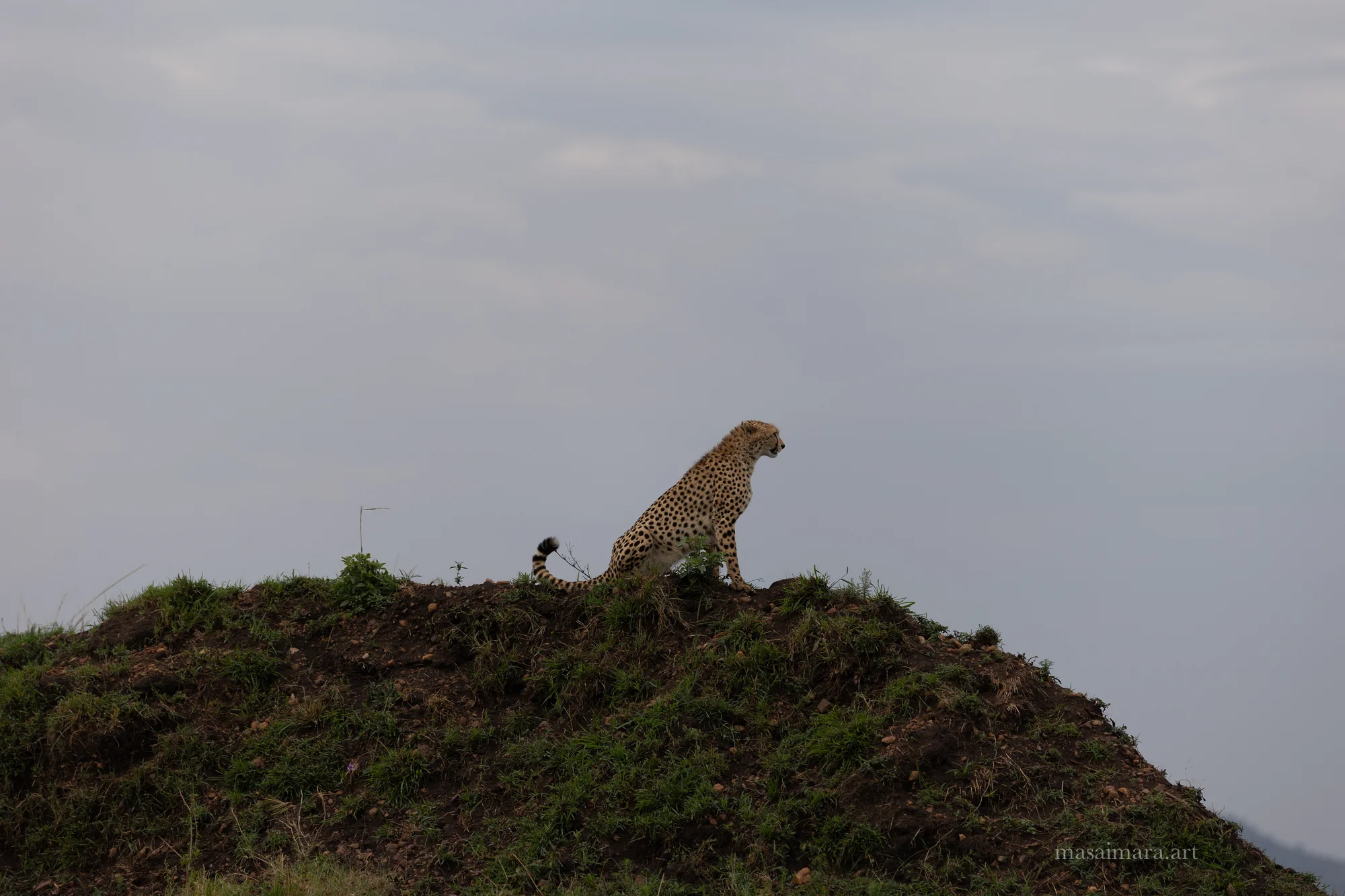
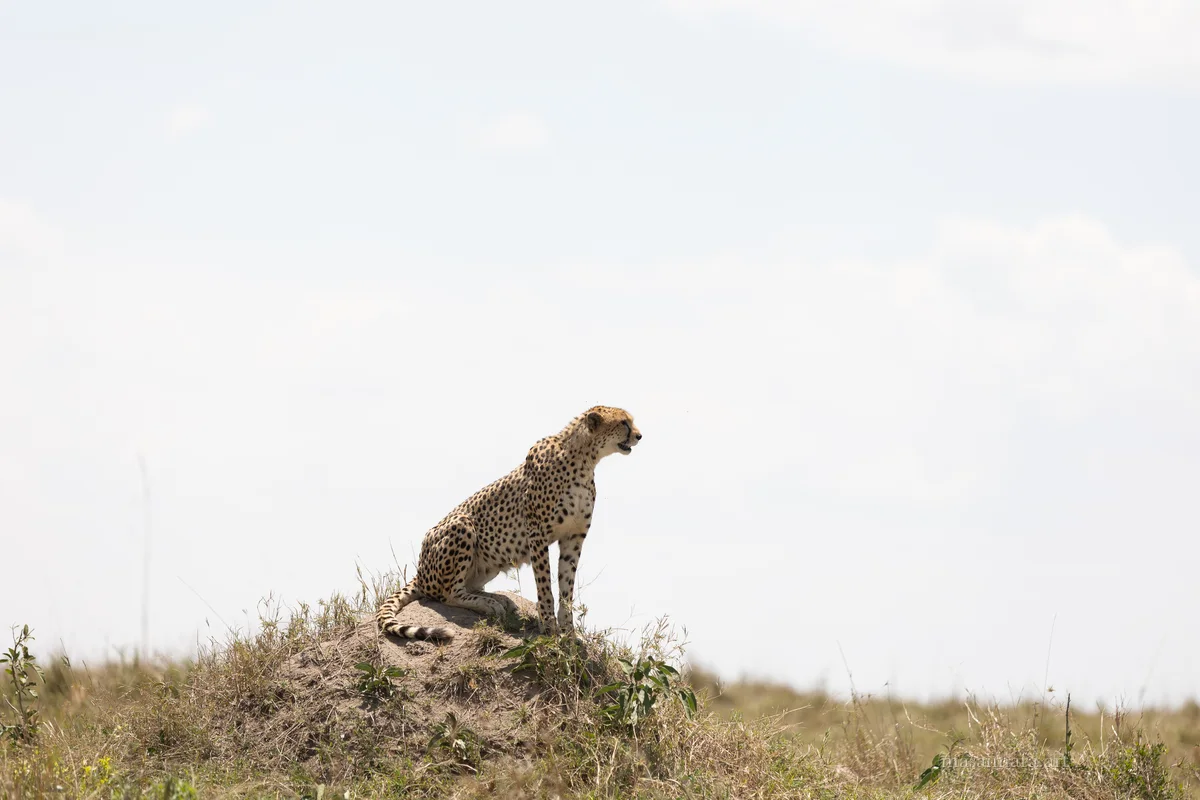
She finds the photograph rather than the other way around. Upright on a small grass rise, the plain enormous around her, a single thorn tree on the horizon — at the very edge of what a long lens will let her be. She is the cat the afternoon has chosen.
She drops into the grass. Only the shoulders read above a low shrub; the head is forward; the body is committed to a direction. The first picture of her as a hunter rather than a portrait — and she, very quickly, will go back to being a portrait, because cheetahs spend most of their hunting being still.
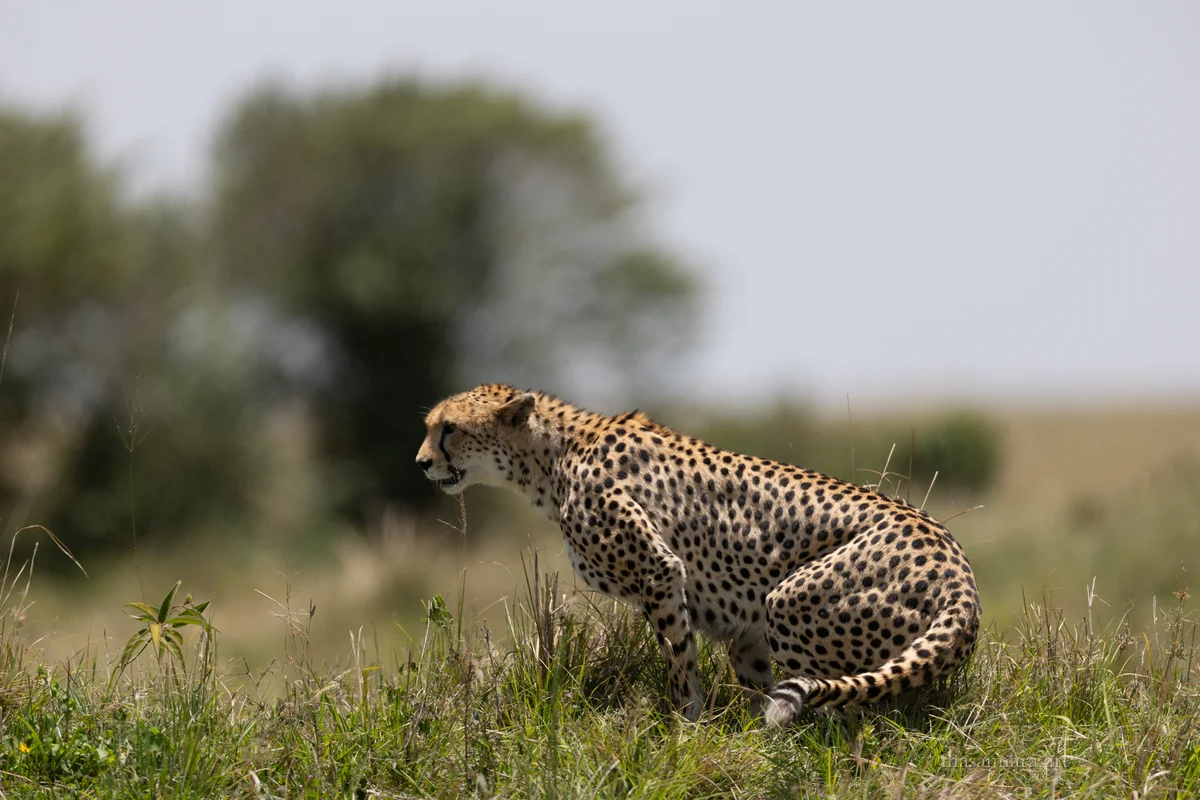
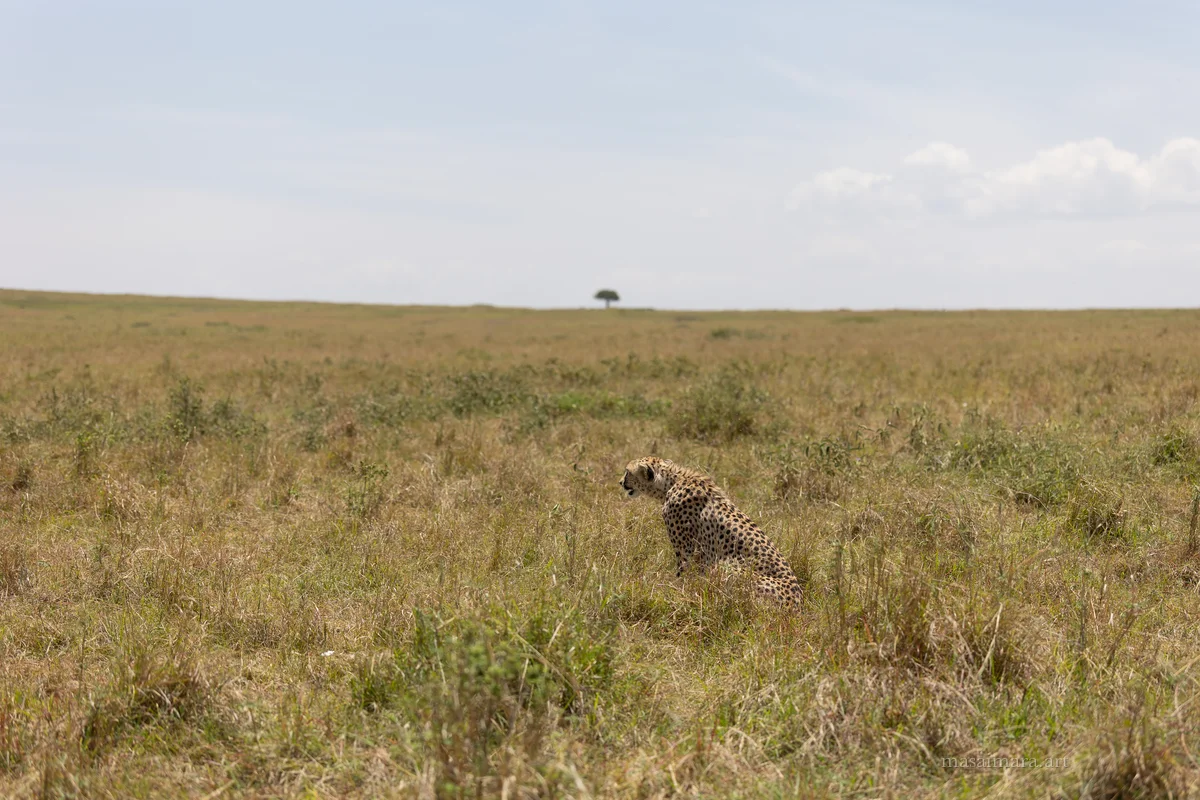
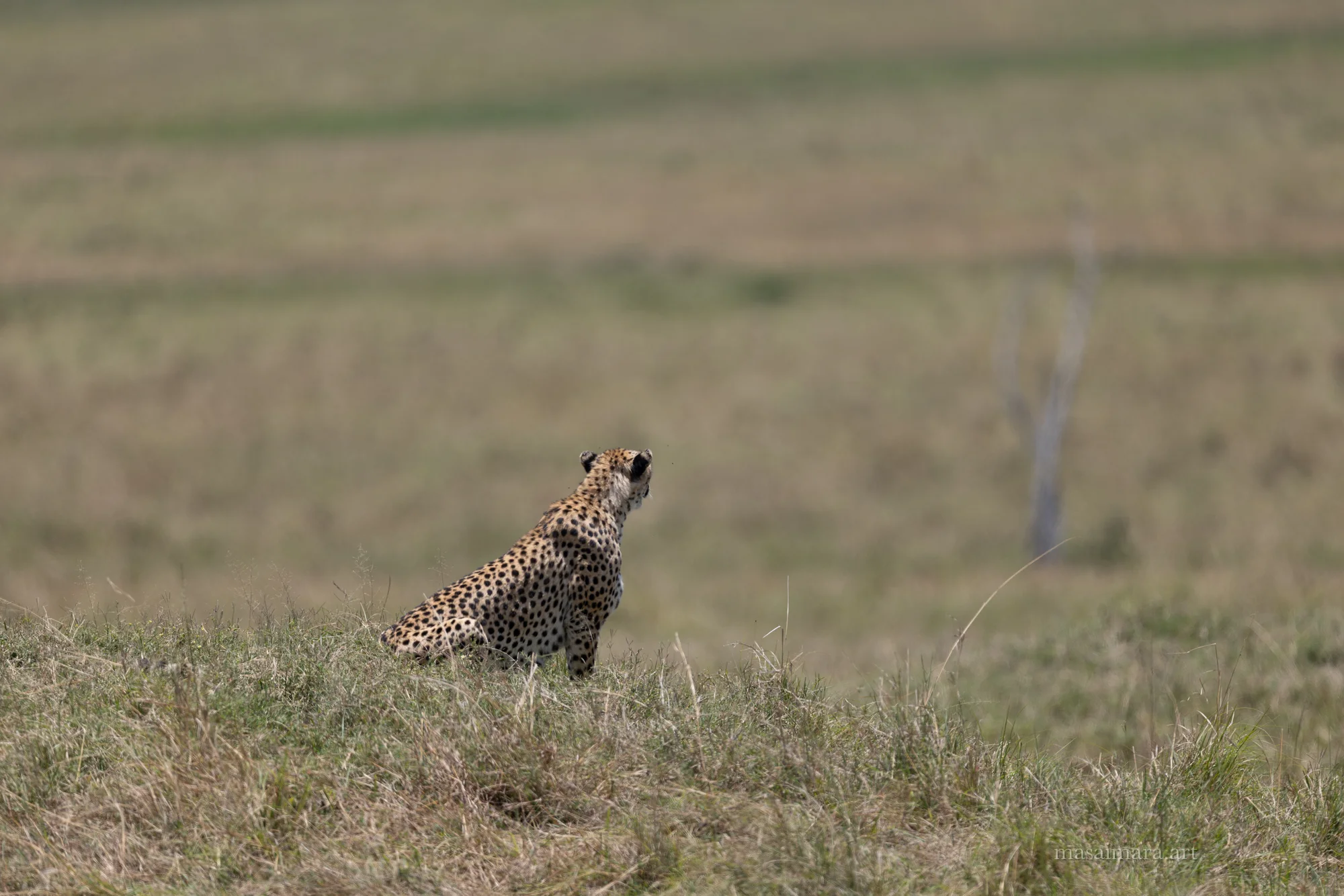
The watch resumes. Sitting up in long grass, head turned to scan, the plain extending behind — the lens is patient with the long stretch of looking-like-nothing, and the cat is patient with it back.
She sits up. The whole plain reappears — the grass stretching out behind her, the herd somewhere in the distance, the cat upright and watching. From here a long watch holds.
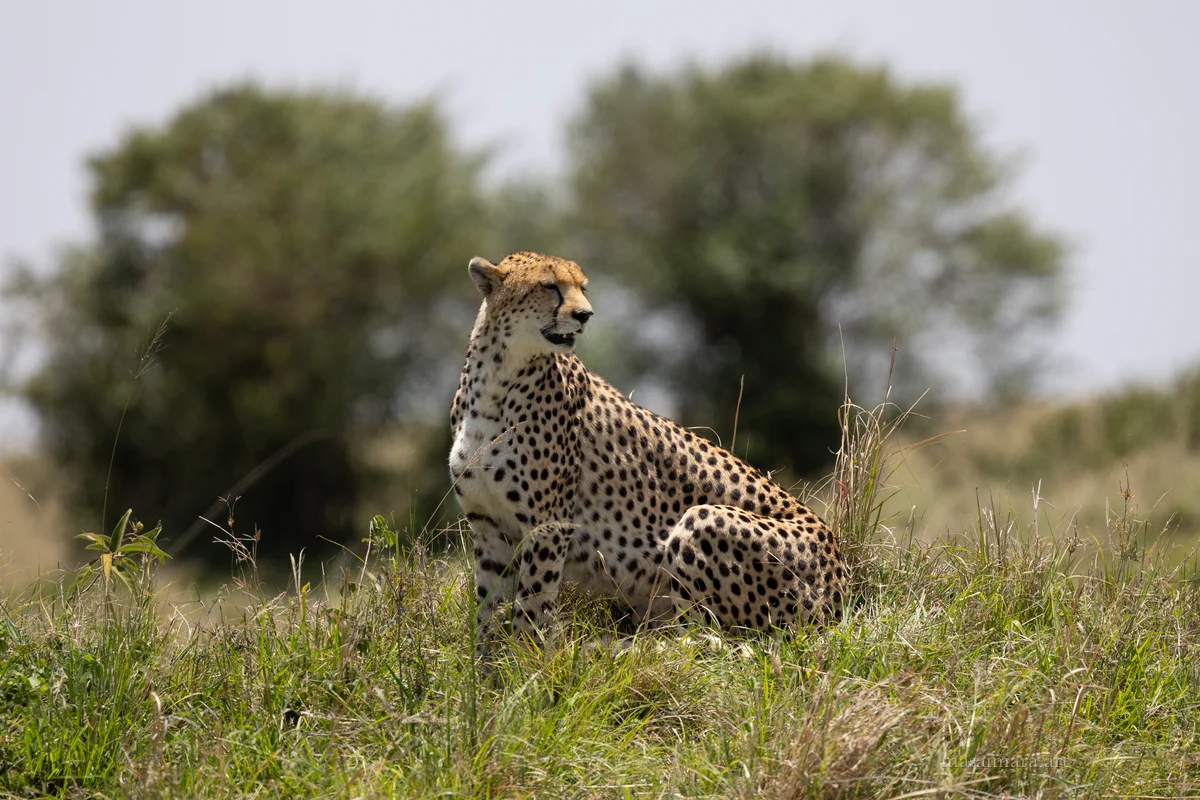
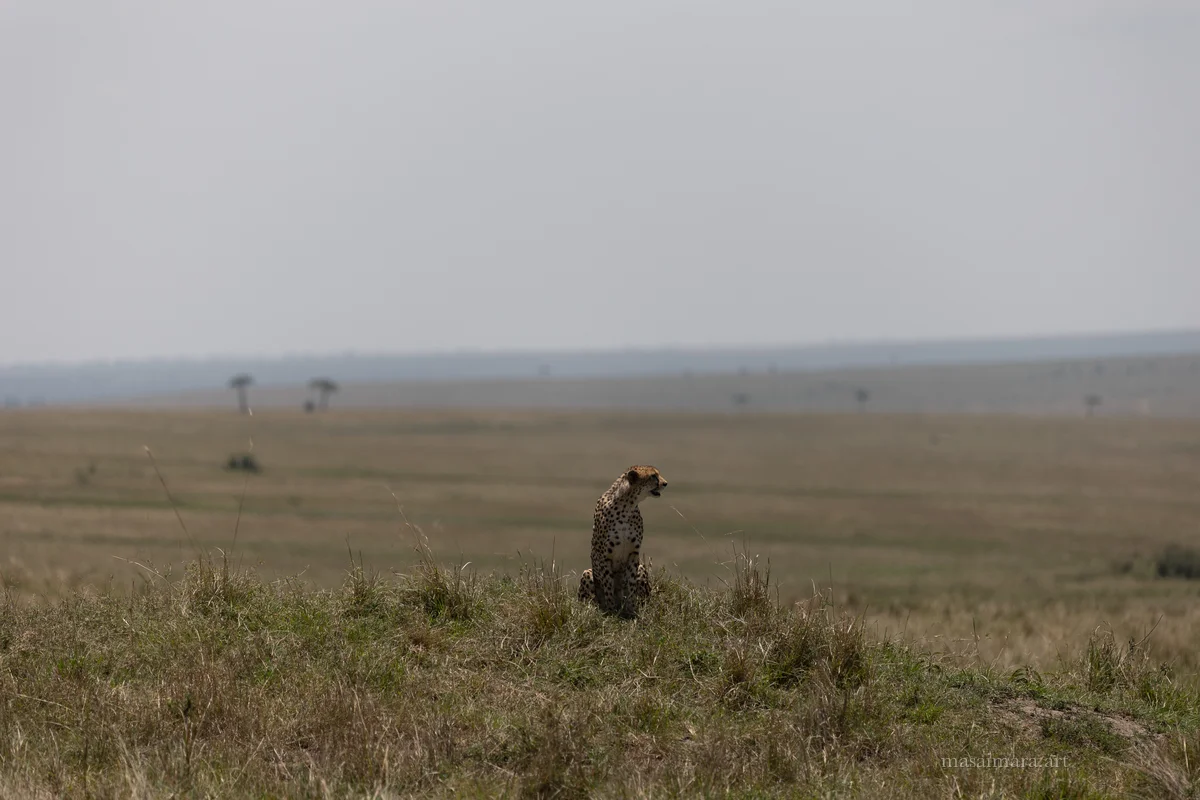
The wider lens holds her at distance — upright on a low rise, nothing else moved, the plain reading as miles deep. Professional patience: the kind of stretch where neither the cat nor the photograph is doing anything visible, and both are doing all the work.
Standing tall, mouth open in a long pant. The hour has cost her something visible — the breath, the slight droop in the shoulders, the head no longer quite as steady. A termite mound becomes the working pulpit. The held breath before the sprint.
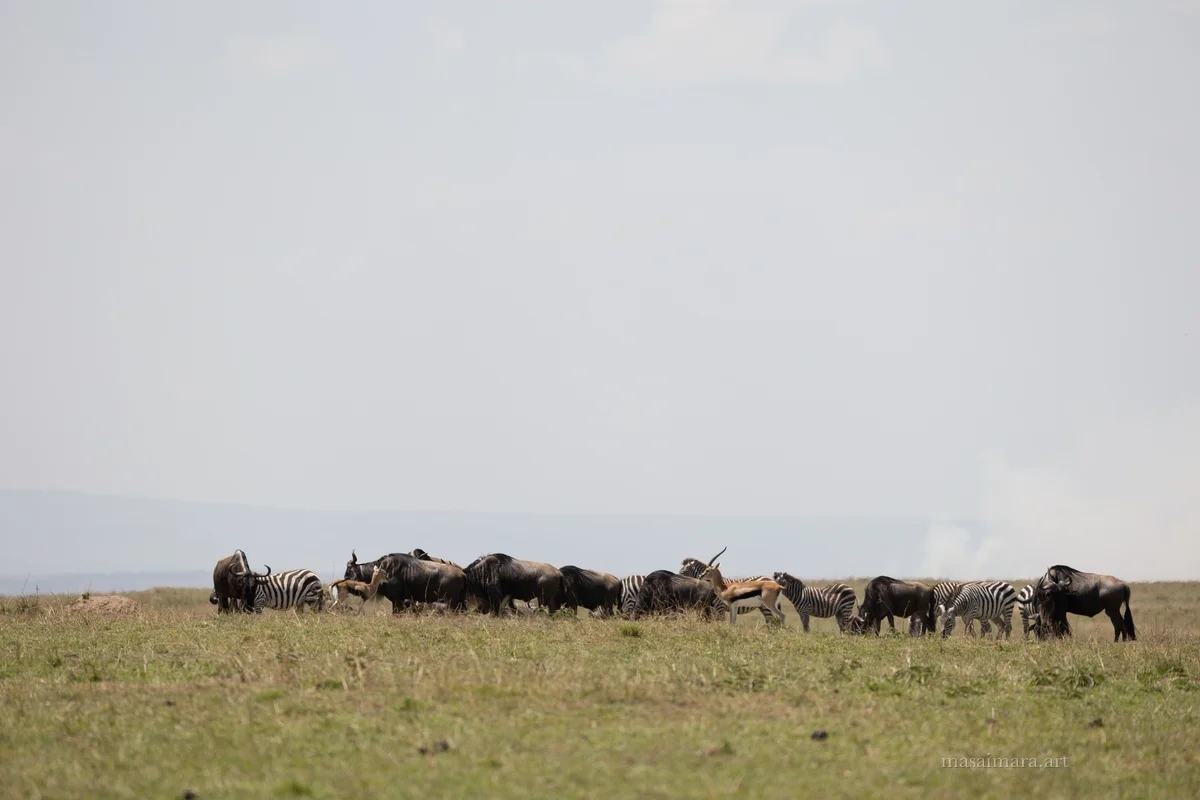
The wider lens names the prey at last. A herd — zebra and wildebeest threaded across the middle distance, an adult Thomson's gazelle and a fawn somewhere on a bare path between them. A second animal, finally declared.
“The hour has held. The decision is one stride long.
”
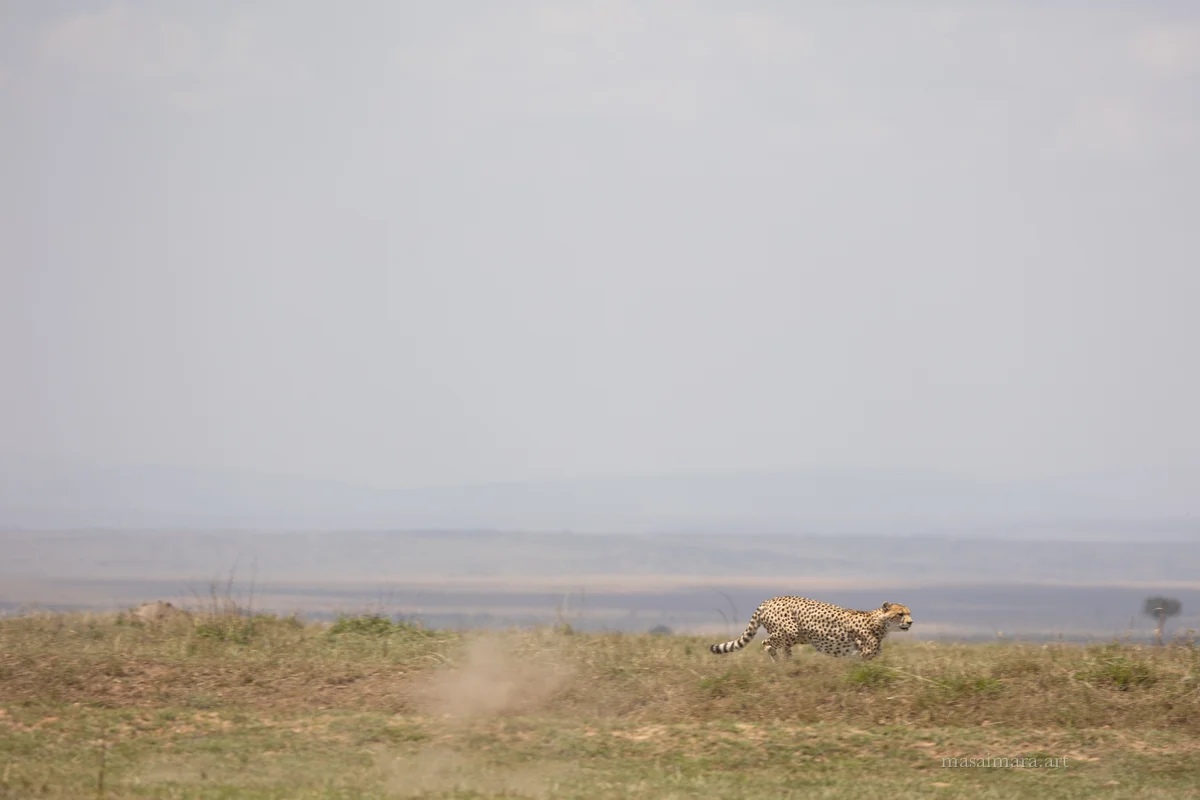
The sprint. Mid-stride across a low ridge, dust trailing low behind her — the burst is one frame long. The picture has finally been given an event.
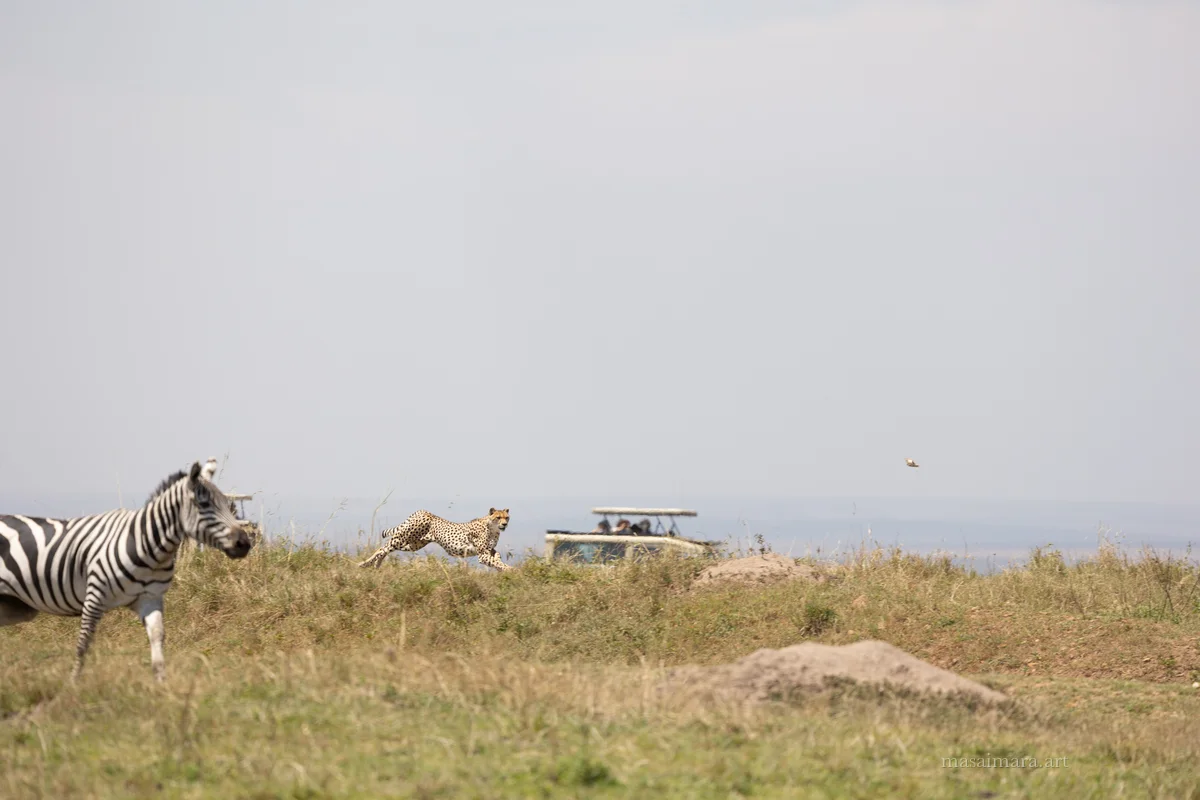
The catch, with company. In a single frame she has the fawn in her jaws, a zebra is already galloping out of the corner of the picture, a safari truck is small in the background. The herd's reaction is the proof of the work.
The carry. The body is relaxed; the fawn is soft in her jaws; the frame is gentler than anything the rest of the afternoon was. The hour has finally ended; the next hour, with food in it, has begun.
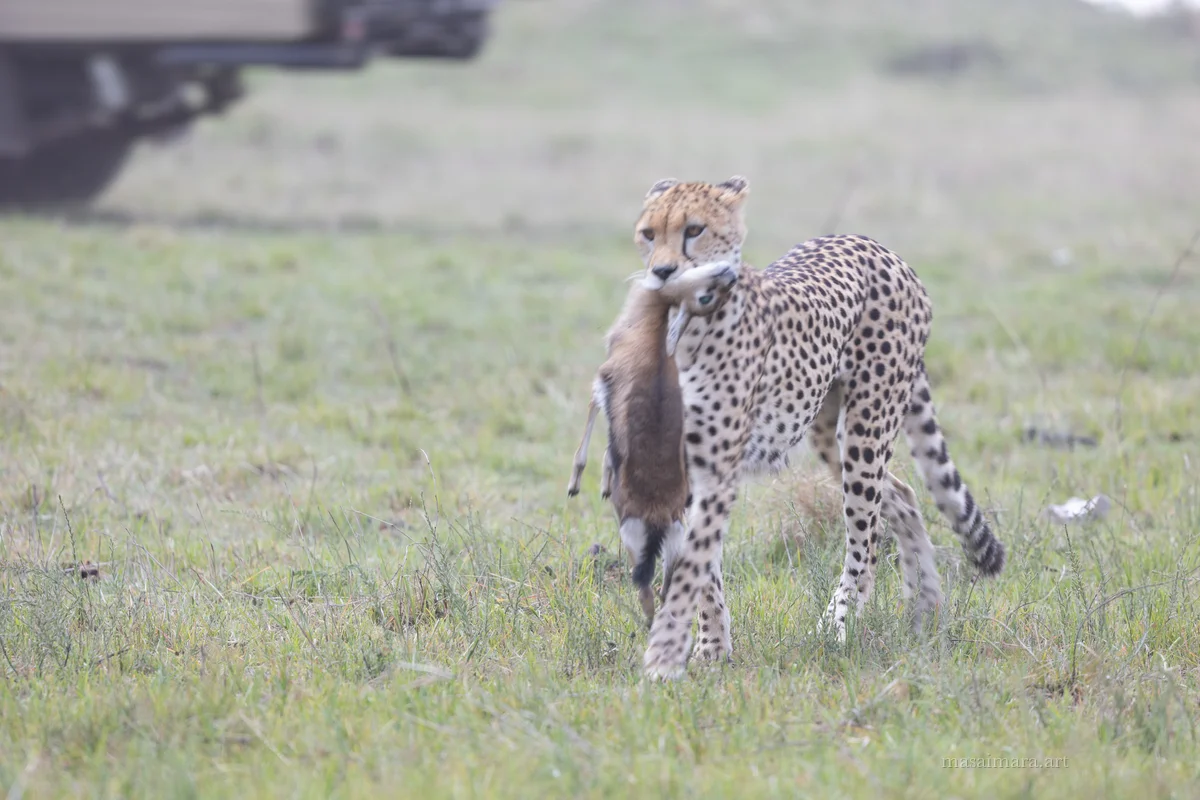
A long held breath through the hottest hours of one day. Three quiet quarter-hours, three short sprints, the catch, and the carry that finally let the afternoon end.
- Camera
- Canon EOS R5 Mark II · Canon EOS R6
- Lens
- Sigma 500mm f/4 DG OS HSM Sports · Canon RF 70–200mm f/2.8 L IS USM Z