slow-encounter
Consort
Hard midday. The act. The walk back, past a herd that does not lift a head.
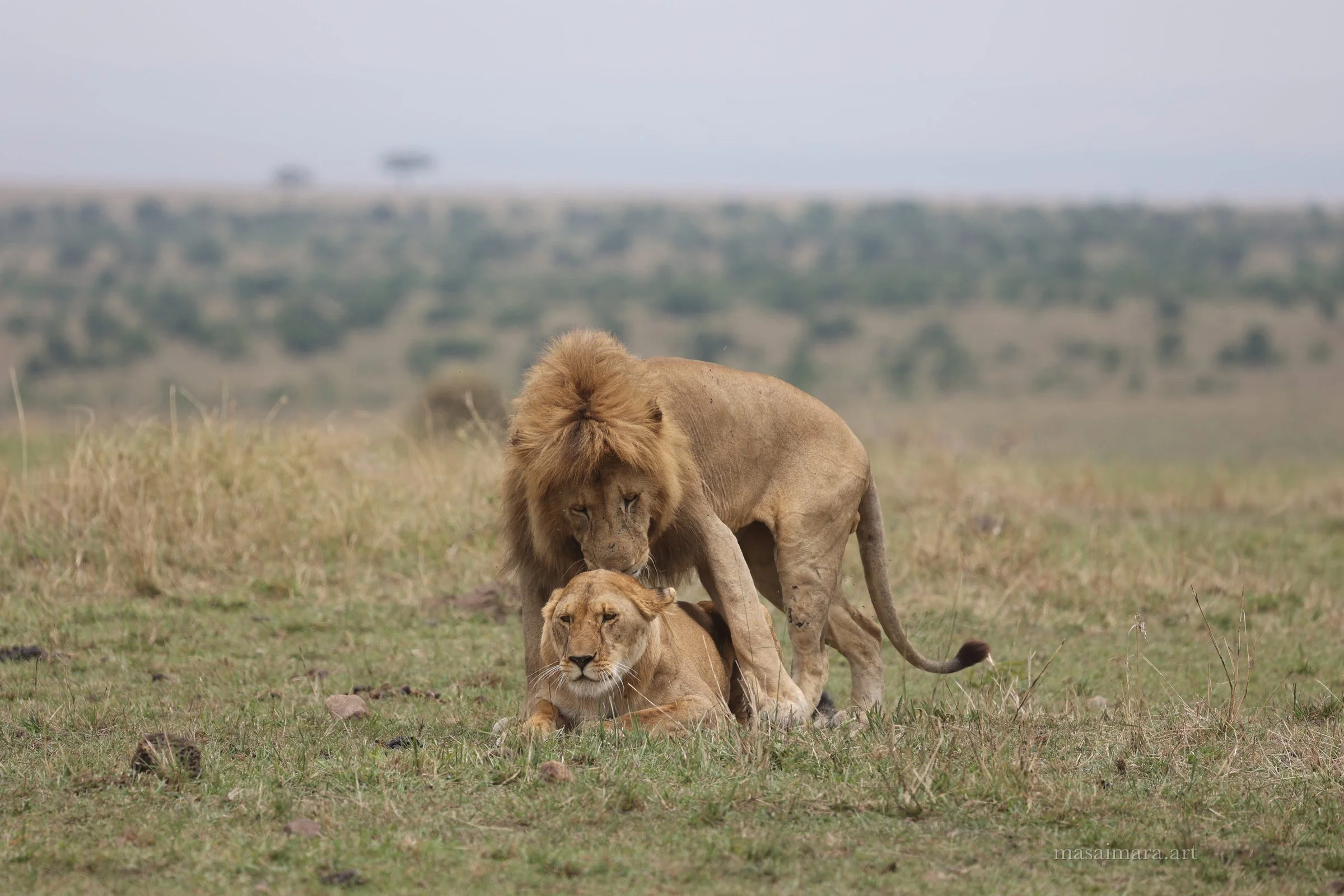
The frame is direct. He stands behind her in low grass, head down to her body, the whole horizon admitted past them — there is no bush to soften the geometry. The light is hard and the colour of dry summer. The lens does not look away.
The bite at the back of her neck arrives without warning, and her eyes have already closed when the camera admits it. The whole act is brief — a single short burst across a handful of frames — and then he is standing again.
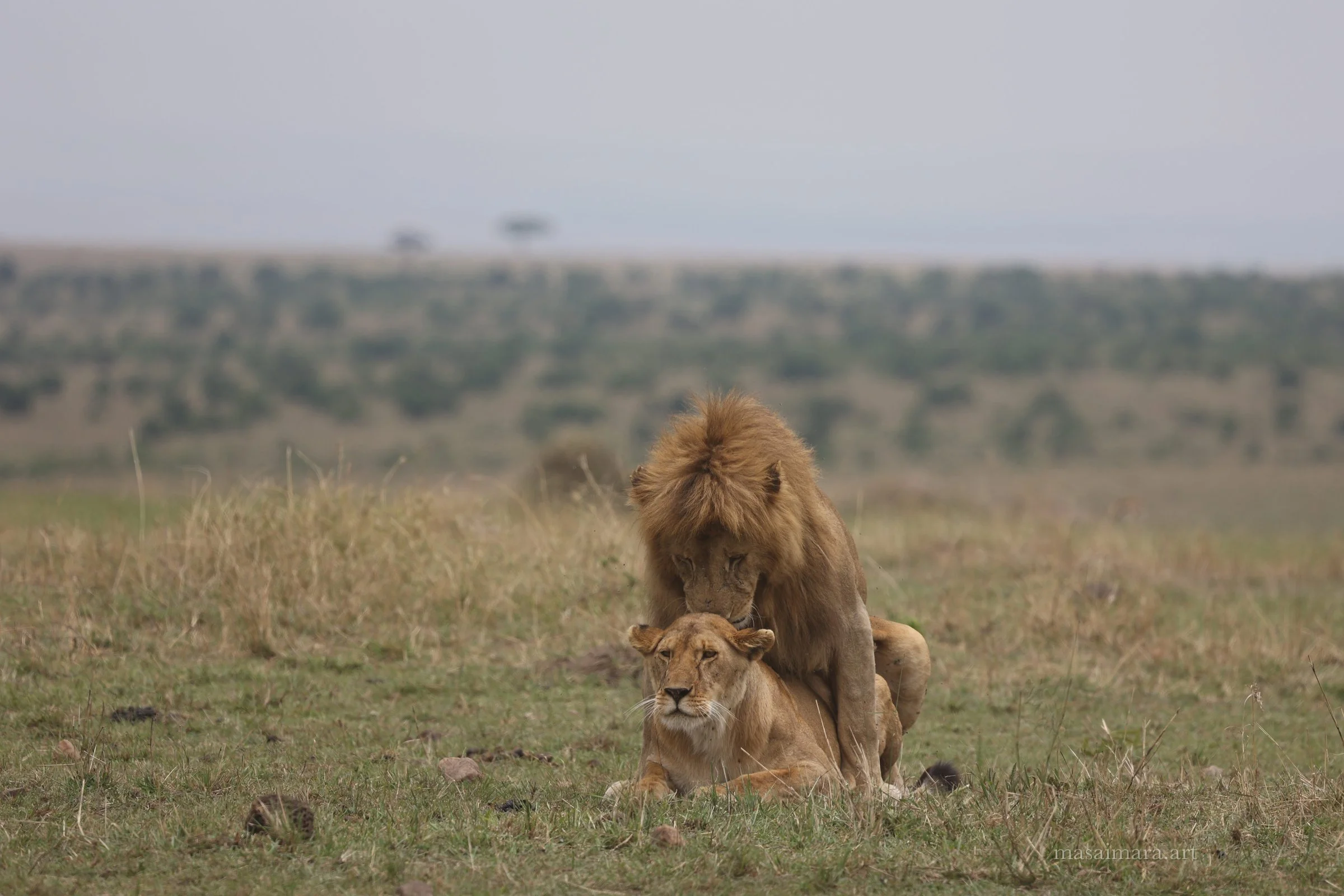
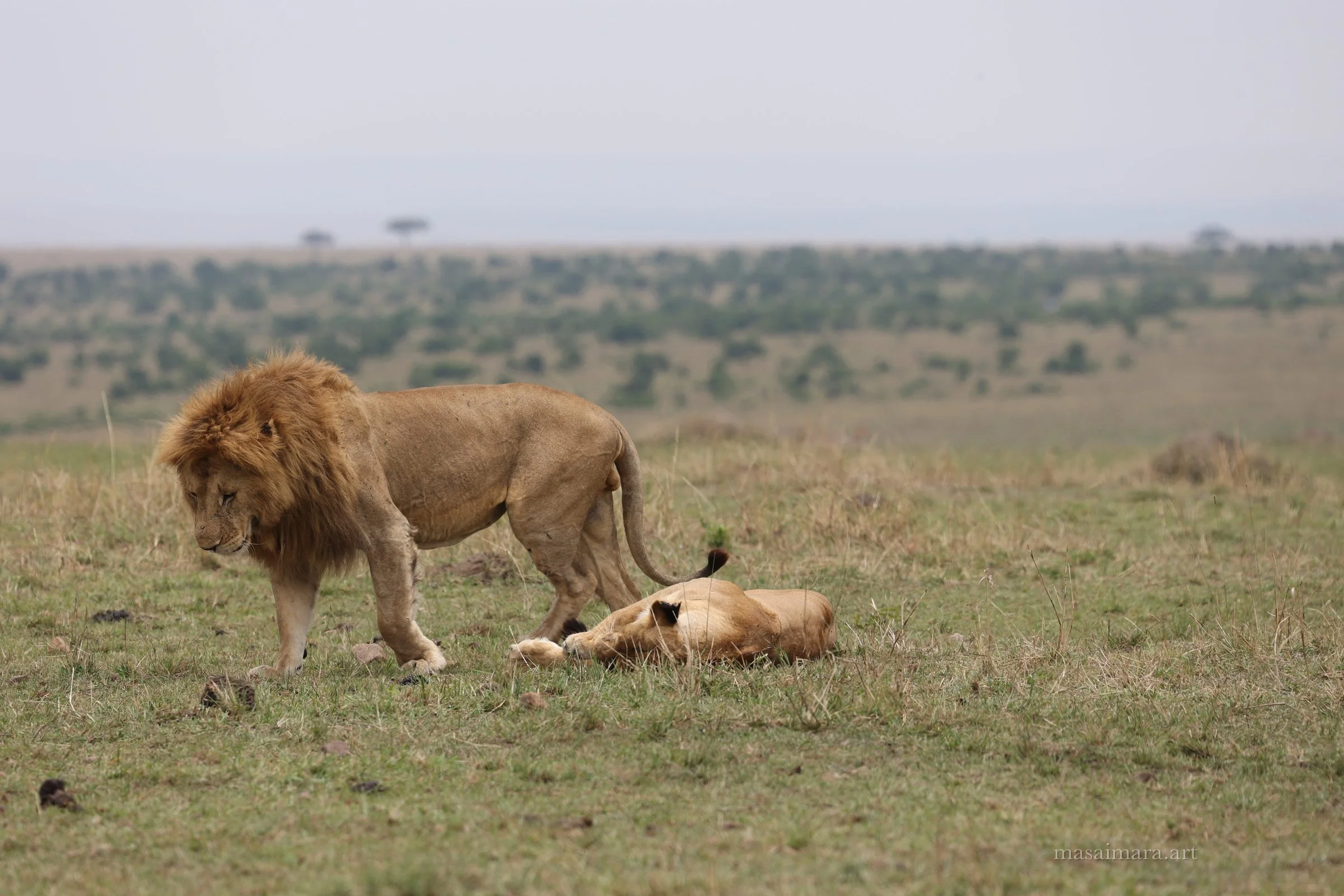
The dismount. He is standing, the body relaxed, the head down to her; she is flat in the grass, ribs slack, eyes shut. A frame later they are lying parallel — his mane against her flank — and the act is already domesticated into its afterwards.
The wider lens turns away. A small herd of zebras has been stepping across pale grass somewhere off the shoulder of the act, indifferent to all of it — admitted as the day's other content, neither commenting nor pretending the comment is not being made.
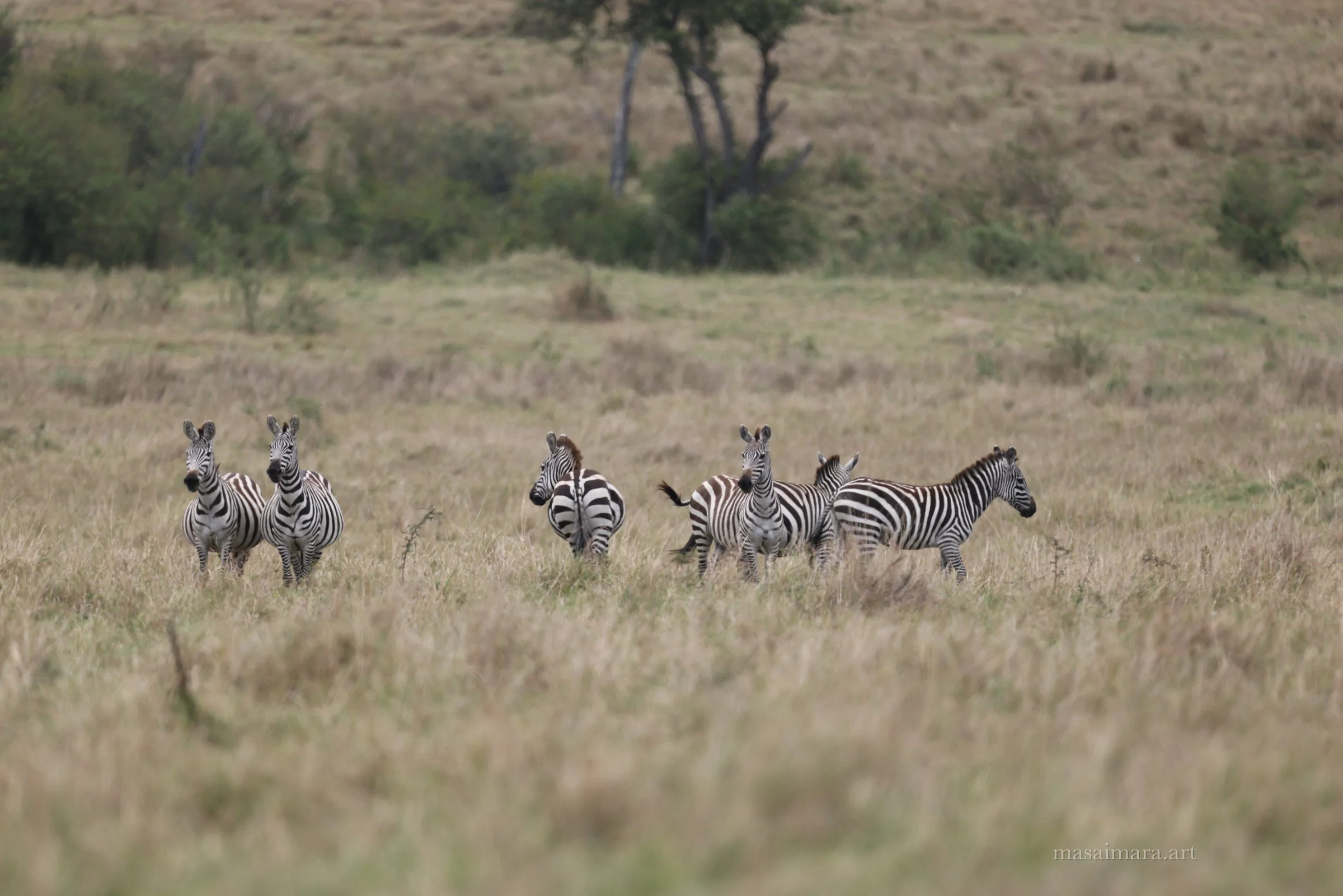
“The afternoon belongs to the herd. She just happens to be in it.
”
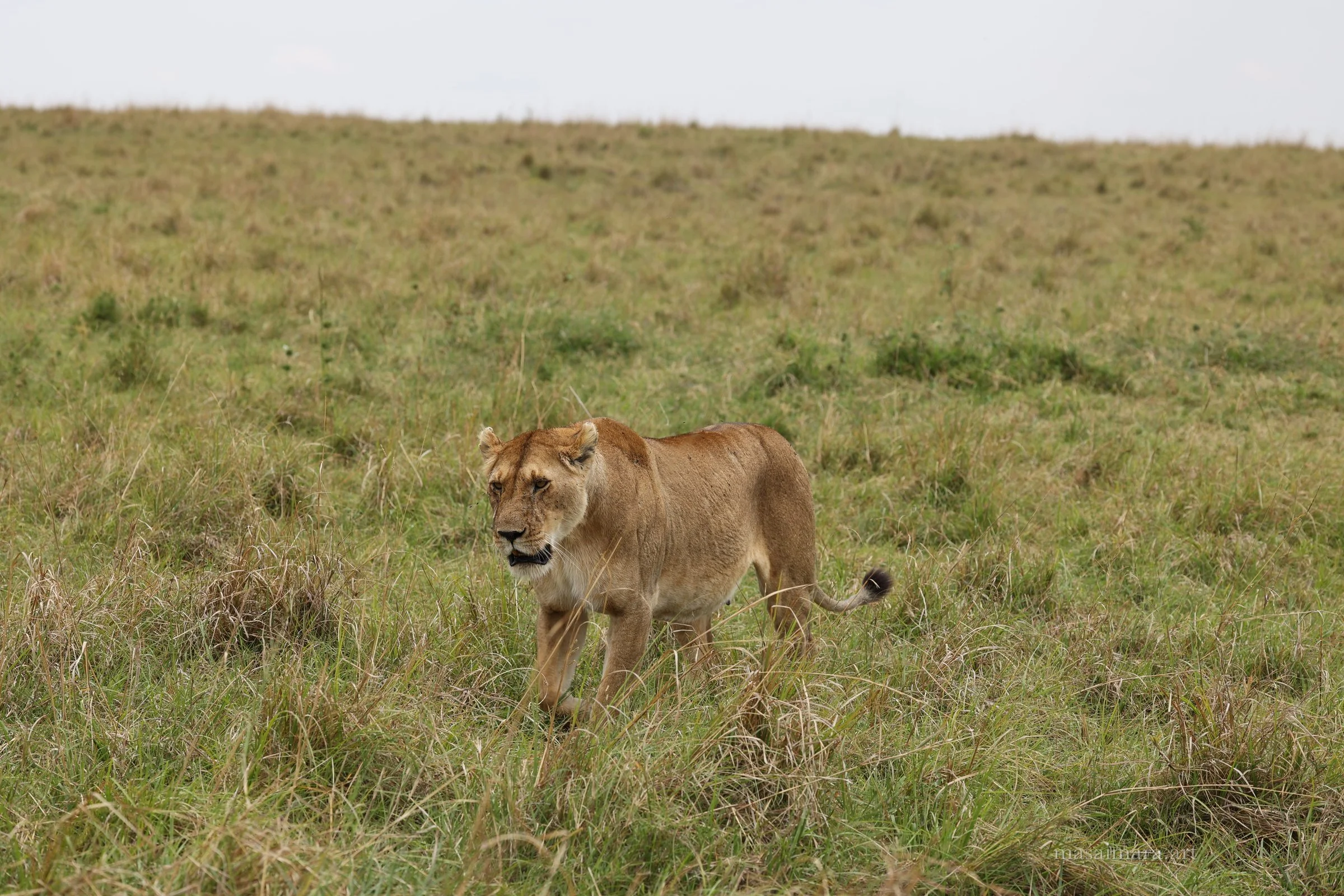
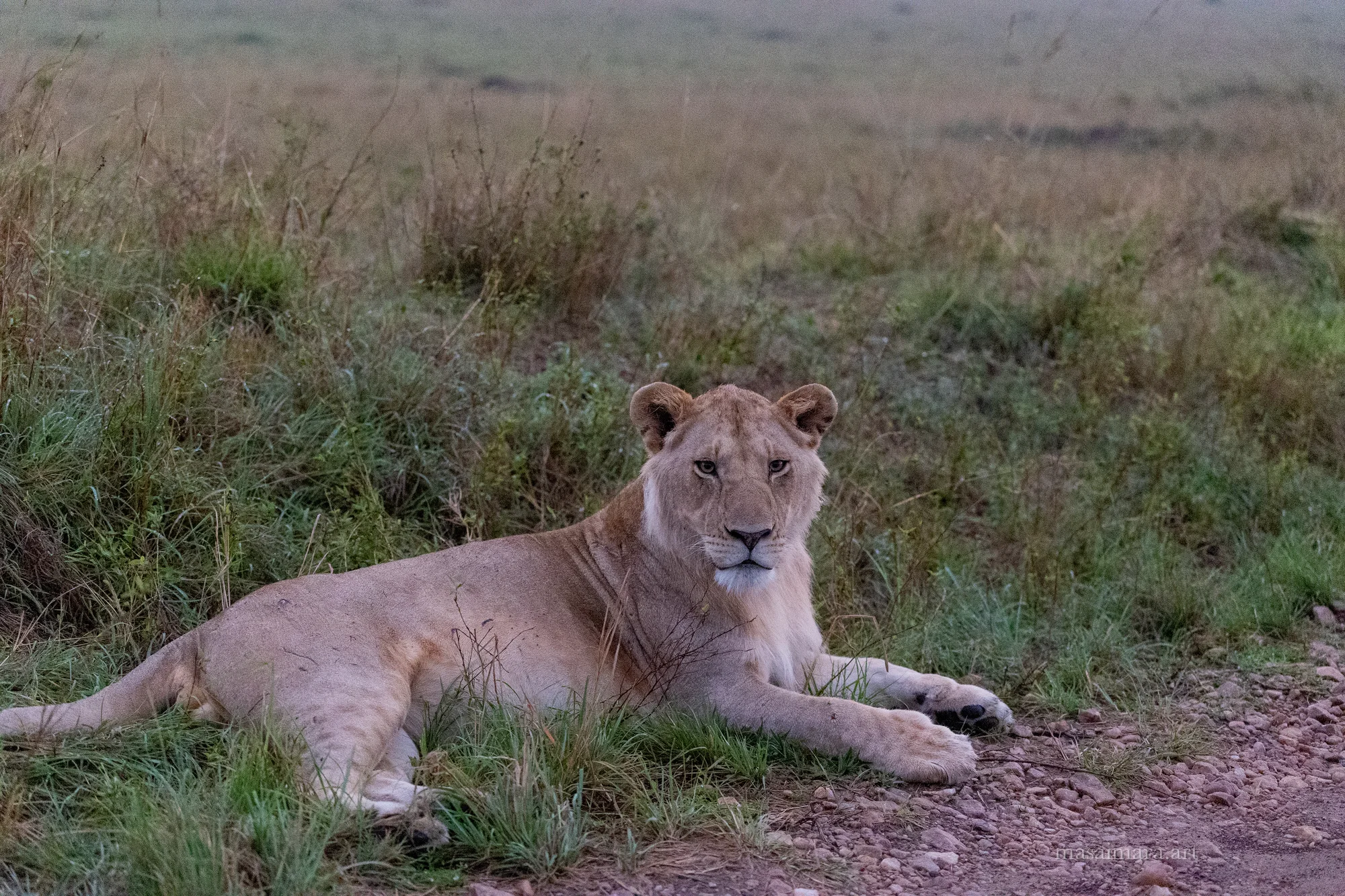
She is up. The male has dropped out of the frame and stays out of it. The lens follows her instead — head-on through the stalks, profile a beat later, mouth open in a long flehmen, head-on again at different distances. The afternoon has narrowed to a single body moving across short grass.
A working portrait, finally. She has stopped, the body squared to the lens, the head turned slightly. The closest thing the afternoon will give to a still frame between act and walk.
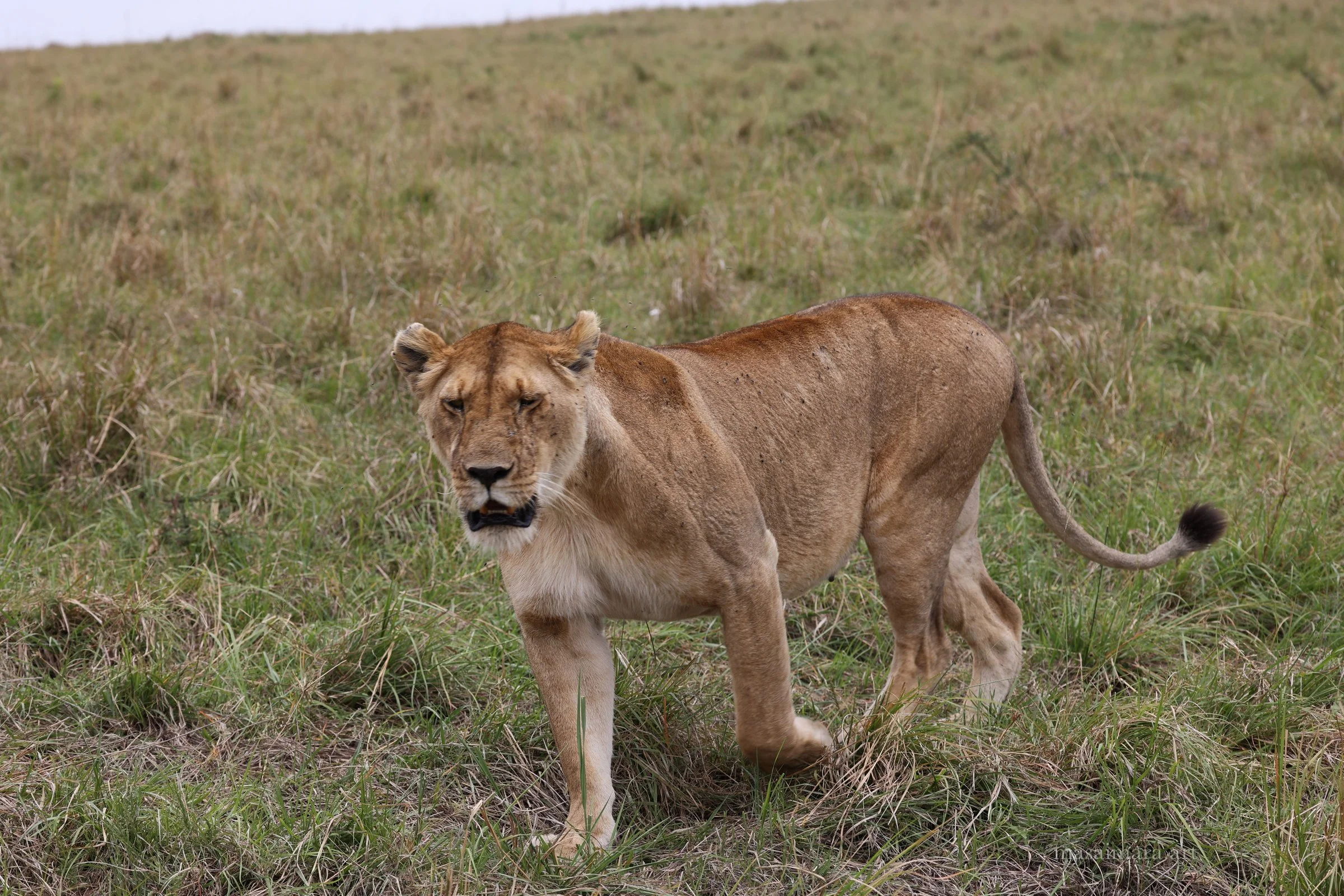
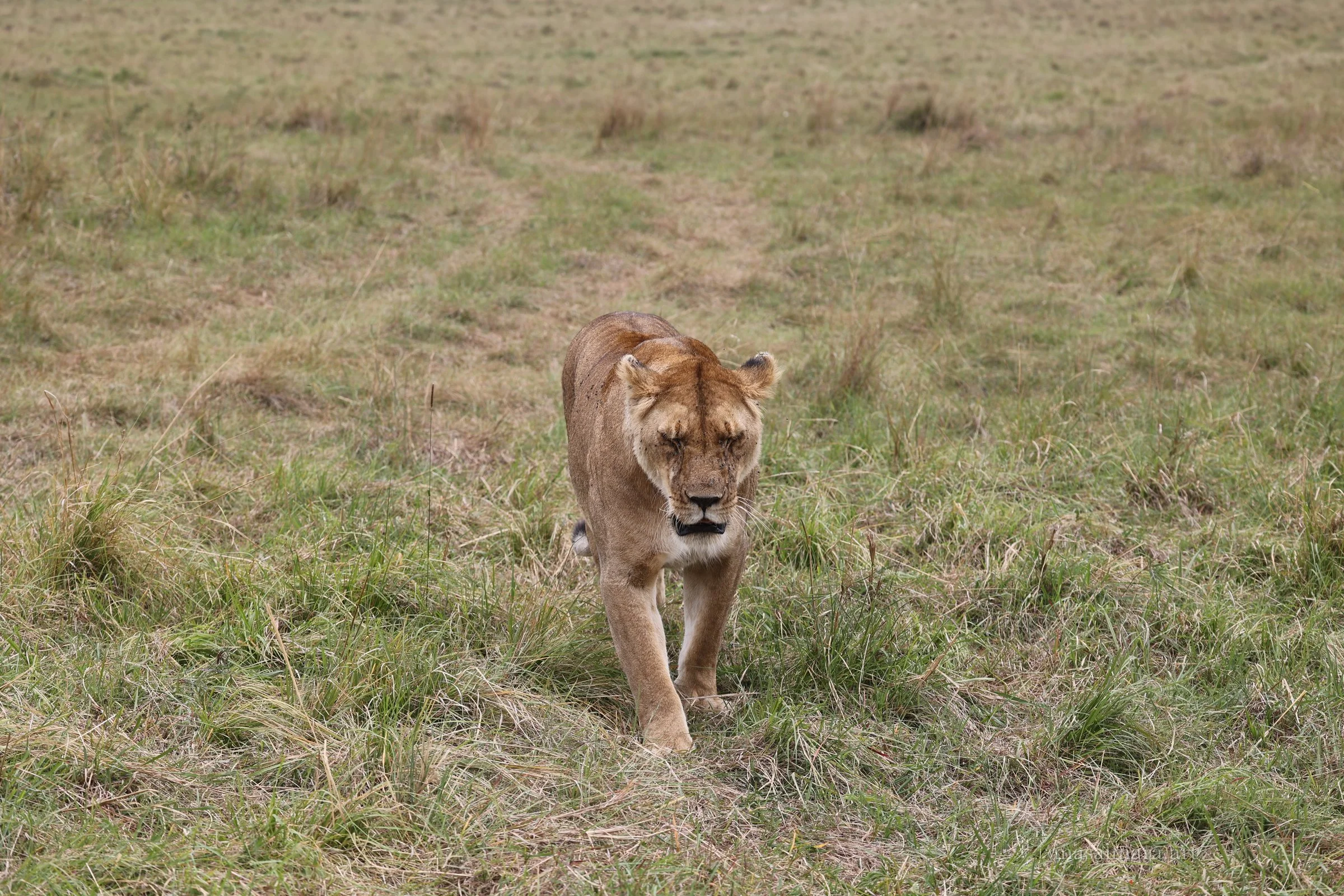
The wider lens widens. A safari vehicle is on the horizon, very small; she is in the foreground, walking on, the whole picture suddenly an exercise in how much room a plain can hold without anything important happening in it.
The frame gets fuller. A line of wildebeest steps across the middle distance, four trucks parked behind them, and in the front of the frame the same lioness — undisturbed, undisturbing — walks past all of it. None of the herd lifts a head; none of the trucks moves. The whole afternoon admitted, and what the afternoon is willing to admit her into.
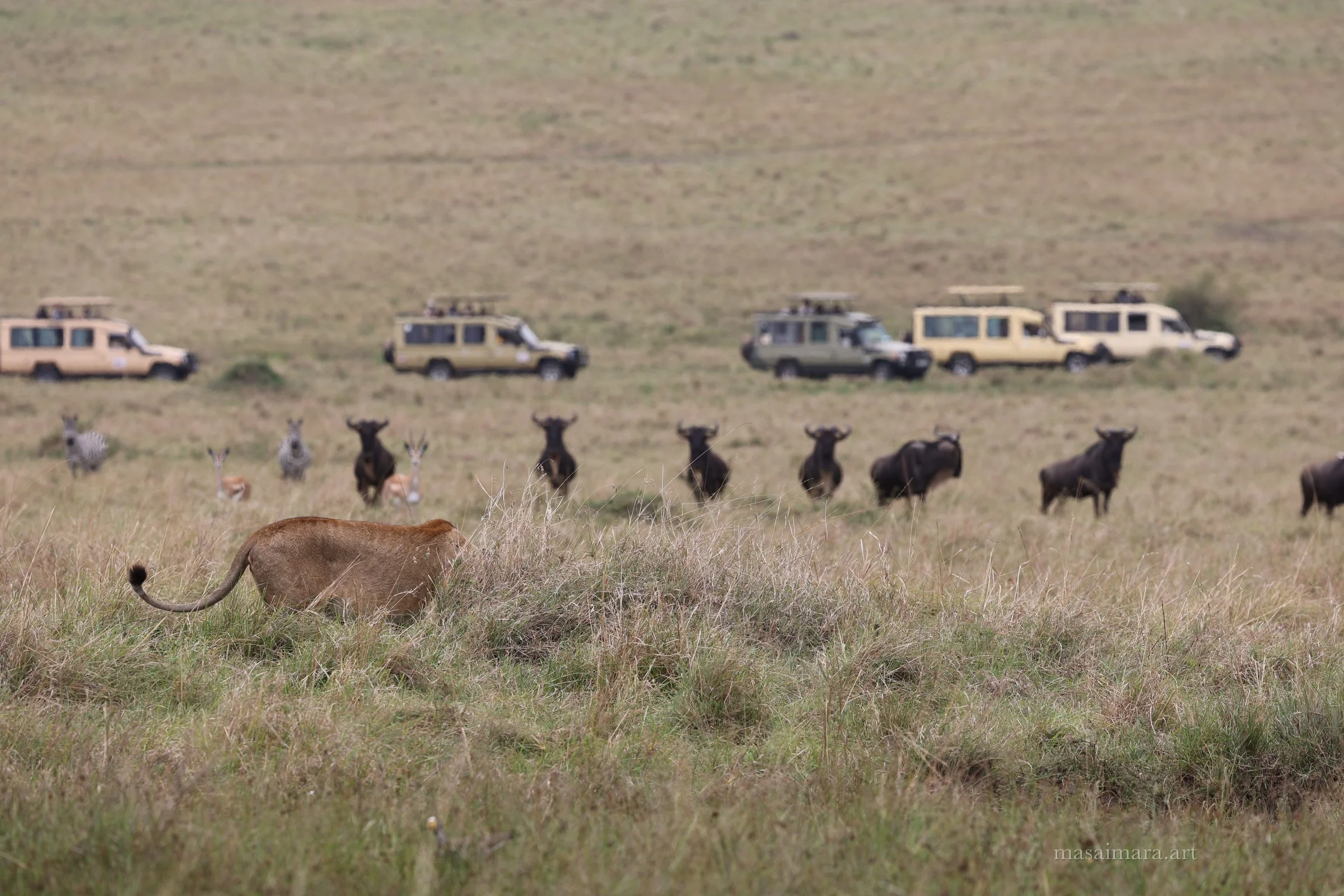
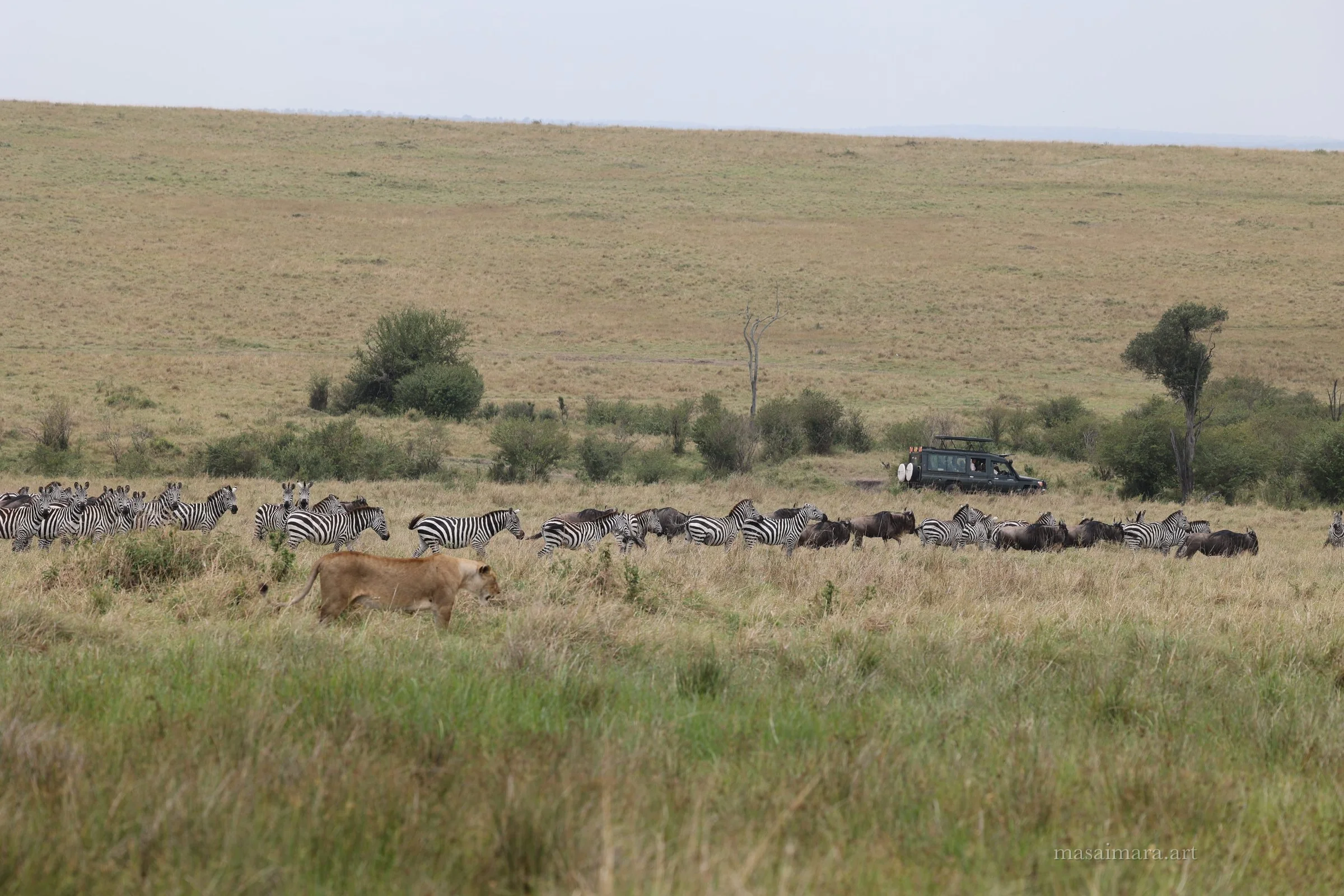
The last frame is only her, almost out of it, moving on across the grass. There is no event in it. There has not been one for a long time.
Hard early-afternoon light, dry pale grass, a long horizon that admits both the act and its immediate indifference. The Rekero pride.
- Camera
- Canon EOS R5 Mark II · Canon EOS R6
- Lens
- Sigma 500mm f/4 DG OS HSM Sports · Canon RF 70–200mm f/2.8 L IS USM Z