slow-encounter
Giraffes
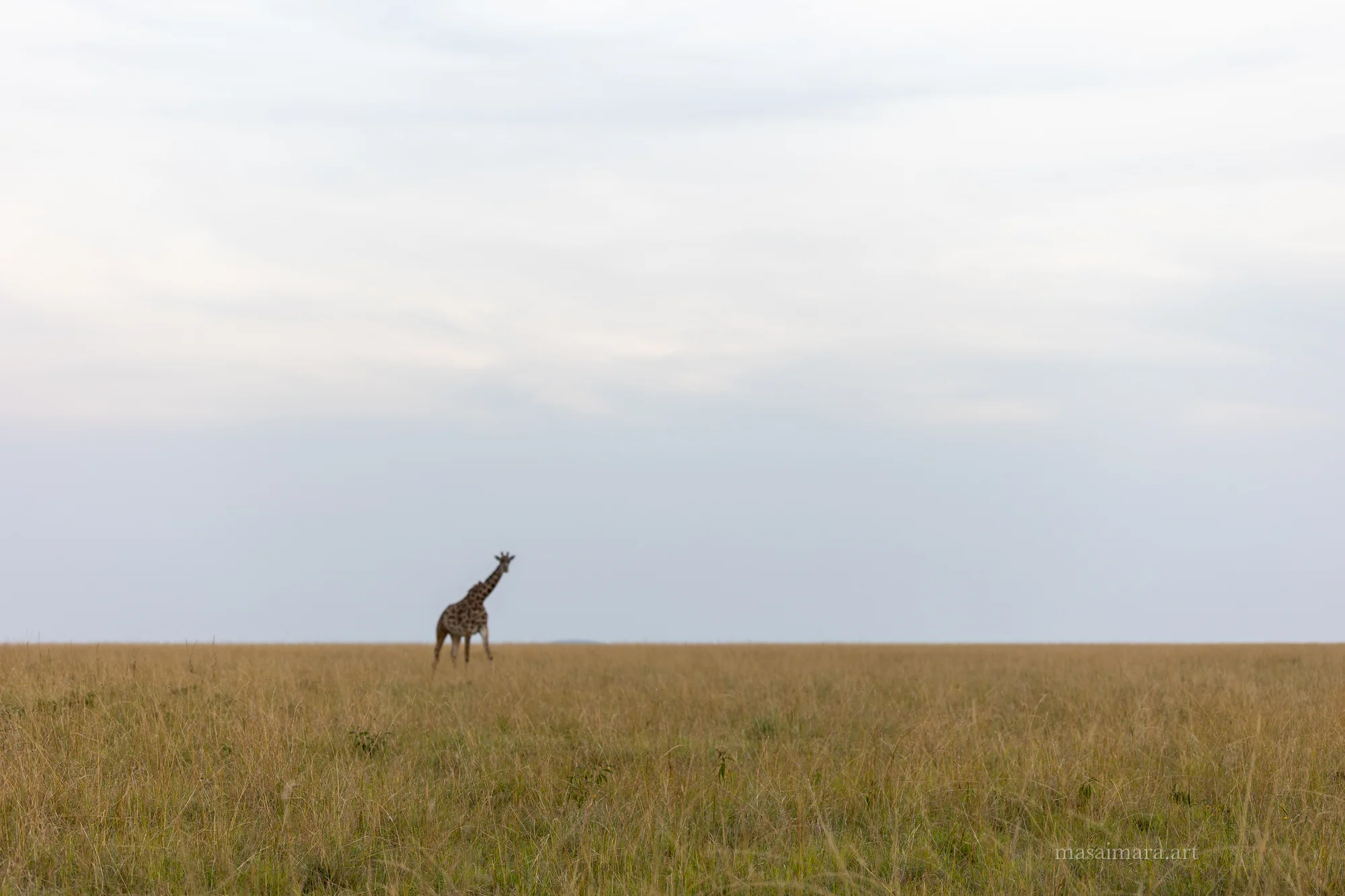
The afternoon hands the giraffe the horizon, then the foreground, then the picture.
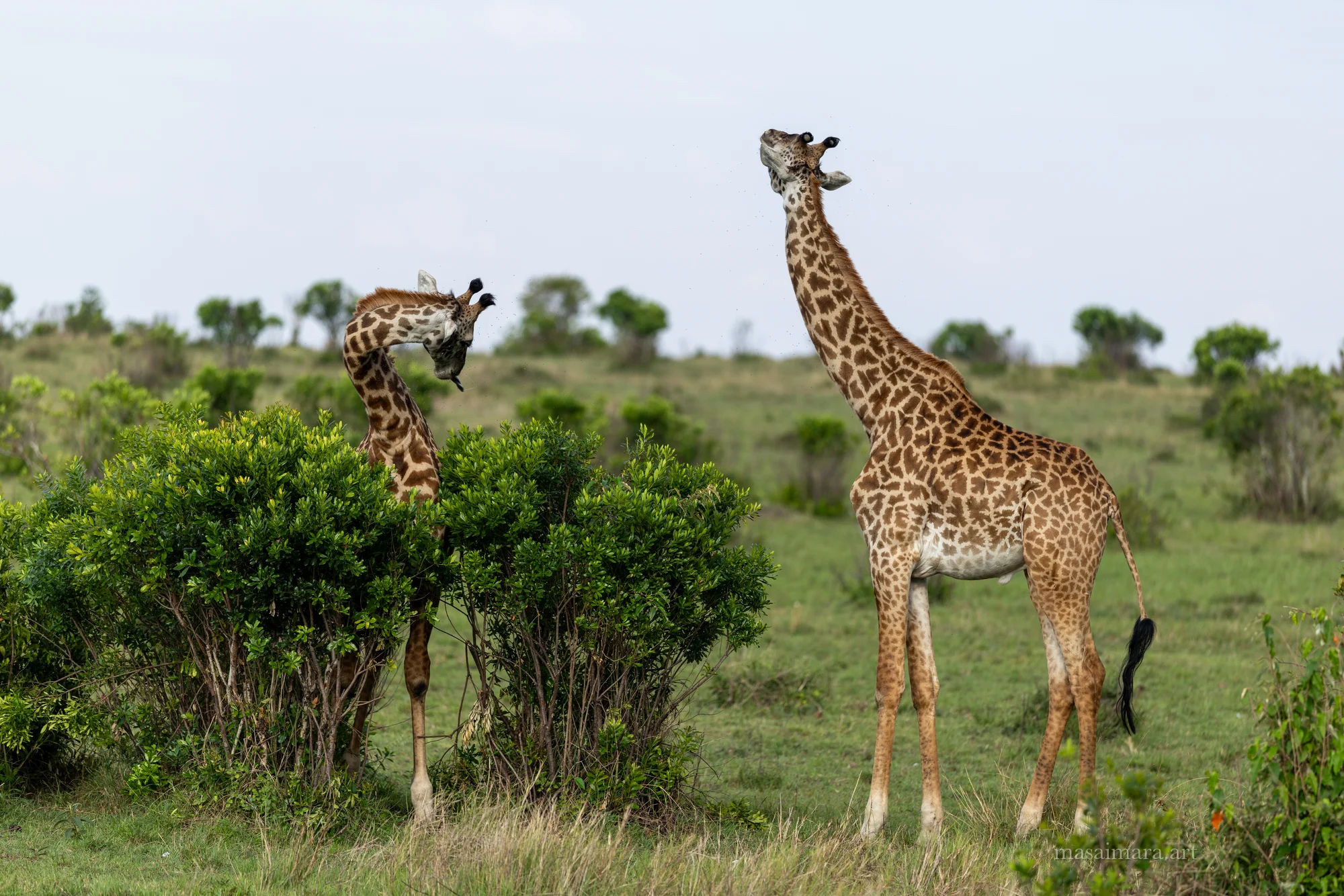
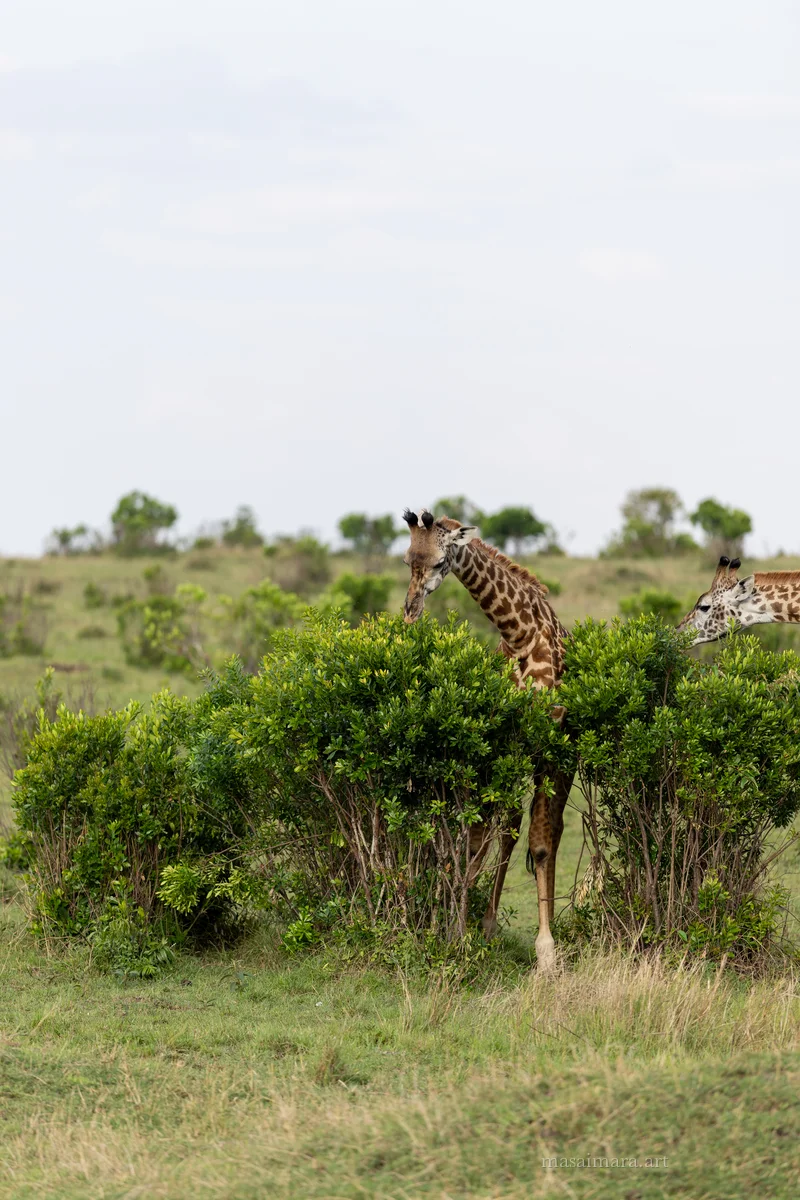
The afternoon opens with two of them at the same bush — one head buried in the leaves, the other a long pale neck rising past them, head raised into nothing in particular. More tree than animal, which is the kind of frame giraffes usually want.
The camera tightens. The animal disappears head-first into the thornwood; a second giraffe drifts past at the far edge of the bush, a paler echo of the first. The bush is briefly the centre of the picture.
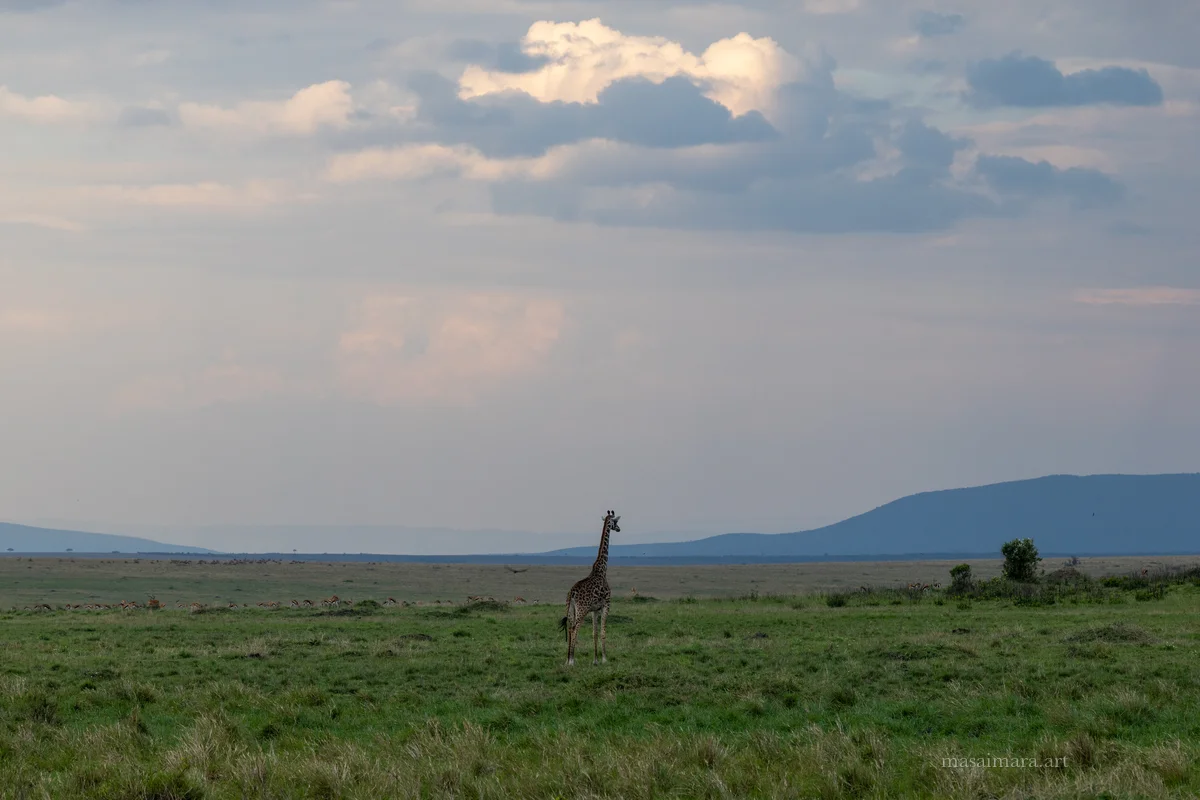
Step out. The animal is small in the frame now, the subject mostly weather and distance — a long pale neck rising into a stack of cloud, the blue hills holding everything together at the back.
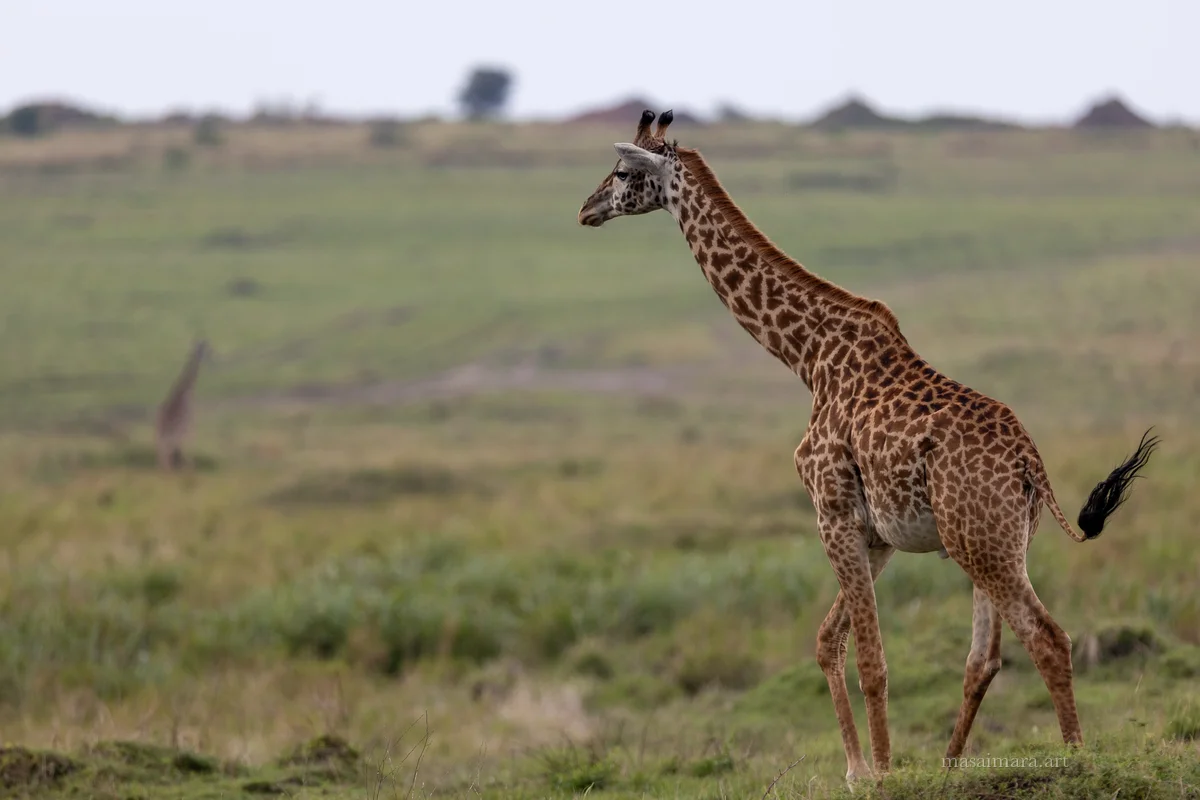
Two minutes on the longer lens. The same animal in profile, head up, the body composed against pale grass — another giraffe far enough back to be only a punctuation mark.
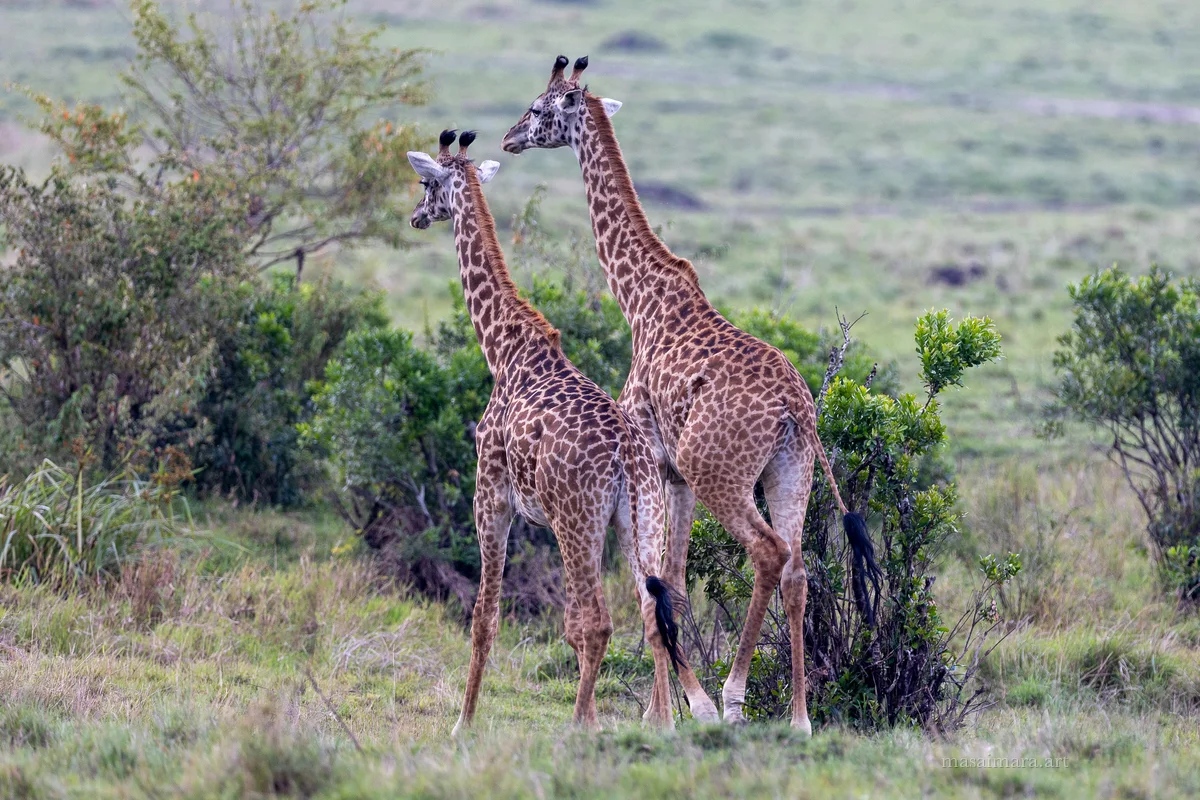
A second one joins. Both heads up, both turned the same direction at the same thing the camera cannot see — a paired silhouette in front of the low bush, a pause the field has decided is worth holding.
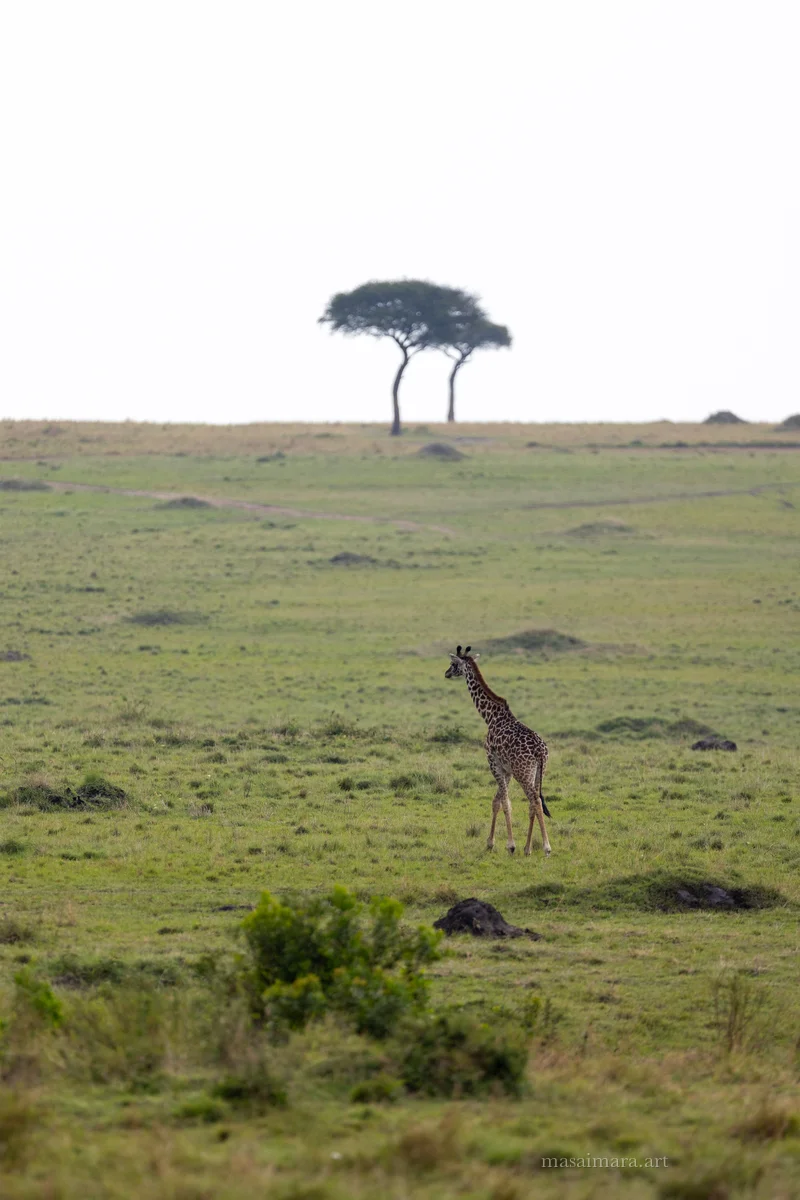
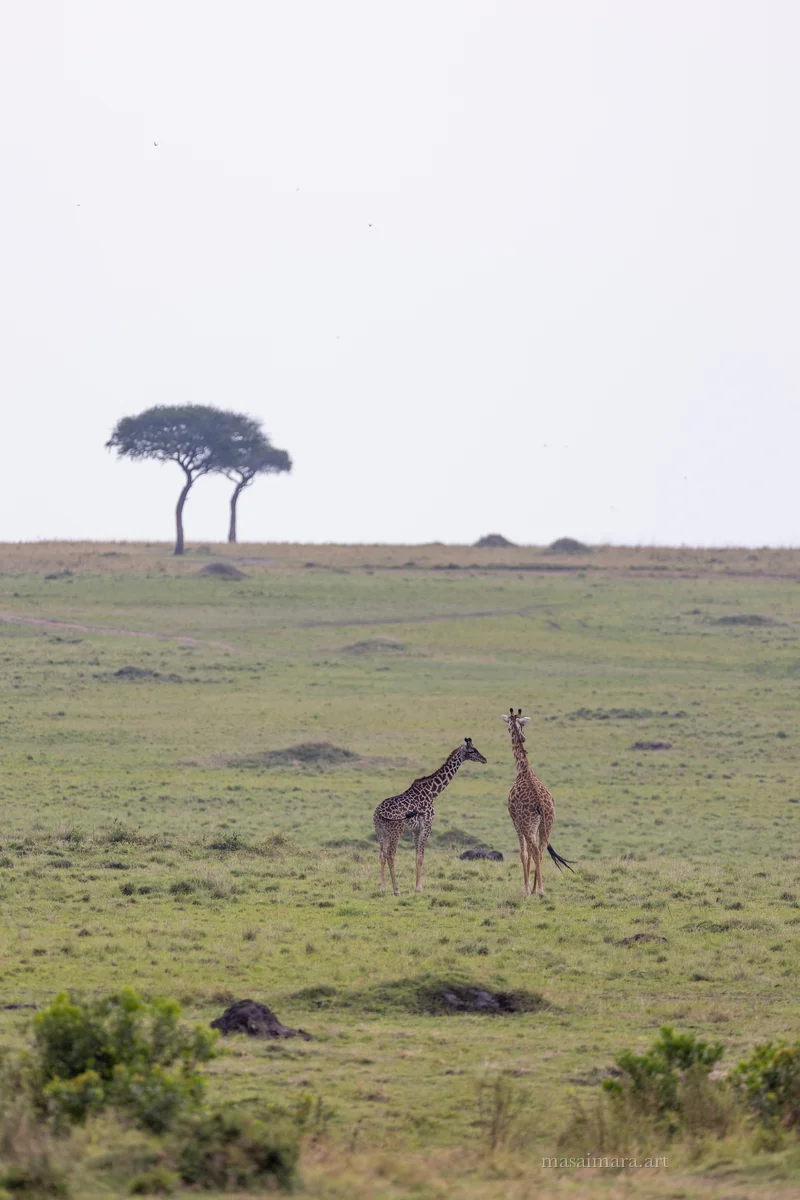
Two punctuation marks on the same line, then two animals beneath them — the acacia first, the giraffes catching up.
And the closing frame. The animal reads against a band of pale hills far in the distance, a thin line of antelope just visible at the left edge — the rest of the field finally allowed to share the picture. The afternoon has handed the giraffe the frame, and the giraffe — having spent its life inheriting the horizon — has accepted it without comment.
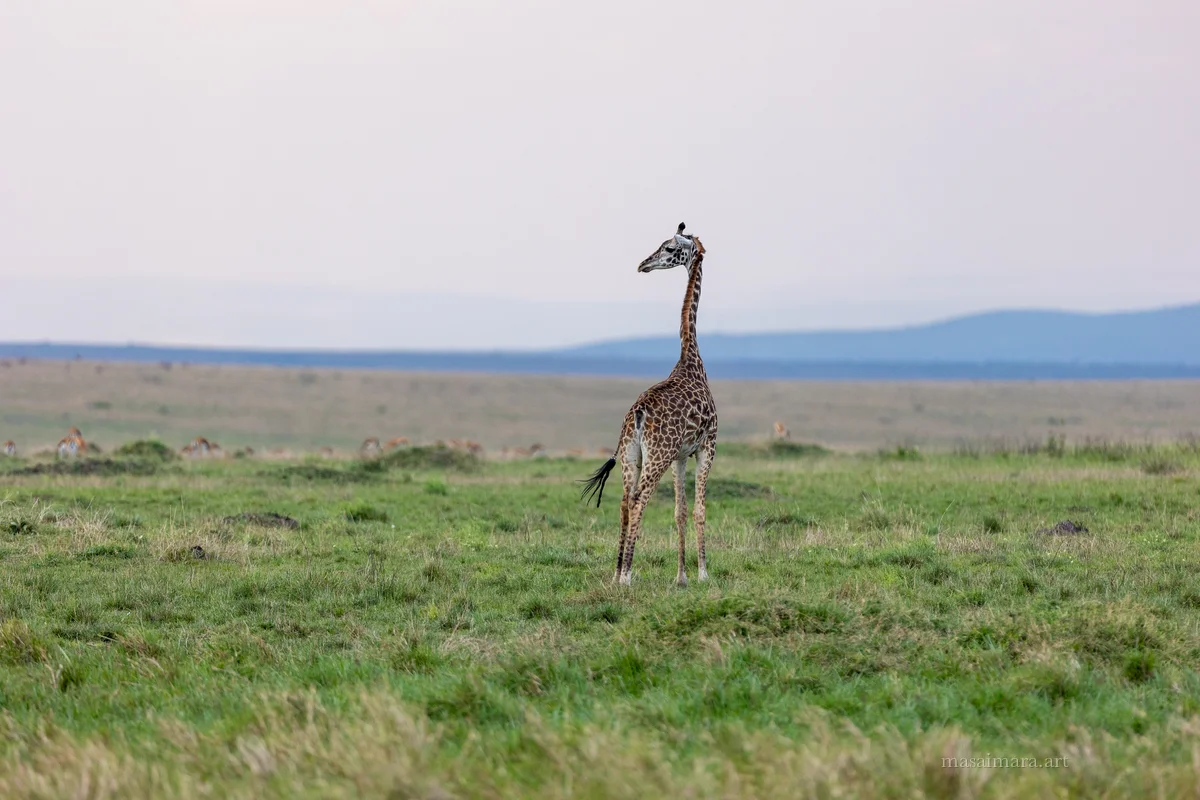
The day finishes by giving the giraffe the horizon, then the foreground, then the picture itself.
- Camera
- Canon EOS R5 Mark II
- Lens
- Sigma 500mm f/4 DG OS HSM Sports