solitude
After Dark
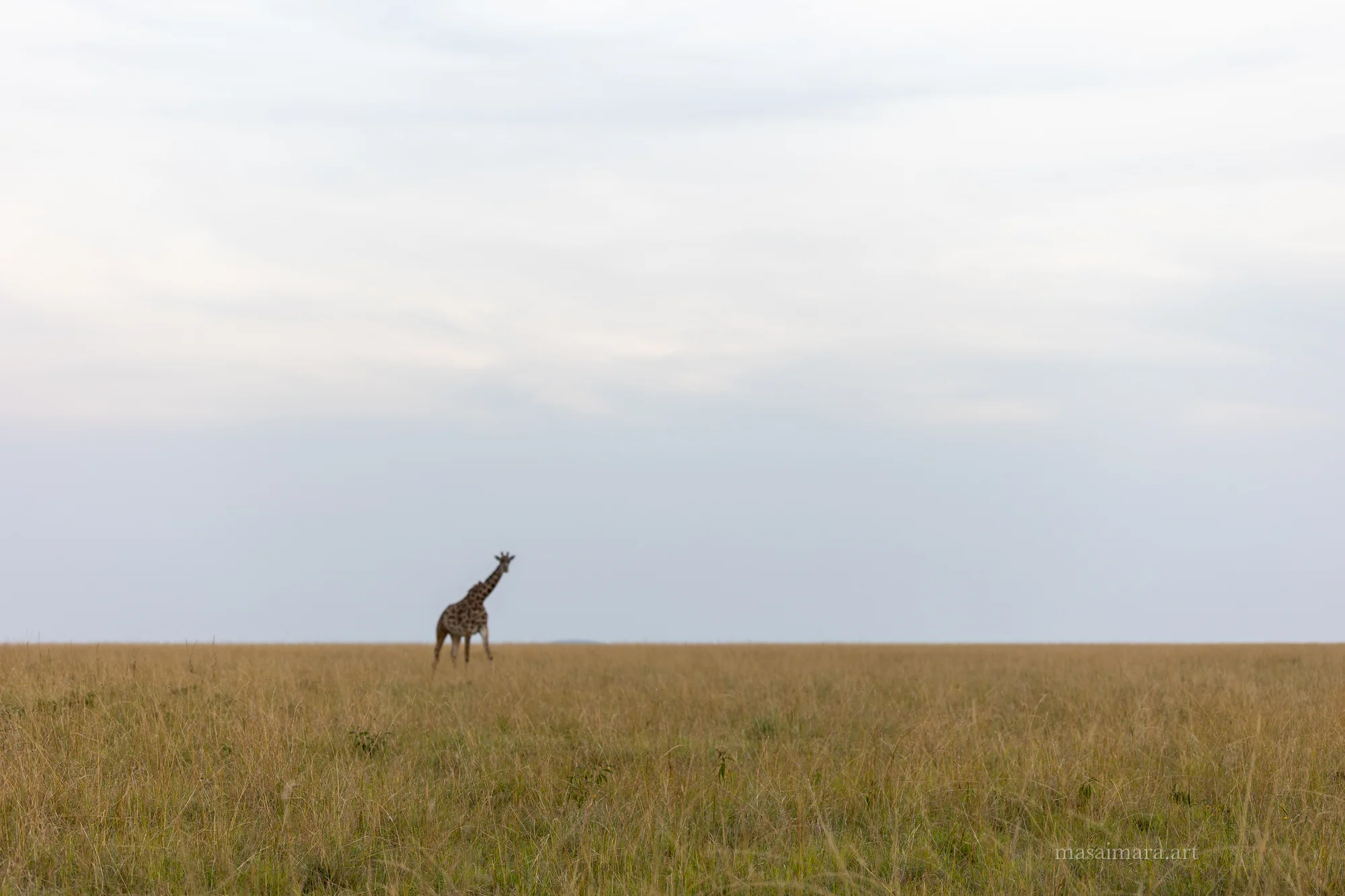
A giraffe at the edge of the picture, then nothing, then a male lion held against the last of the sky.
The picture turns to a giraffe. Small and centred, head clear of the horizon, the sky behind it the colour of nothing in particular. Twenty-seven minutes go by in a single edit. When the camera comes back to the plain, a male lion is on the ground at the edge of what the camera can still see.
He is out in the open. He has come from the bush onto open earth, sprawled on his side in short grass, one hind leg lifted — the long body unguarded. There is no urgency in any of his weather.
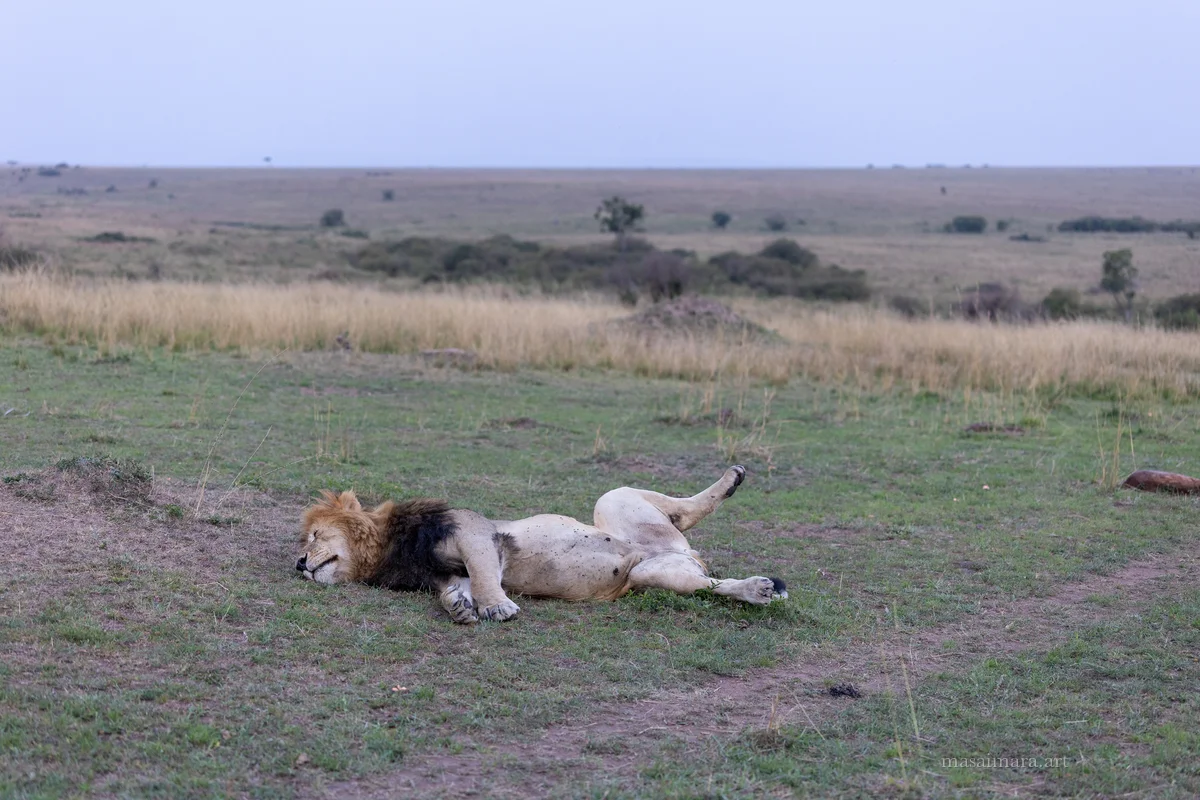
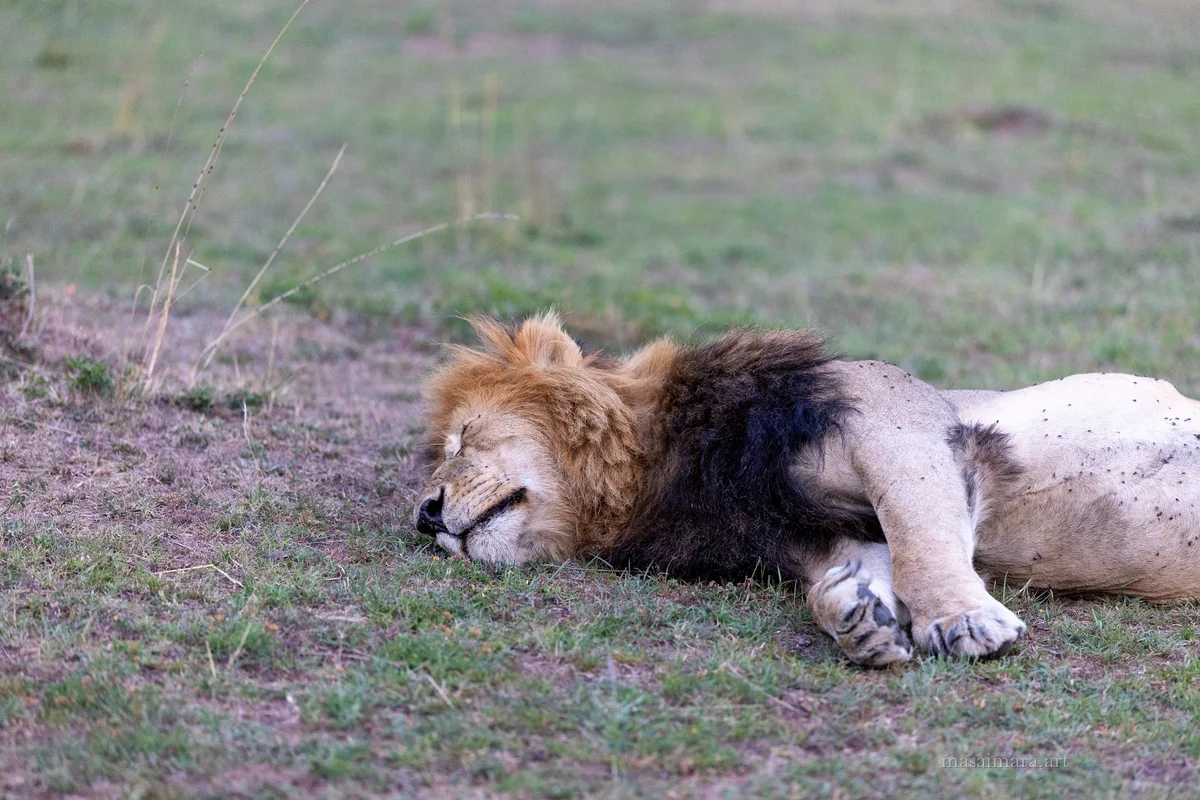
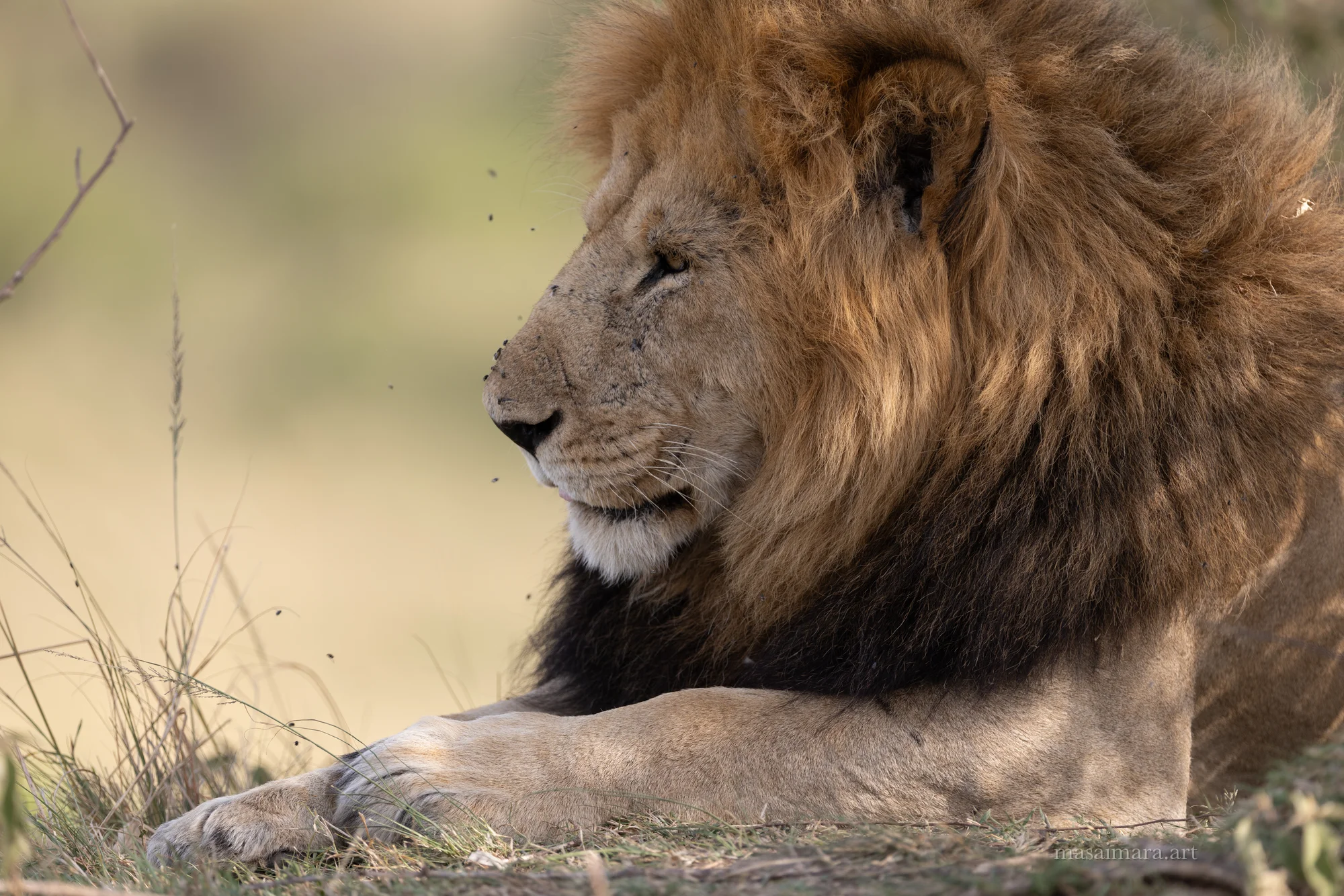
The camera moves in. Chin to the grass, the mane spilling forward. Flies have found the white of his flank and are not moving either; the body has not noticed them, or has noticed them and decided against it.
“The flies still find him, and he still does not chase them.
”
He opens an eye. Whatever he hears, the lens does not hear; the body has not shifted, only the face. The mane is backlit by what the sky still admits — a thin gold seam at the edge of the dark.
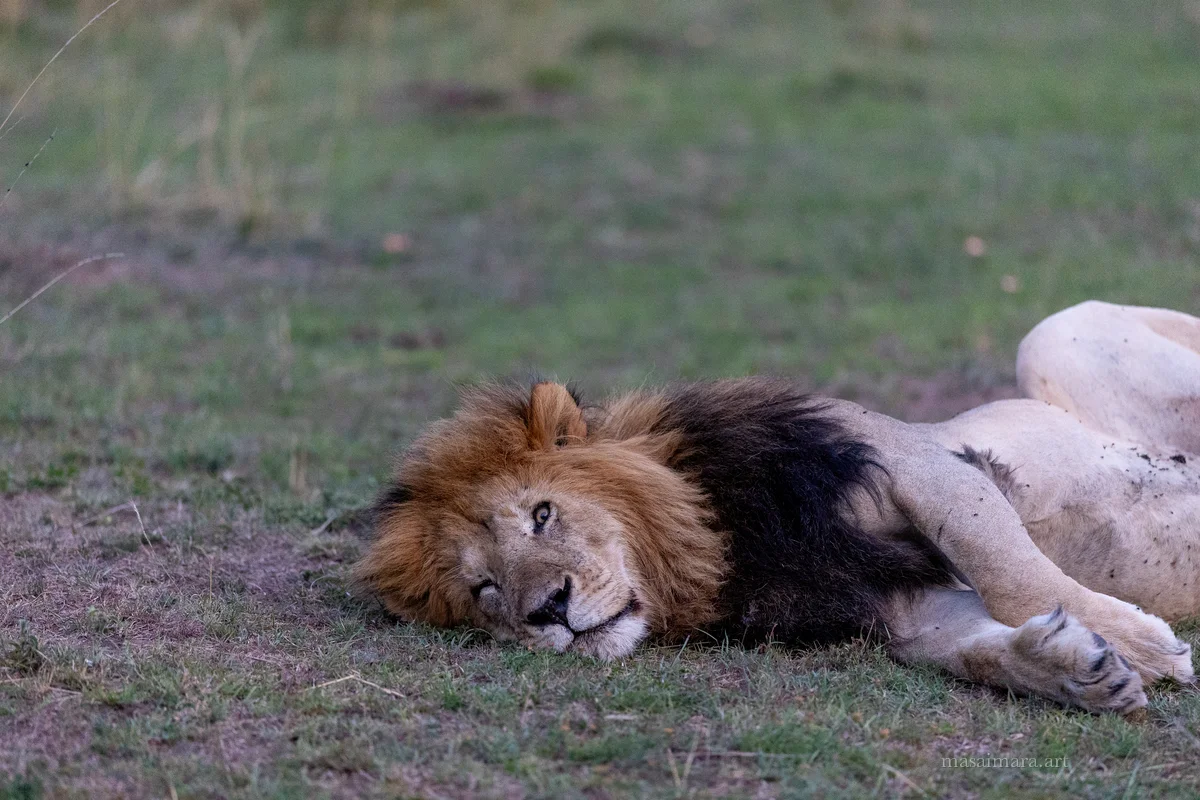
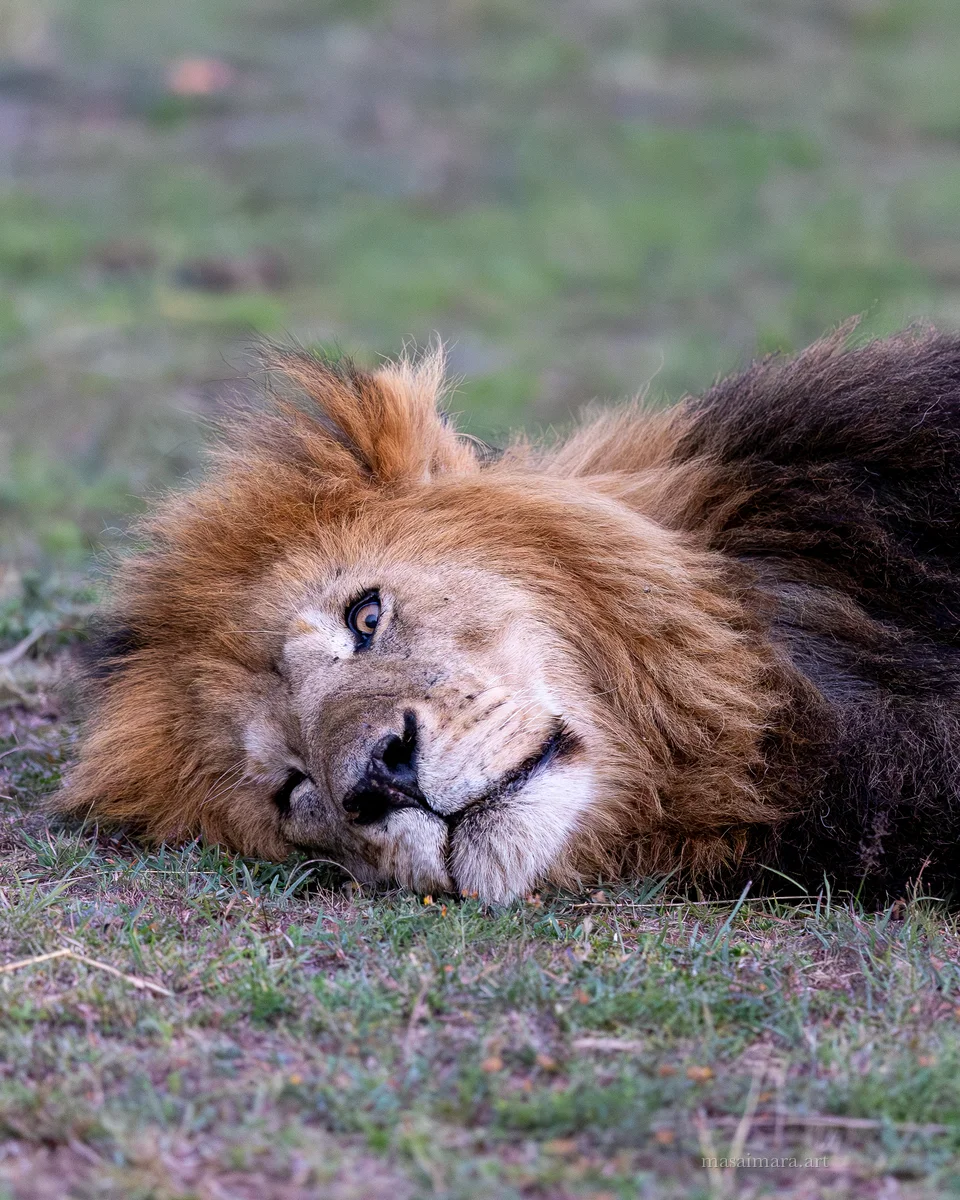
A long held portrait. The look does not move. Same head, same eye, the file growing noisier between frames as the ISO climbs from sixteen hundred to sixteen thousand. The camera, working past the light it has been given, keeps agreeing to less of it.
The head goes back down. The chin returns to the grass; the mane fans out behind. The body is almost flat. He is not done with the day, but the day is done with him.
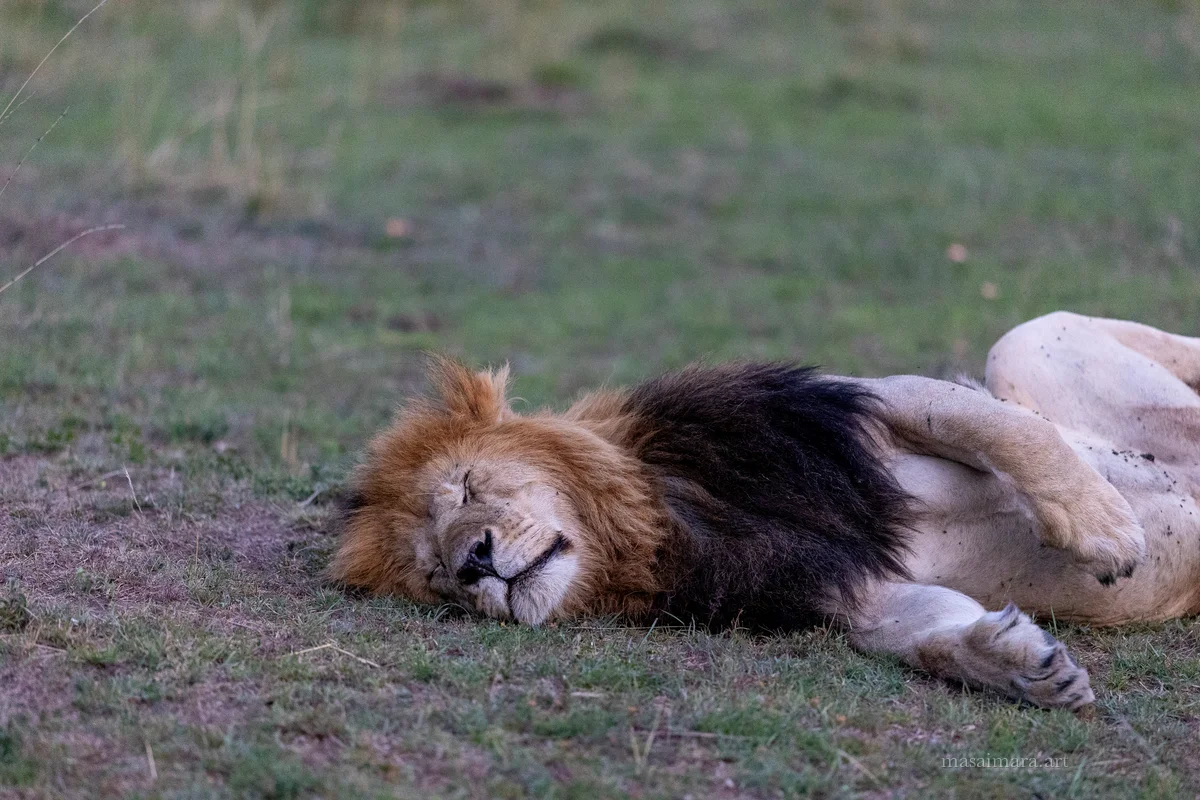
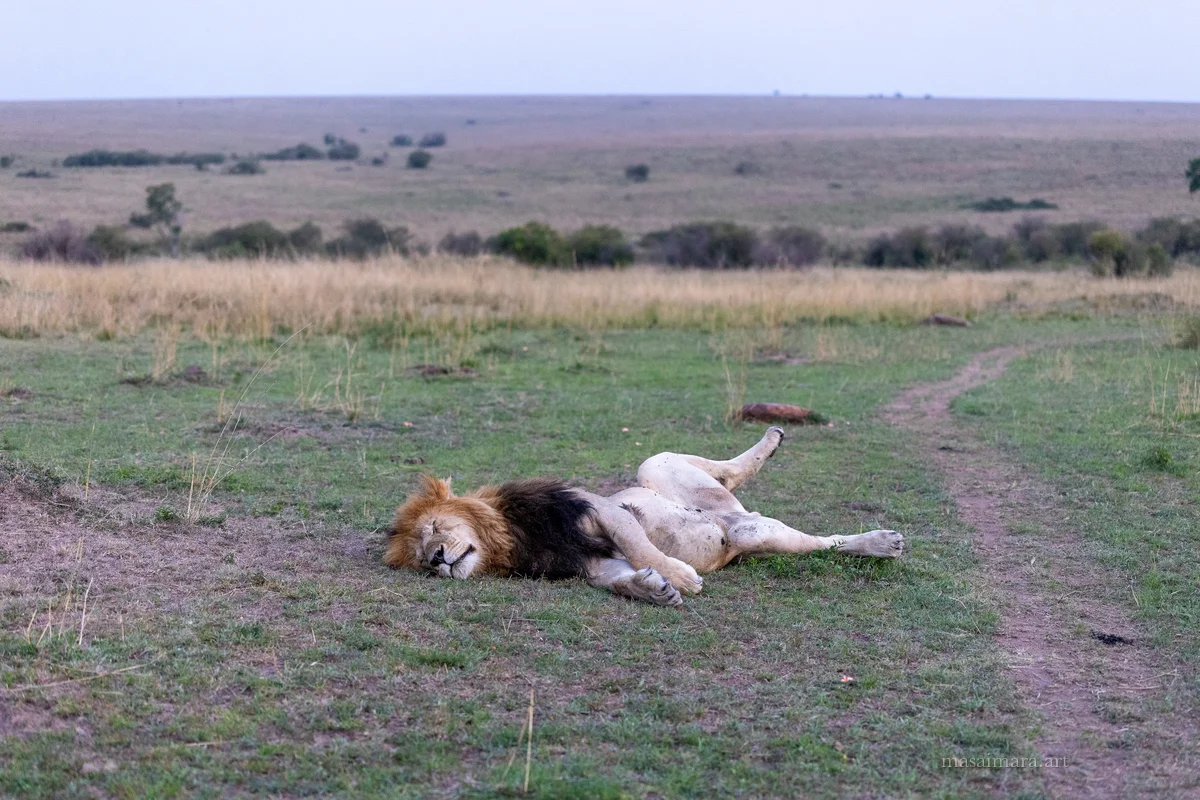
The camera steps back one last time. The plain pulls away behind him; the horizon is already the colour the night will be. The photograph, holding its breath at a shutter that should not still be working, lets him go into the dark.
Cold dusk into pure low light. The grain in the file is part of the photograph. One upright animal in the early frames and one supine animal in the late ones; the distance between them is the subject. The Rekero pride.
- Camera
- Canon EOS R6
- Lens
- Canon RF 70–200mm f/2.8 L IS USM Z