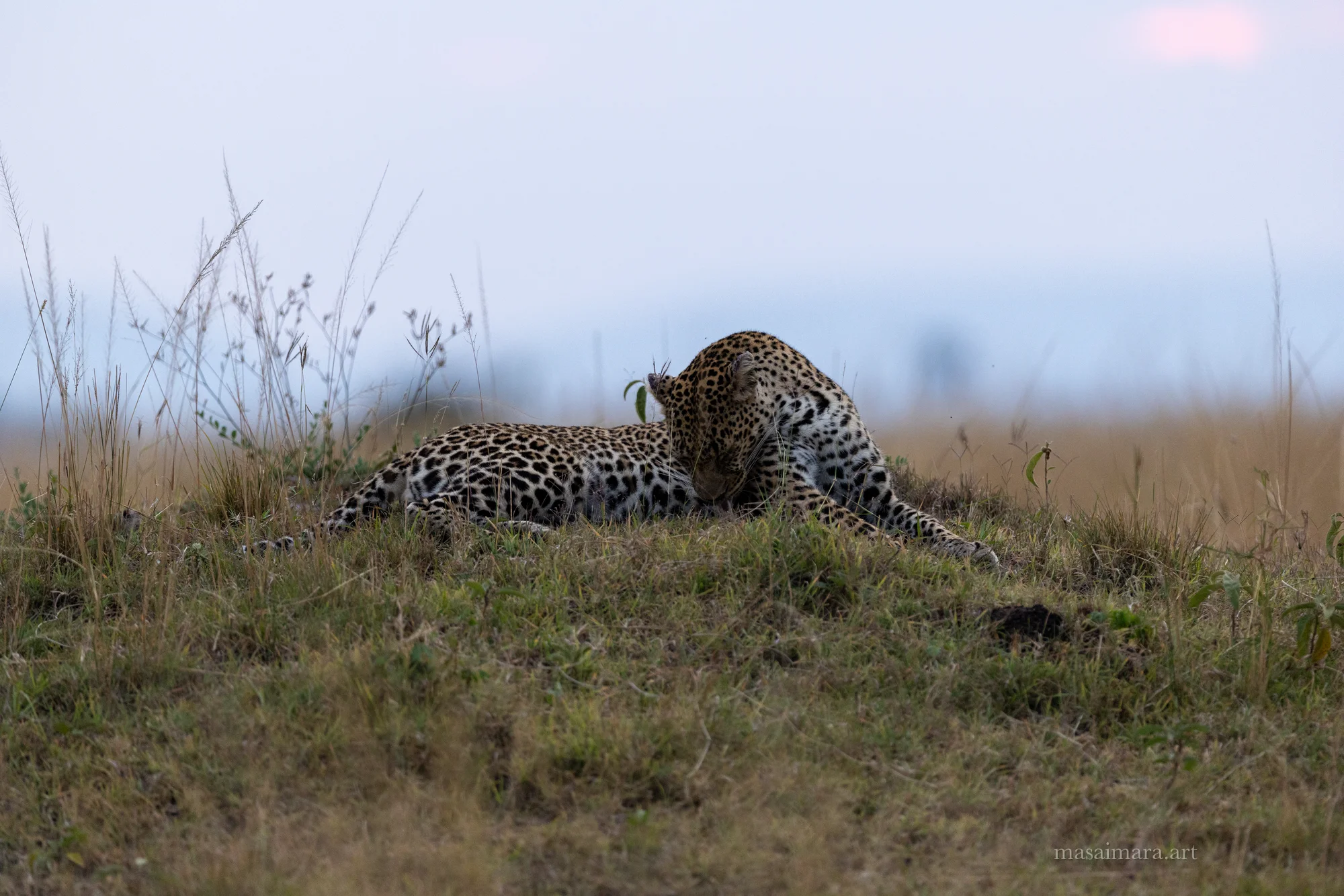
The leopard is the cat the Mara hides. The lion holds the open plain, the cheetah holds the long grass at the head of the valley; the leopard holds the riverine bush, the croton thicket, the deep shade of a single fig. The whole animal is designed around the assumption that it will not be seen, and the field-craft of finding one is the field-craft of unlearning that assumption an inch at a time.
The radio call rarely comes first. What comes first is silence — the long quiet stretch of a morning that the guide has decided is leopard country, and the slow drive along the same line of bush for the third time, and the small angle of head that picks up something the rest of the truck does not yet have. There. And only then the radio.
The tree is the field guide
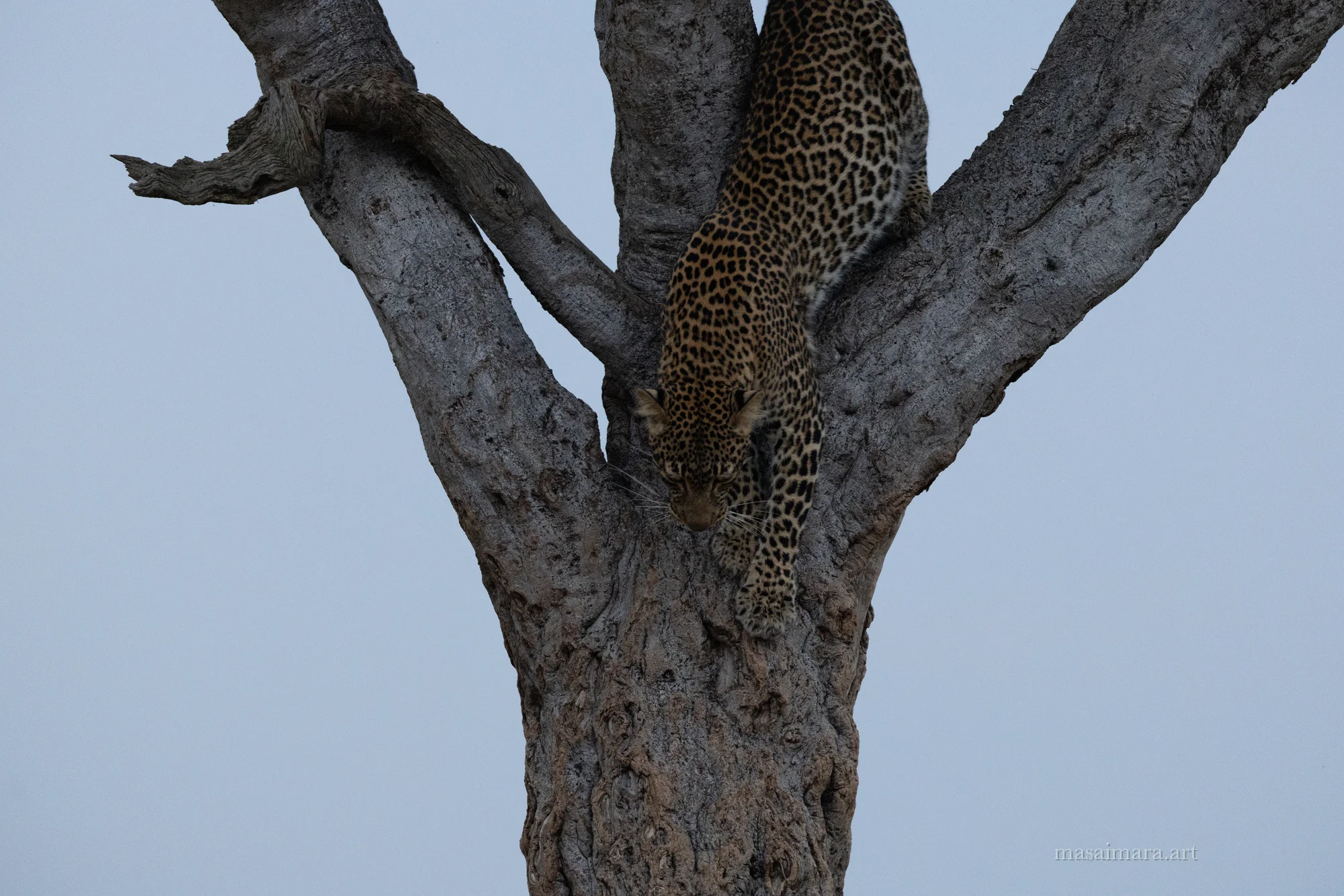
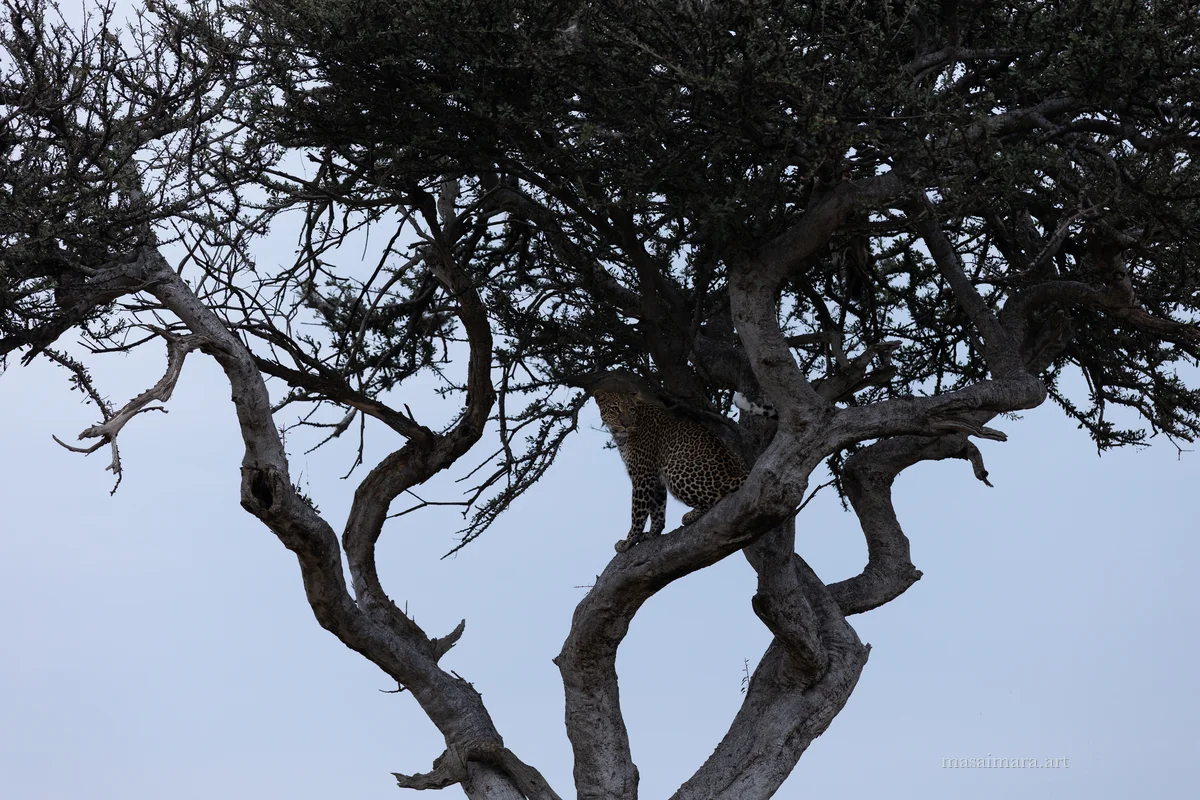
A leopard's relationship to a tree is the closest a Mara cat gets to architecture. She uses the canopy as a larder, a daybed, a lookout, and on rare occasions a hide. A kill cached in a fork at four metres of elevation is unreachable by lion, mostly unreachable by hyena, and stays cooler in the late-morning heat than a kill left on the ground.
The first frame of a leopard morning, almost always, is the tree before it is the cat. The wedge of dark in the architecture of branches. The yellow eye that catches reciprocal light only when the head turns. The whole animal a study in patience held at the height of two storeys.
The solitary cat
The leopard is the only one of the Mara's three big cats that is fully solitary. The cubs leave at eighteen to twenty-four months and the mother returns to a range she defends, mostly through scent, against other females. Males overlap the ranges of two or three females and meet them only to mate.
The consequence is that almost every leopard you photograph is the same individual repeated. A female on a stretch of the Talek river will be the leopard of that stretch for the eight to twelve years she holds it. The cubs of that female, if they survive, will hold the same stretch after her. The fieldwork is to learn the individual, not the species.
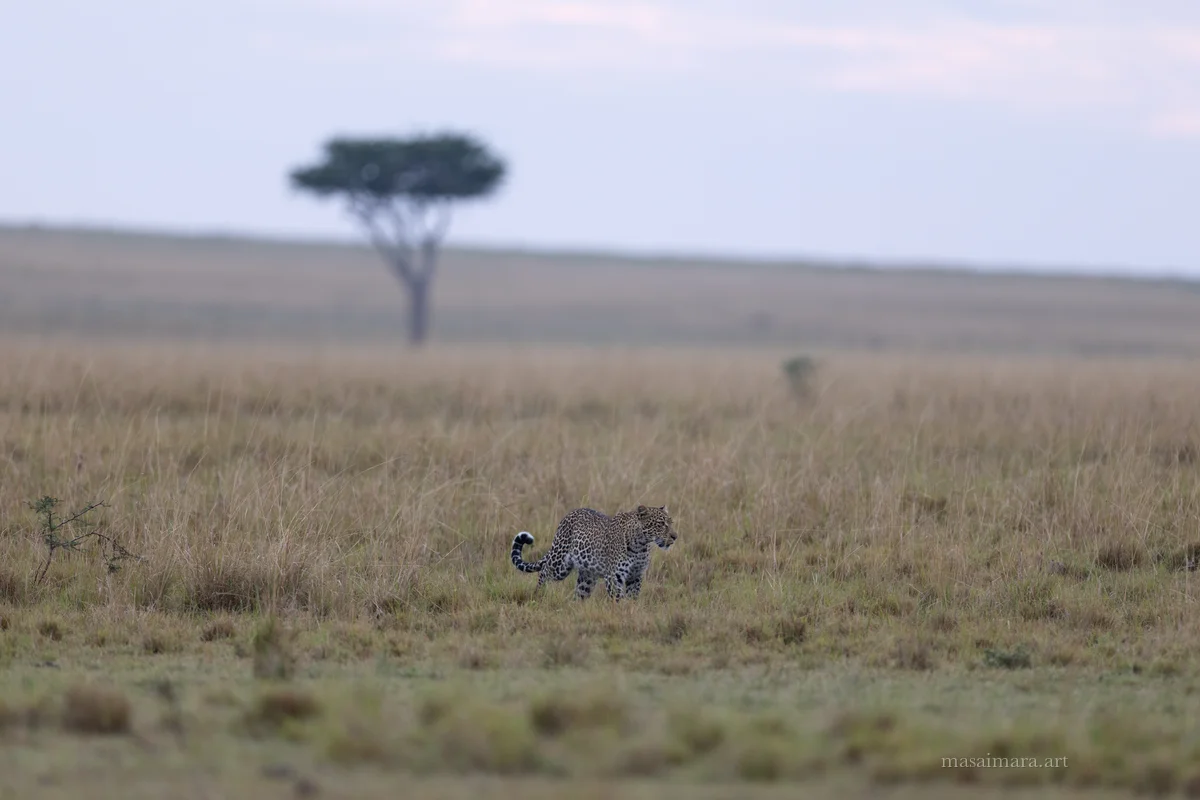
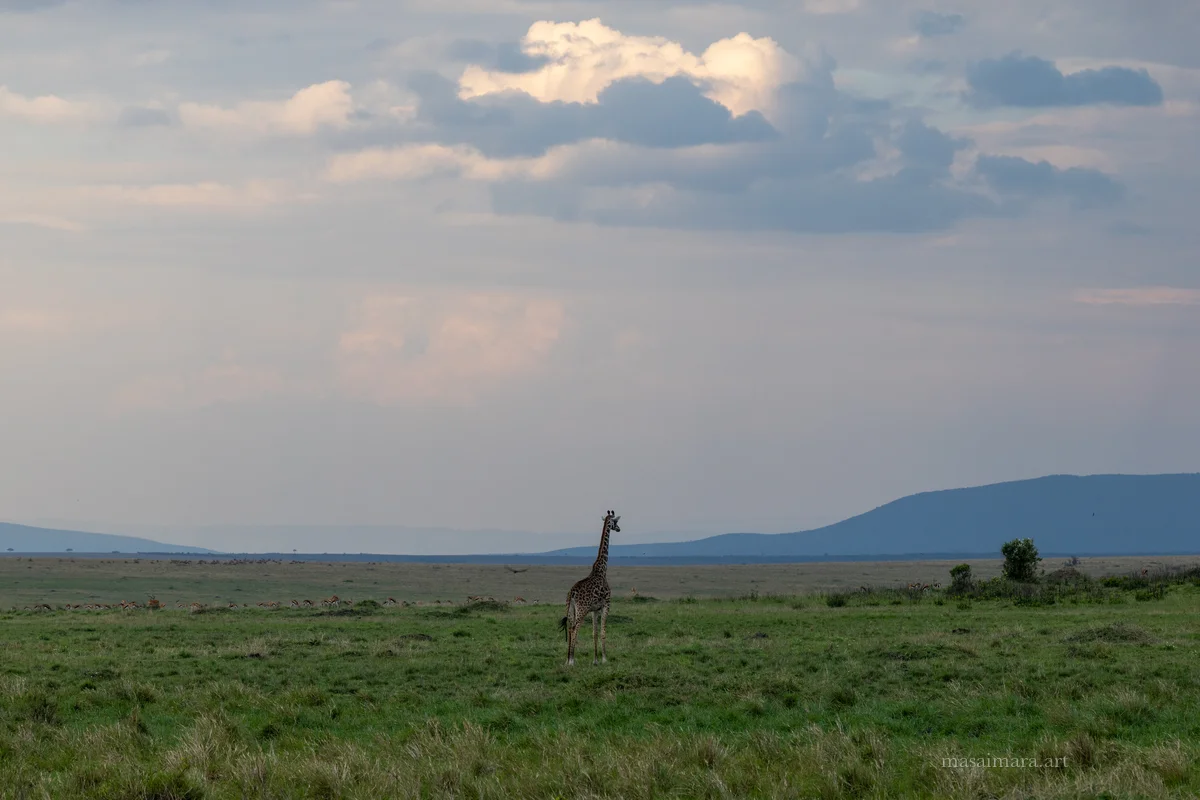
Two punctuation marks on the same plain — a single acacia on the horizon, the cat small at her work.
What the kill looks like, before the kill
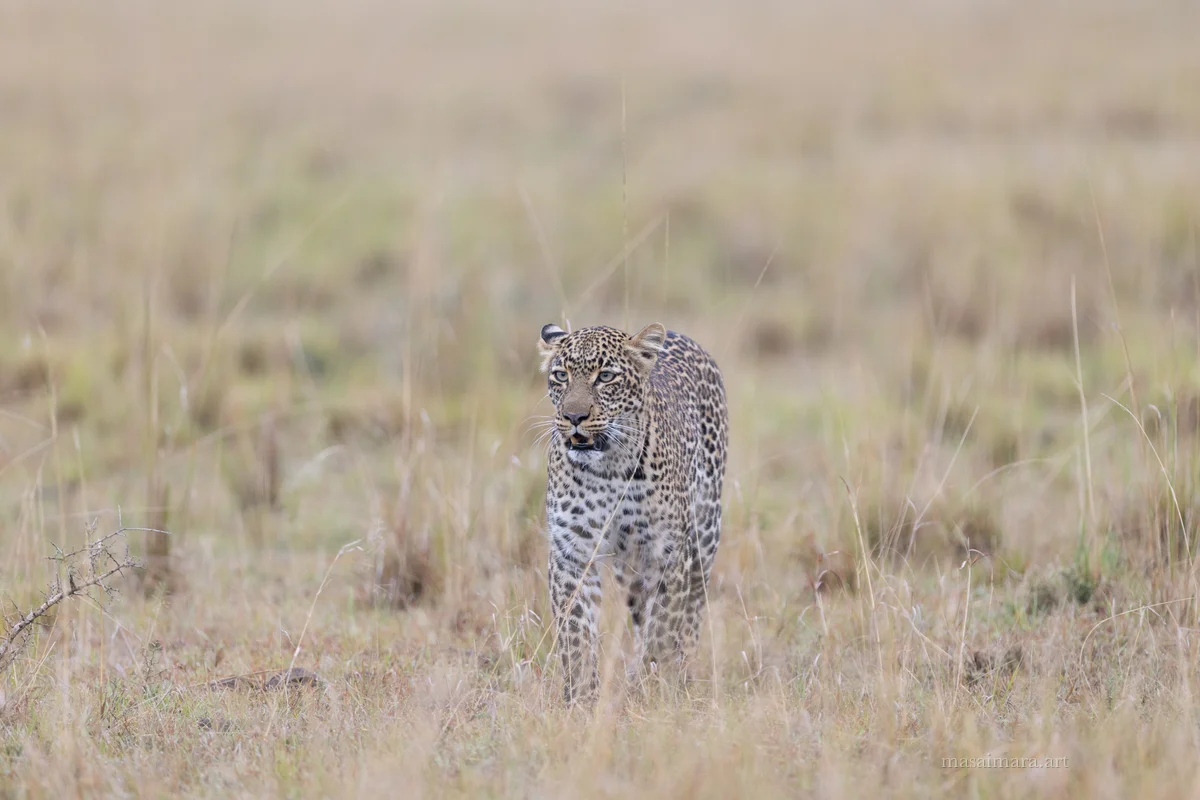
A leopard hunts the way a leopard moves through a tree — one limb at a time, one angle at a time, the body never further forward than the cover allows. The hunt itself is rarely witnessed. What is witnessed is the approach: a cat that has settled lower in the grass than she was a moment ago; a head that has dropped between the shoulders; eyes that have moved on to a single thing and stopped moving back.
The chase, when it comes, is short. Twenty metres, perhaps thirty. The leopard does not have the lung capacity of a cheetah, and she rarely needs it. The success of the hunt was determined ten minutes earlier, in the slow read of a herd against the wind.
Field note — On finding the leopard yourself
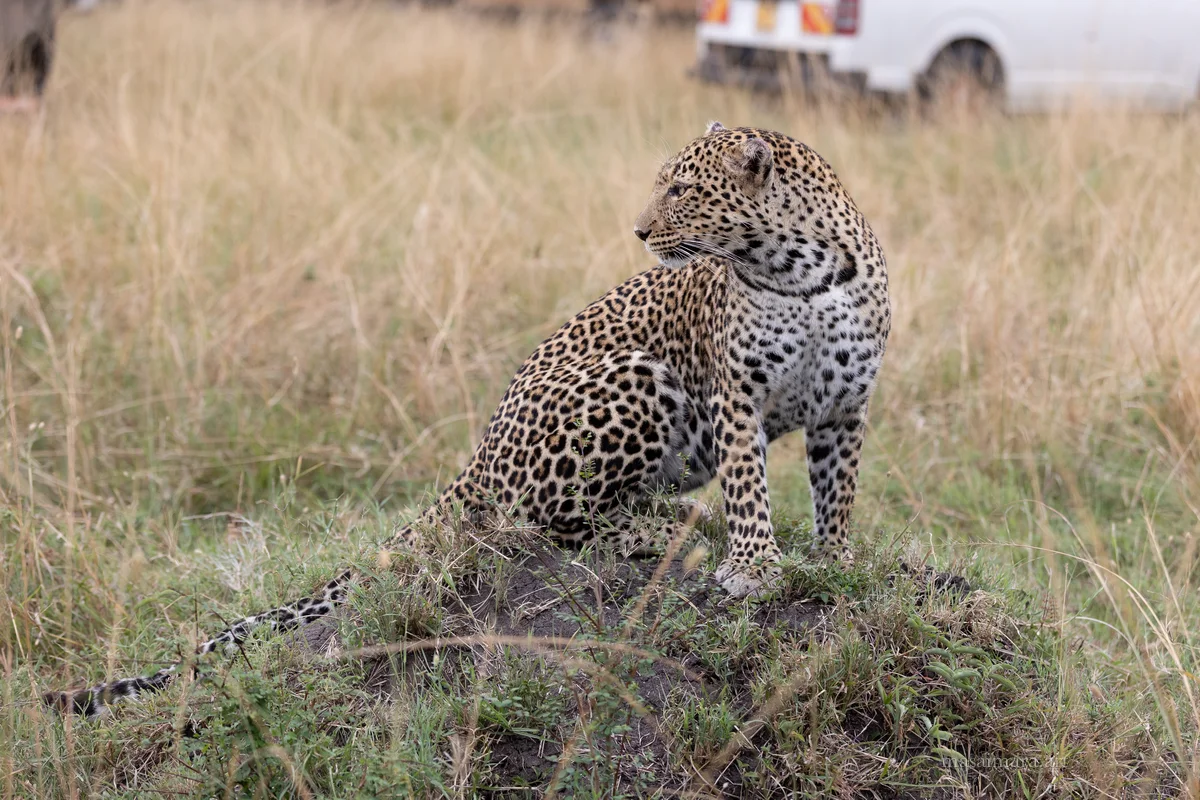
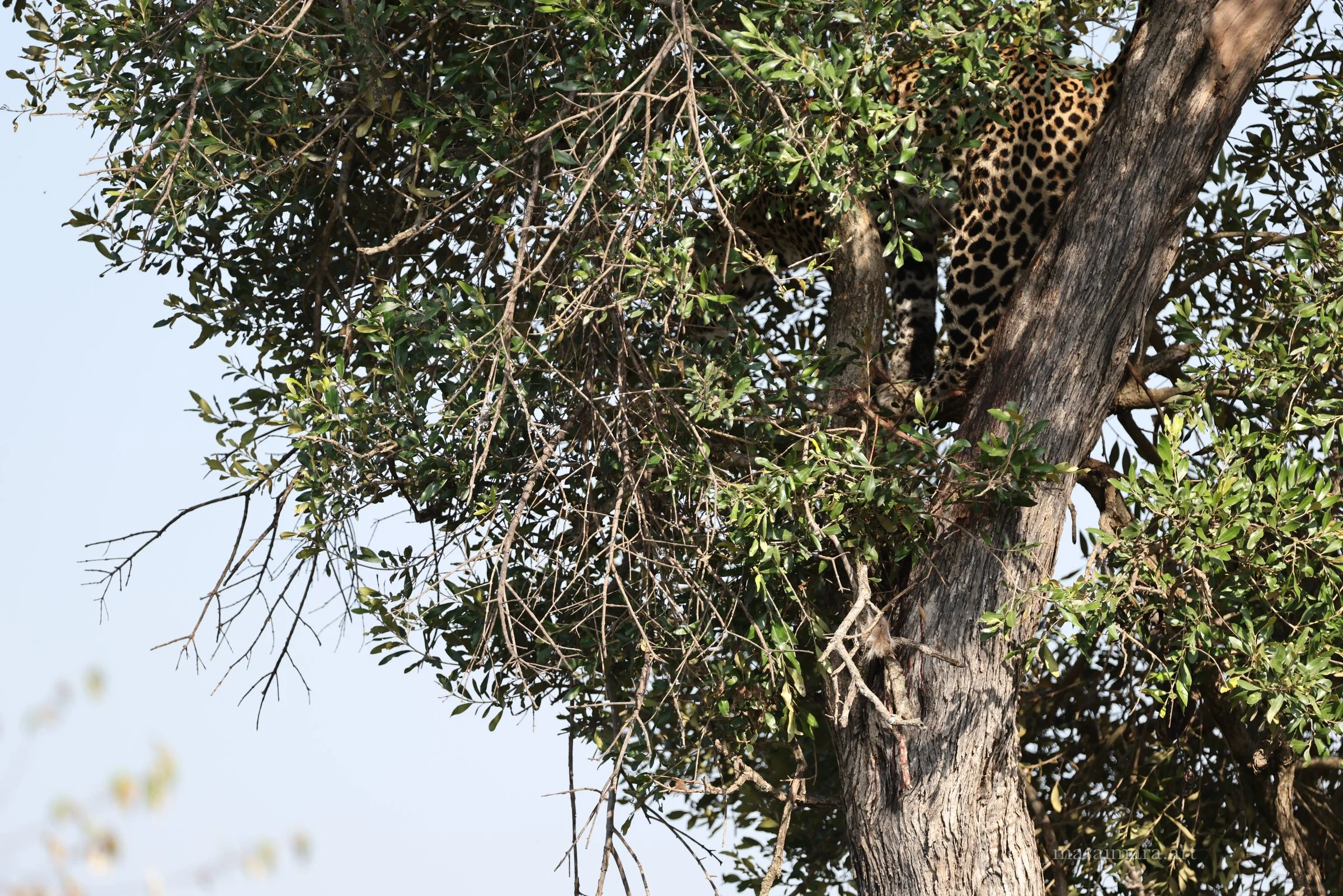
A leopard found before any other vehicle is always a leopard that was already there. The mound at the pink seam of a cold dawn — small dark wedge low against the only colour the morning is willing to offer. The olive tree at hard mid-morning, the cat almost camouflaged out of her own picture, a kill cached in the fork below her chest.
The guide goes silent for ten minutes. The cat has been there longer than the morning has been looking. The lesson of a leopard morning is that the leopard was always there; the morning is what changes.
The cache
The most leopard thing a leopard does is leave a kill in a tree. The behaviour is unique among large cats — no lion, no cheetah, no tiger does this with any regularity — and it is the single defining adaptation of an animal that lives at the bottom rung of a predator hierarchy.
A medium-sized antelope hauled into the fork of a fig or a sausage tree can feed a leopard for three days. The cache is also why the leopard's neck and shoulder muscles are disproportionately heavy: the lift from ground to first branch is, in pure terms, the most physically demanding act in her week.
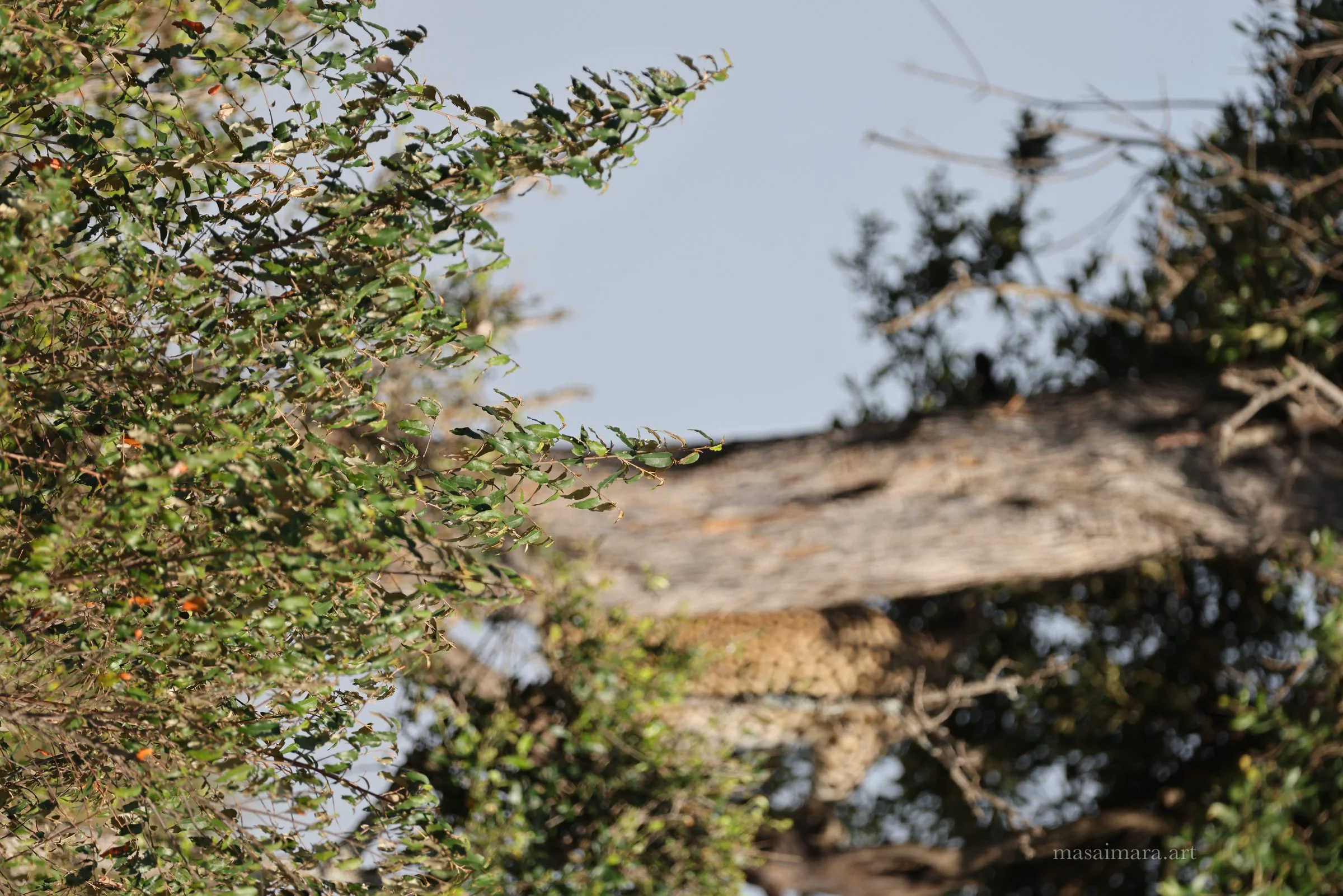
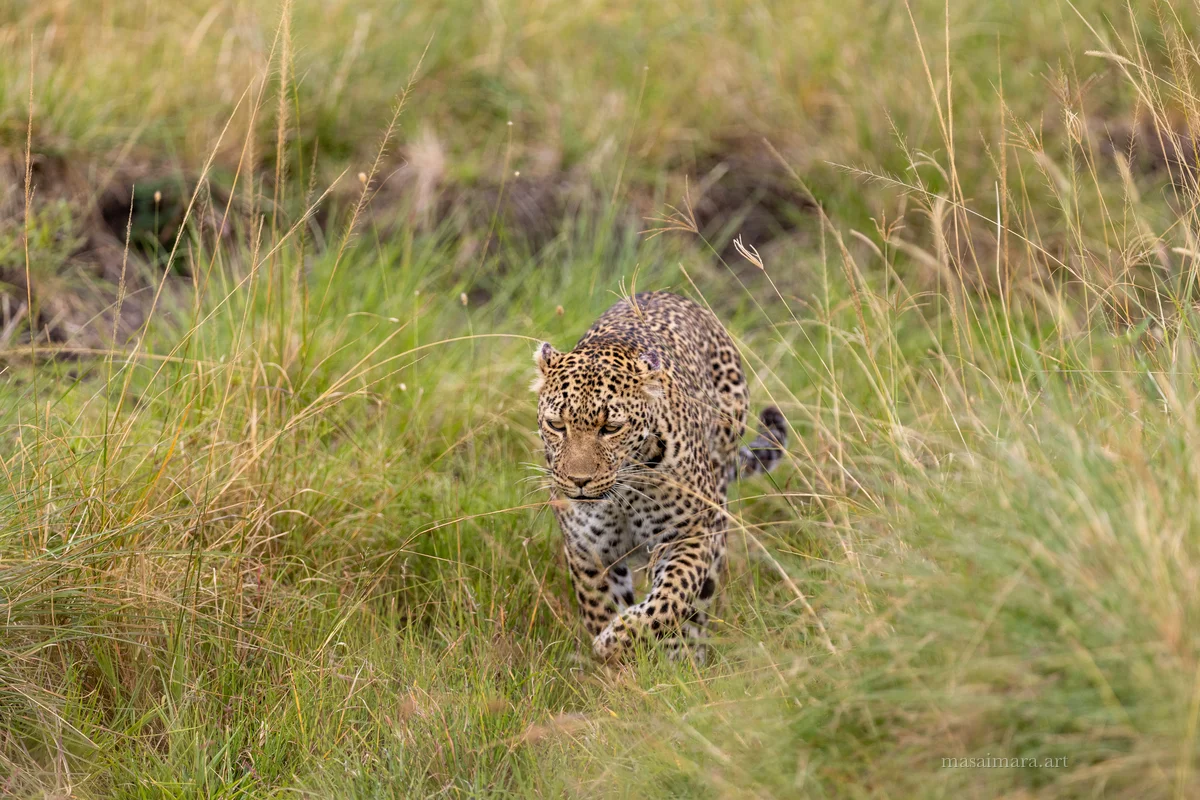
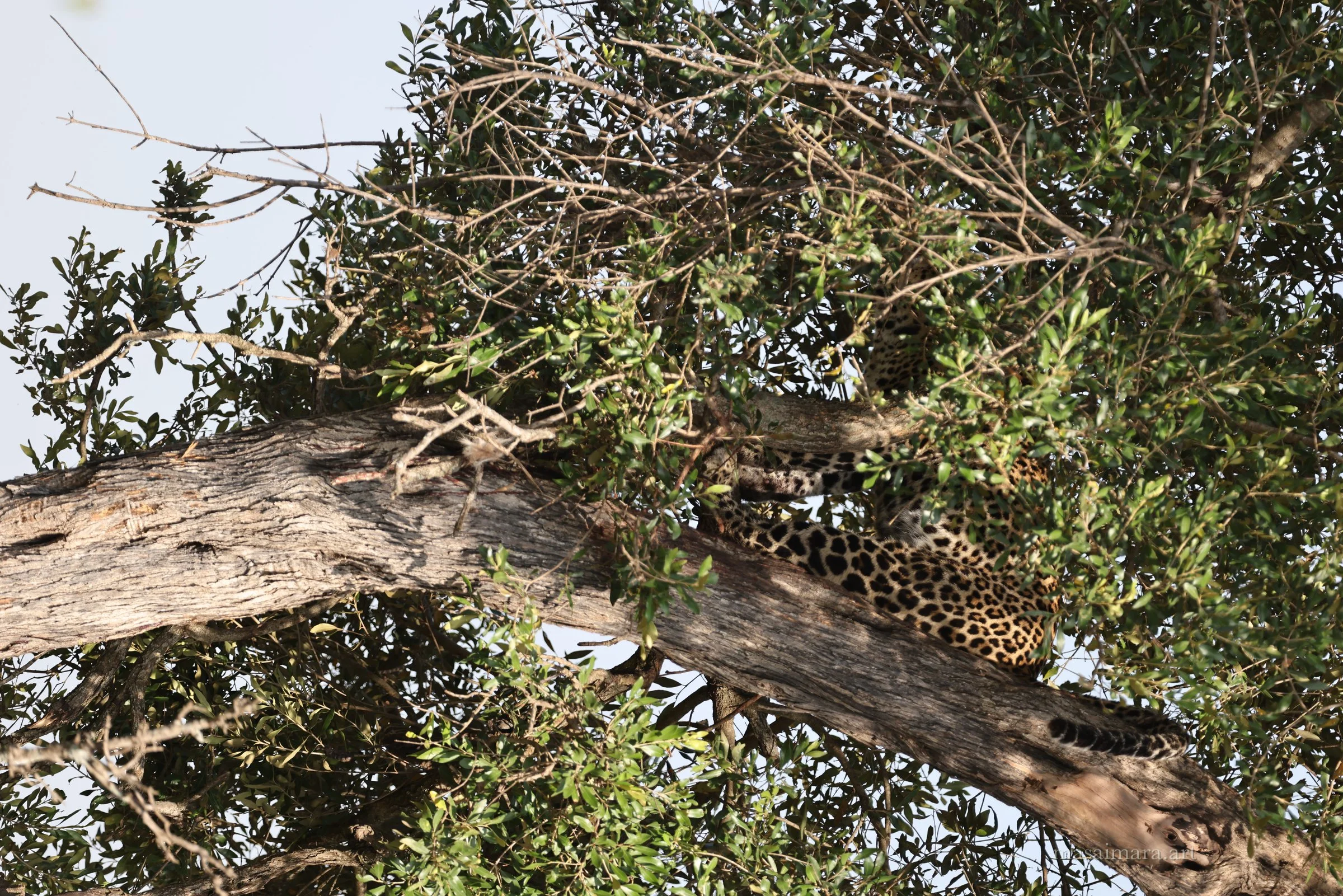
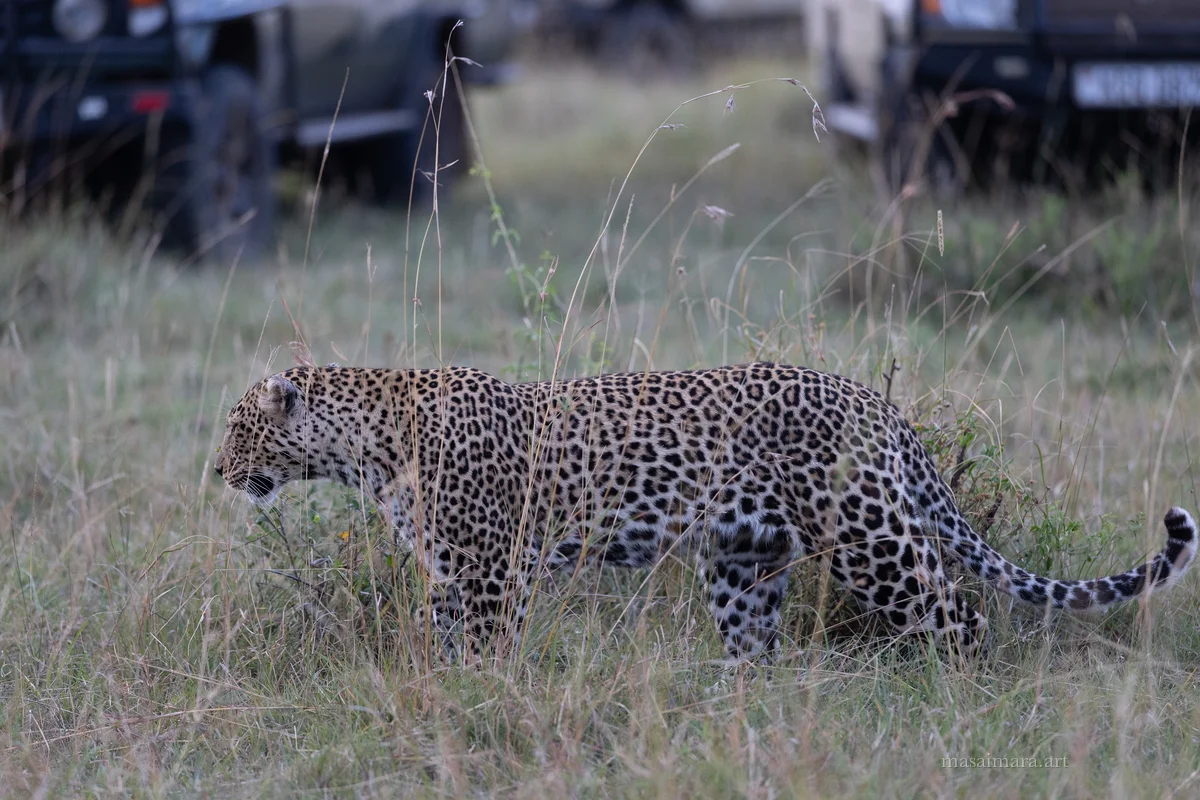
Two faces, two cover types — one through the wet stalks at the edge of a thornbush, one through a small gap the canopy of an olive consents to open.
The cover is the picture
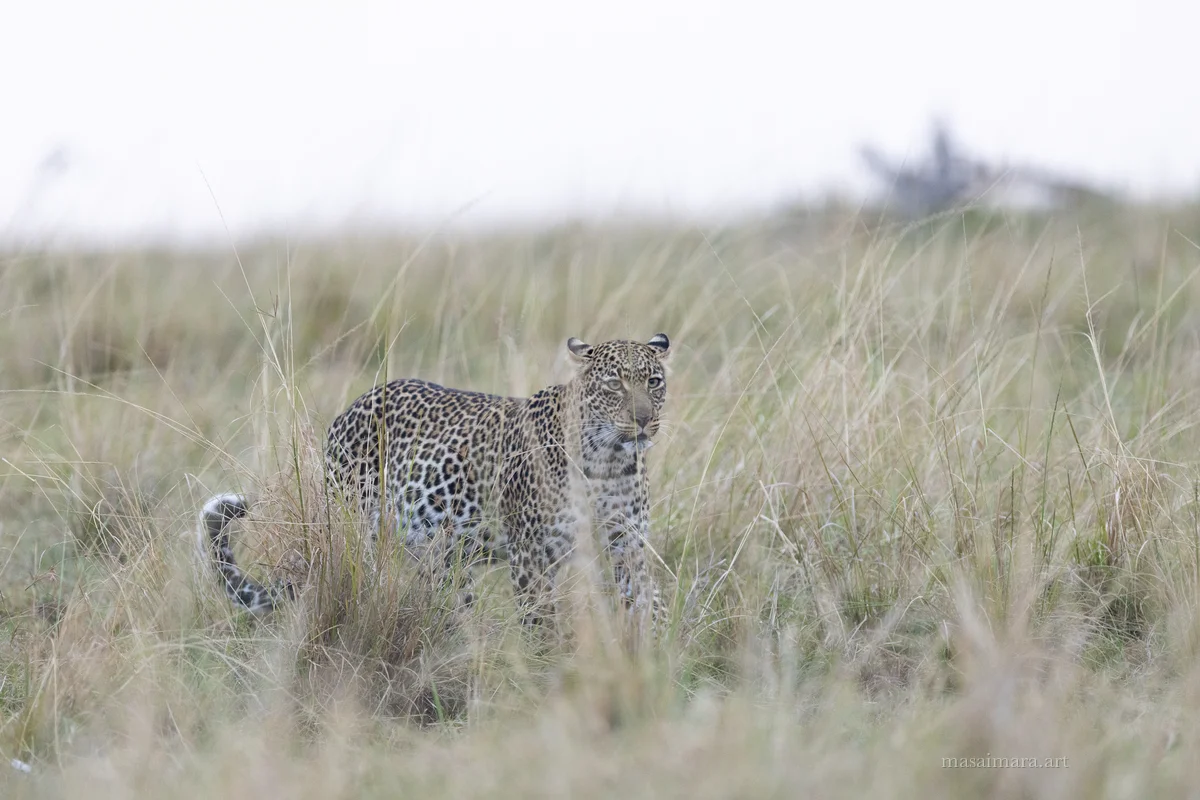
A leopard photographed in the open, on flat ground, in clean light, is a leopard photographed wrong — not technically, but tonally. The animal is of cover; the picture should be too. A frame that argues with the leaves loses its leopard the way a frame that argues with the dust loses its lion. The leaves are the photograph. The leopard is what the leaves agree, briefly, to reveal.
The strongest leopard images come from this argument resolved in the leopard's favour for a single beat. A spot of pattern through a gap in the foliage. A face caught between two stems. The body laid horizontal along a branch in a picture made mostly of verticals.
The dawn habits
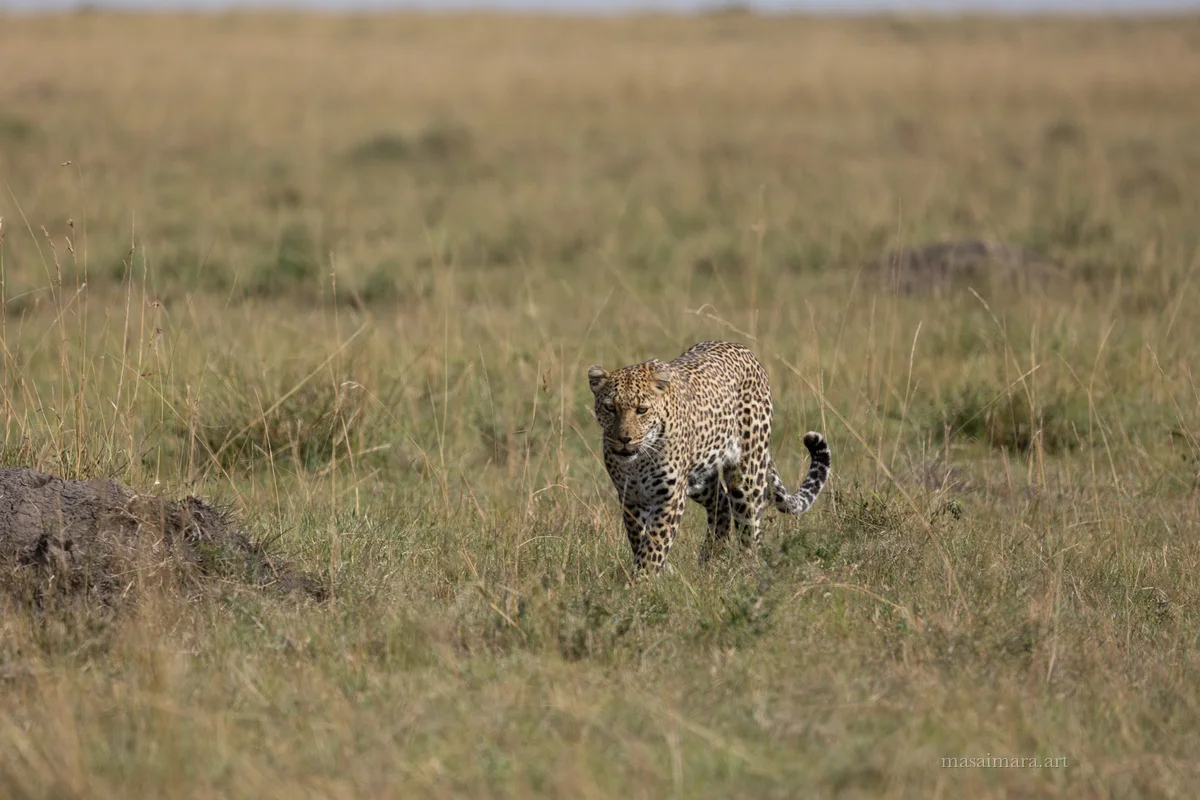
Most leopard sightings in the Mara cluster into two narrow windows. The first is the half-hour either side of sunrise, when a cat returning from a night's hunt or move is briefly more visible than she means to be. The second is the last hour of light, when she is beginning to move again.
Between those windows the leopard sleeps. The sleep is not the lion's loose, openly-laid-on-the-ground sleep — it is a half-sleep with one ear on a branch above the ground and the eyes opening every few minutes to read whatever has come into earshot. The cat that looks asleep is rarely asleep.
“The leopard was always there. The morning is what changes.
”
Field notes
The look
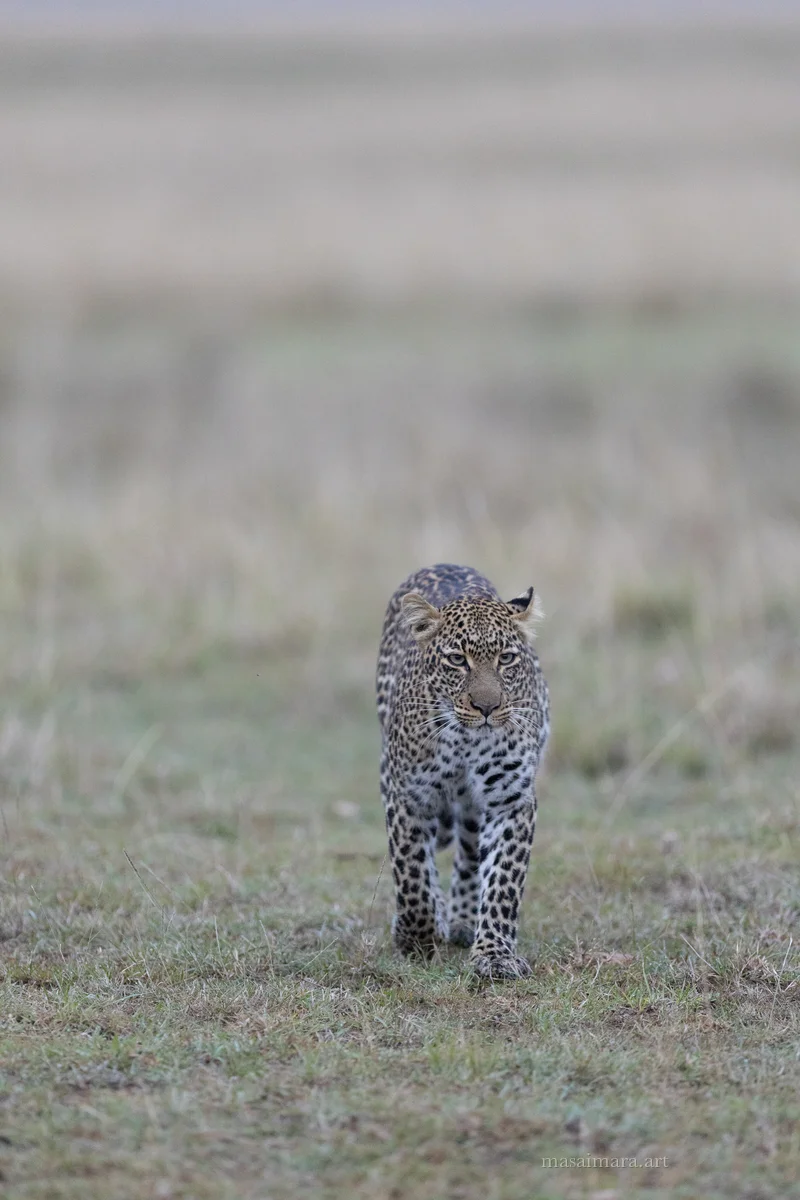
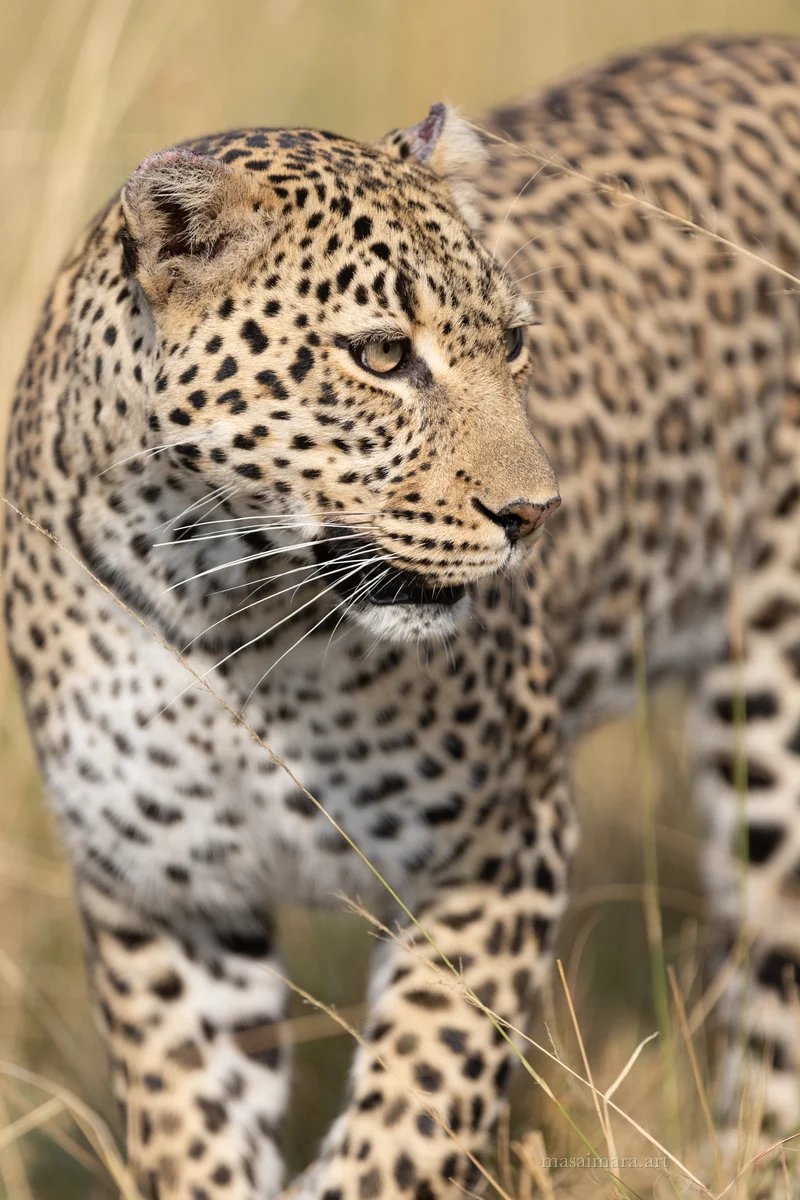
When a leopard does look at you — directly, head-on, with no leaves between the eye and the lens — the look is held for an interval the camera barely has time to absorb. Three frames, perhaps four. Then the head turns and the cat is past you.
It is not a hostile look. It is not even a curious one. It is the brief moment in which she has assessed the vehicle, decided it is not a threat and not prey, and removed it from the list of things her morning still has to attend to. The encounter is over the instant she looks past you.
The predatory posture
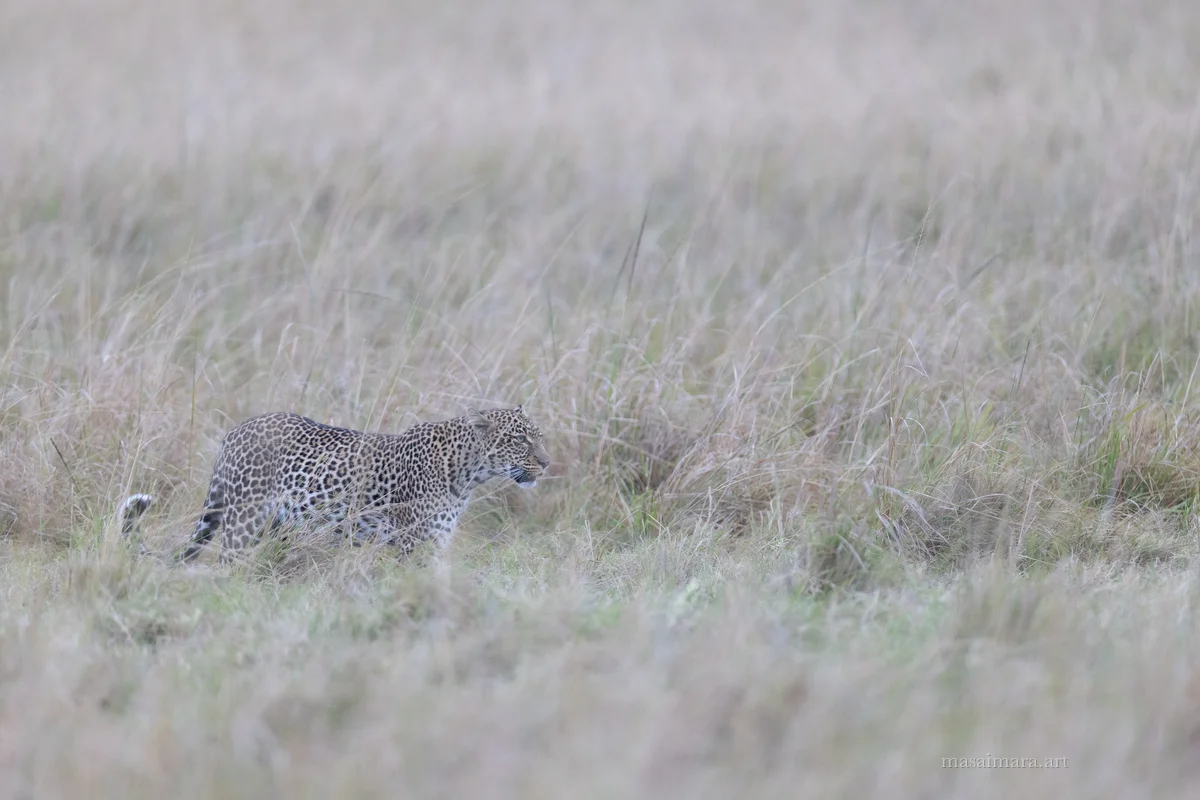
There is a posture a leopard takes, perhaps twice in an hour, that the rest of the encounter does not prepare you for. The body drops fully to the level of the grass. The head goes down between the shoulders. The tail straightens behind her. Every line of the animal is aimed at a single point ahead.
It is the most predatory posture in the cat — a posture the lion does not take and the cheetah cannot hold — and it is held only for as long as the read of the herd requires. A beat, a longer beat, and then she has either committed to the hunt or decided the angle is wrong, and the body comes up again, and the morning resumes.
First Light
Tree Leopard
First Light
Cache
Tree Leopard
The leopard ends every morning the way she began it — already there before the camera arrived, still there after the camera has left. The morning is what changes. The leopard is the constant.
The leopard's mornings repeat themselves across three rooms — the mound at first light, the olive tree at hard mid-morning, the fig at steel-blue dawn. The cat was always there; the morning is what changes.
- Camera
- Canon EOS R5 Mark II · EOS R6
- Lens
- Sigma 500mm f/4 · Canon RF 70–200mm f/2.8