first-light
First Light
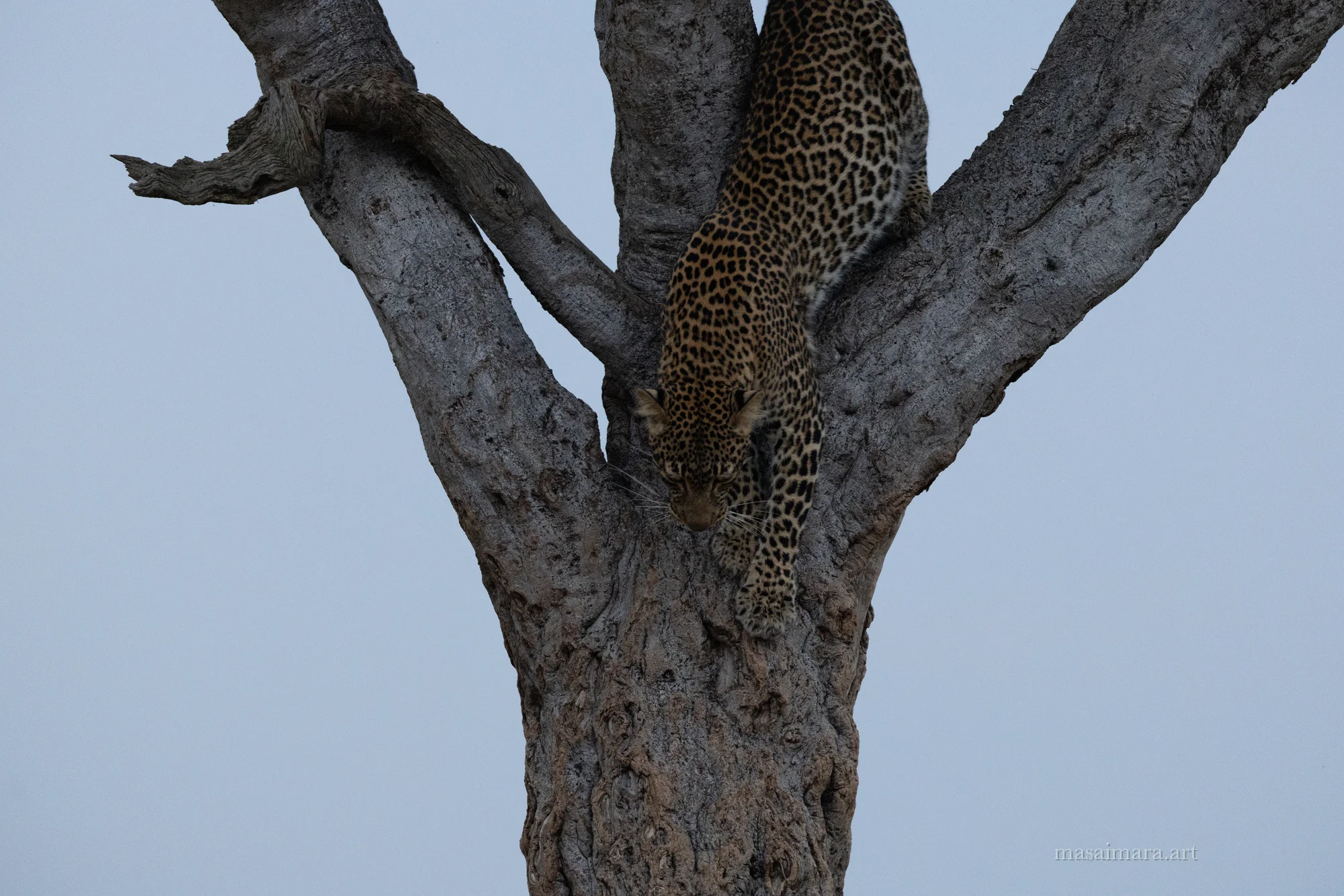
One leopard, five rooms — the earth mound at the pink seam, the wet grass, the thornbush, the erosion gully, and at last the open plain in white light.
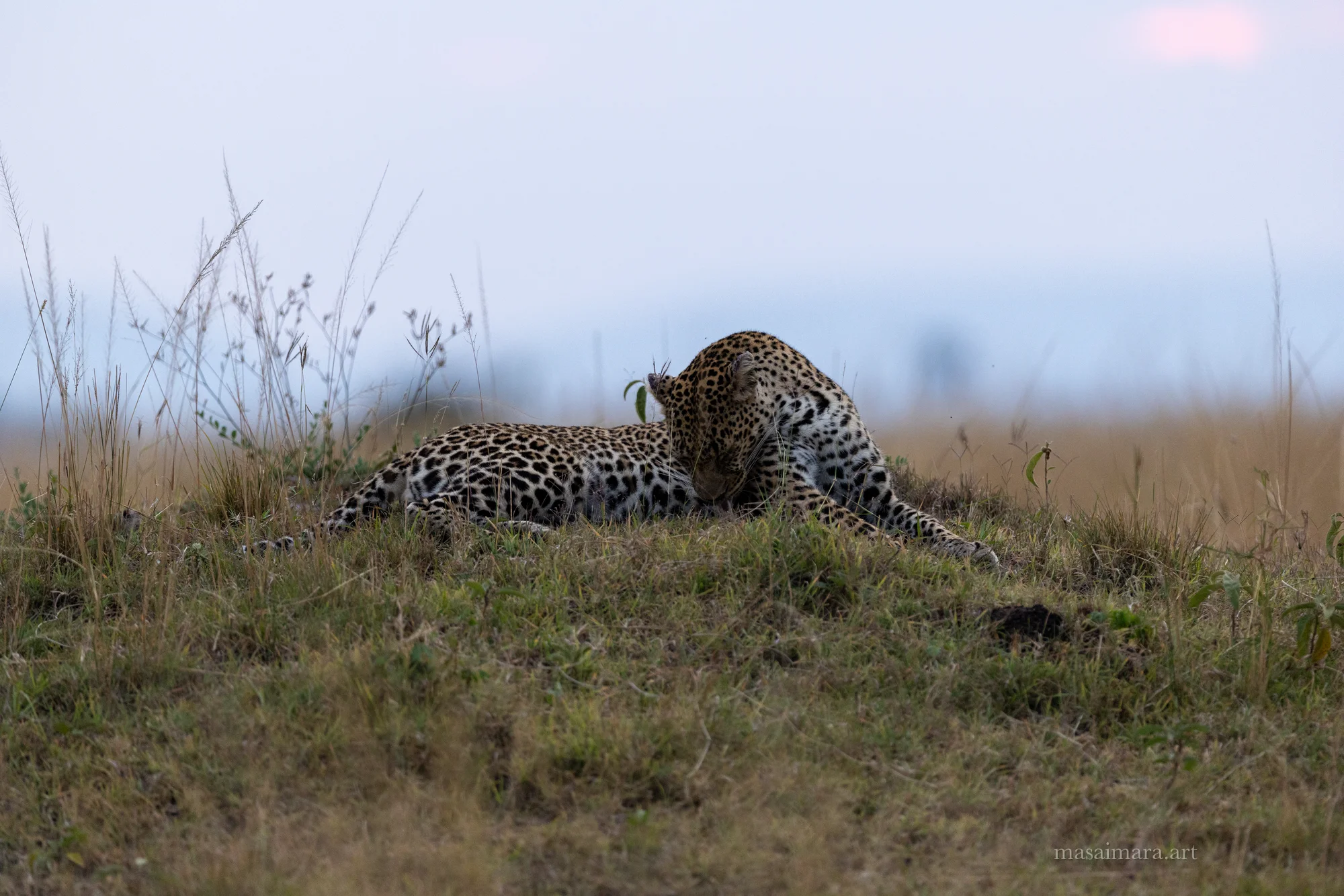
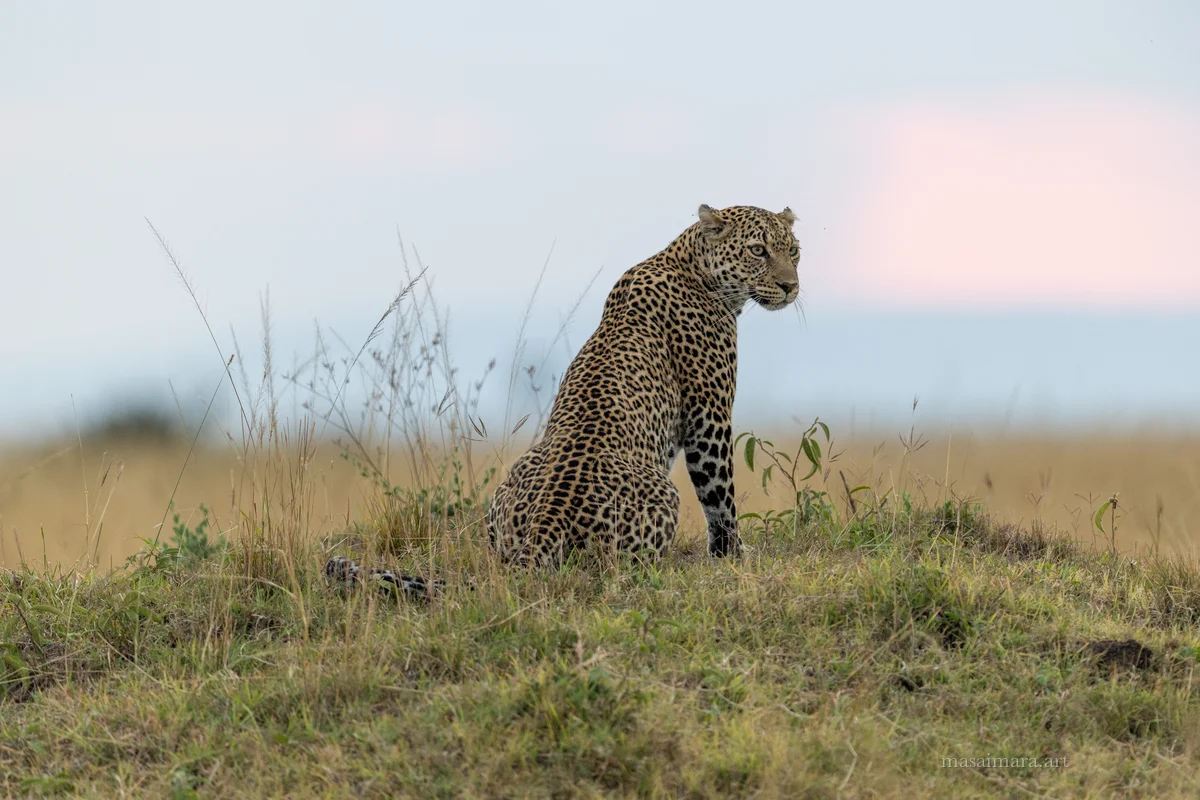
The day opens with mostly sky. The leopard reads as a long dark wedge low on a small earth mound — head dropped to her paws — and the only colour the morning is willing to offer is a pink seam at the horizon. The camera takes two frames before any of it changes. The cat lifts her head into the only light there is, and stays there as long as light is the subject.
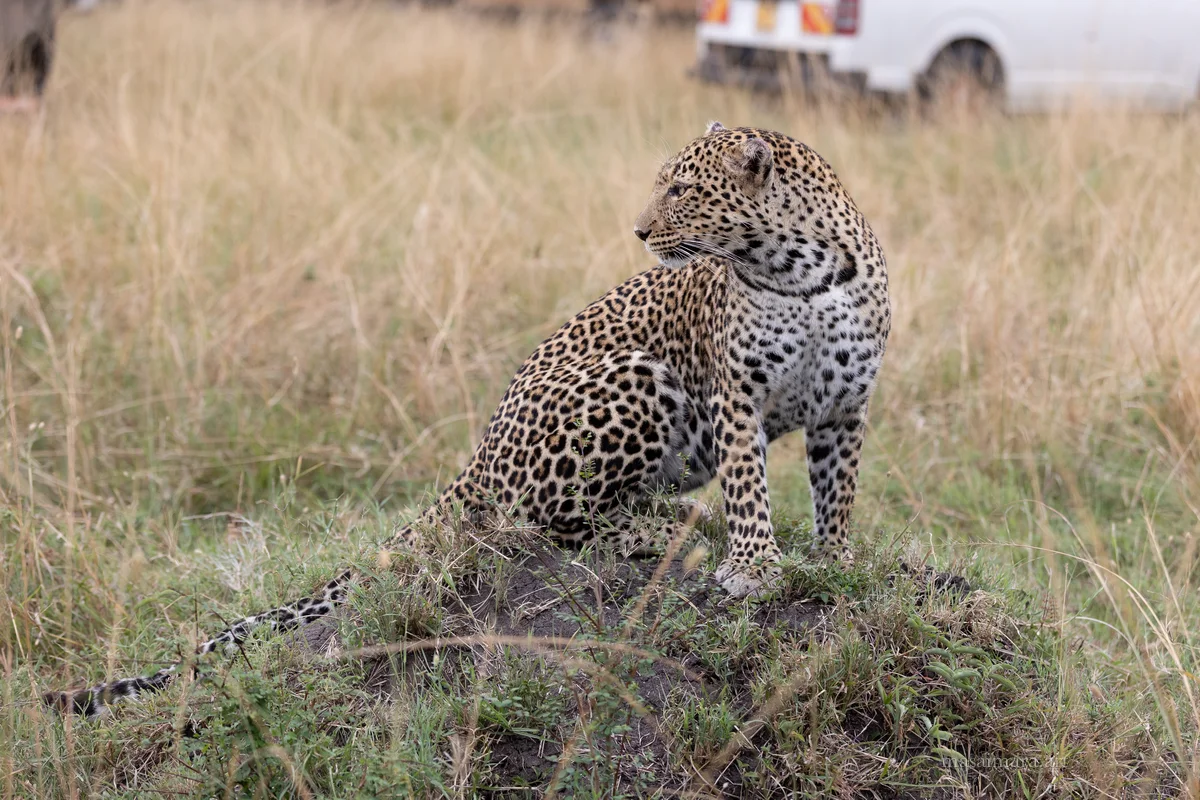
She sits up. Profile to the lens on the same mound, body turned aside, the pink wash low behind the head — the only colour in the frame. Nothing else has yet agreed to be in the picture with her.
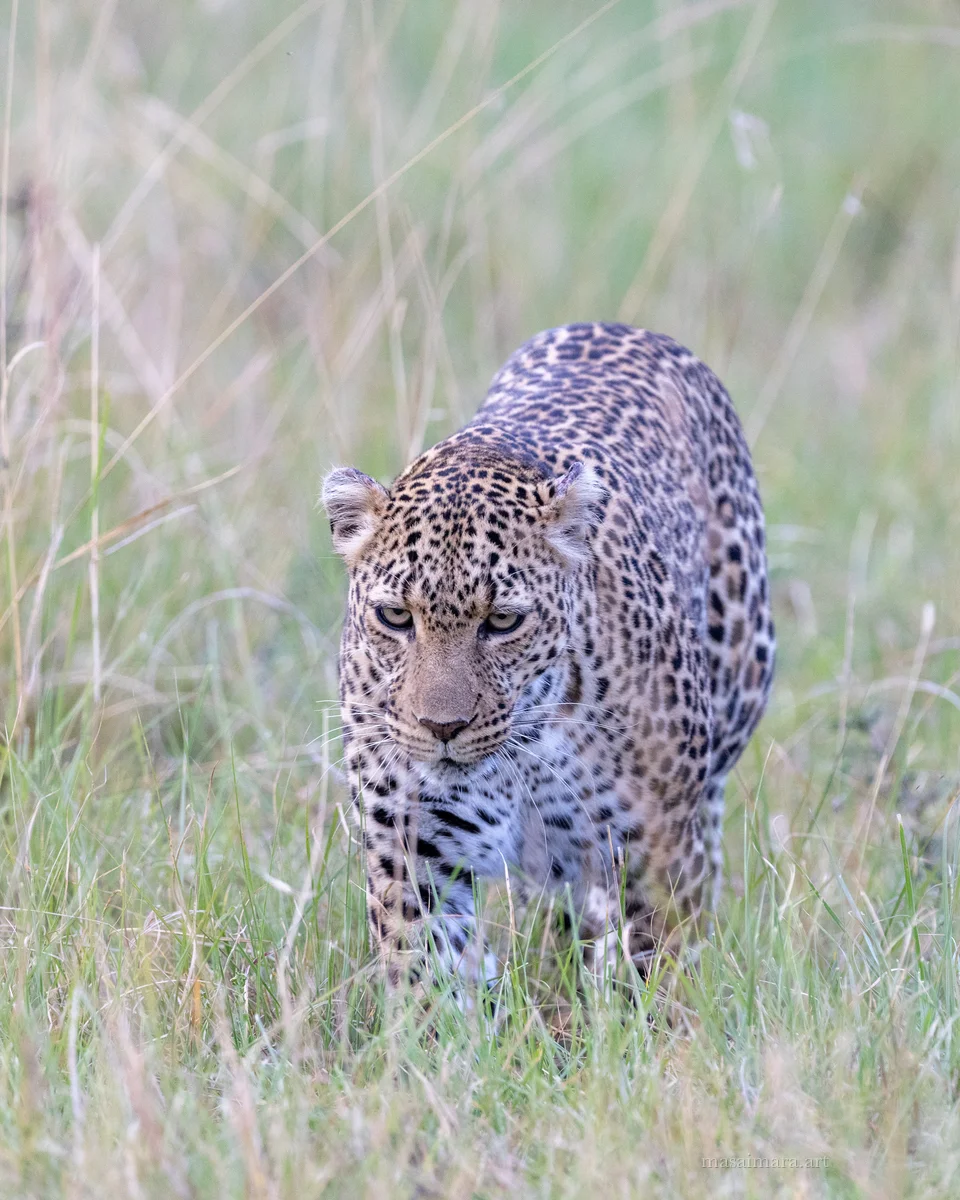
Off the mound. The frames shift from landscape to portrait without the camera asking — the vertical comes in tight, the leopard head-on through wet stalks, the head low and the eyes flat on the lens. Dew still cold enough to read at the paws.
Into the thornbush. The face is in the frame for a long stretch only as a face — the body behind it is leaf and shadow and the negative space of branches the camera has agreed not to argue with.
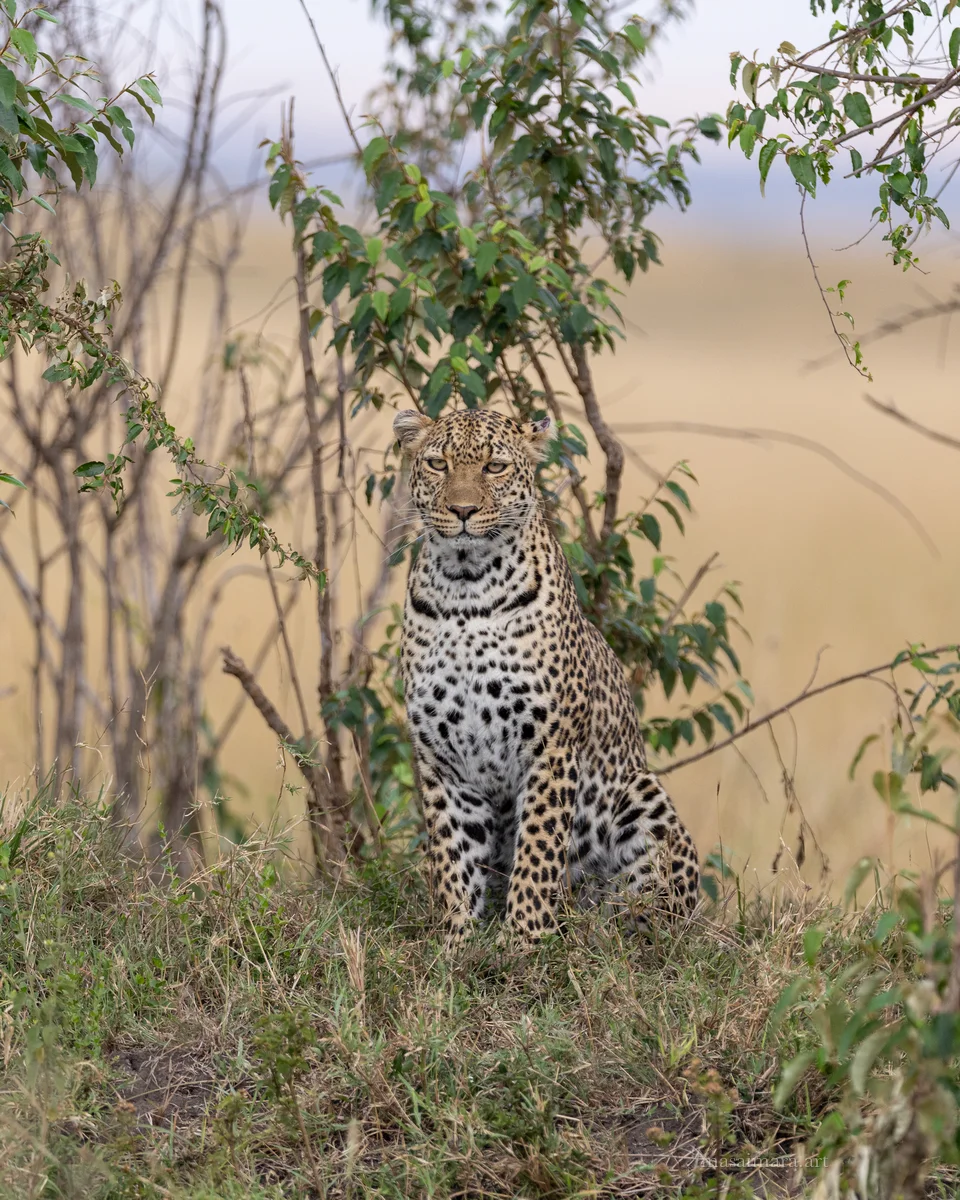
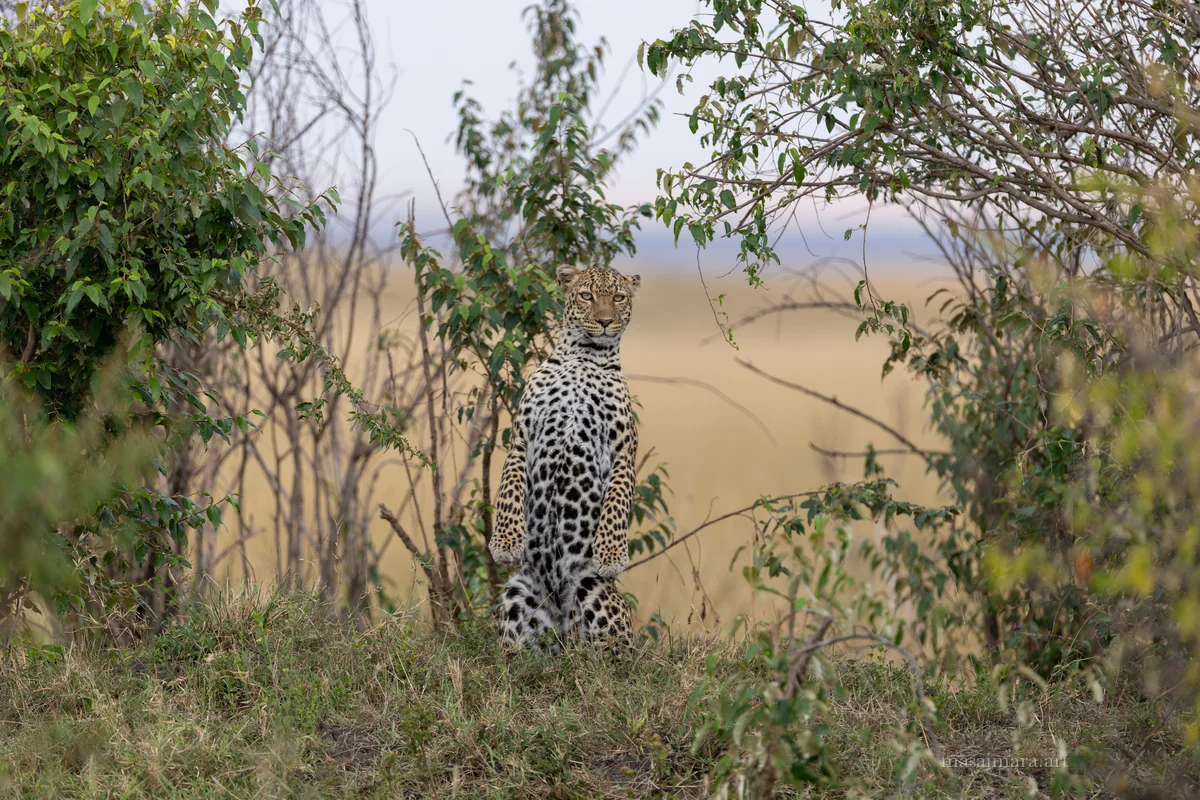
Inside the thicket, the vertical again. She is sitting upright between two leafy stems, looking straight out — the picture filtered through branches, the look itself unobstructed.
And then the one unusual frame. The body is fully extended on its hind legs against the bush, paws hidden in the foliage, the whole animal lifted. A beat later she is down again, walking back into the open. The camera does not get to ask what she was reaching for.
“One leopard, six rooms — and the same morning insisting on each.
”
Field note
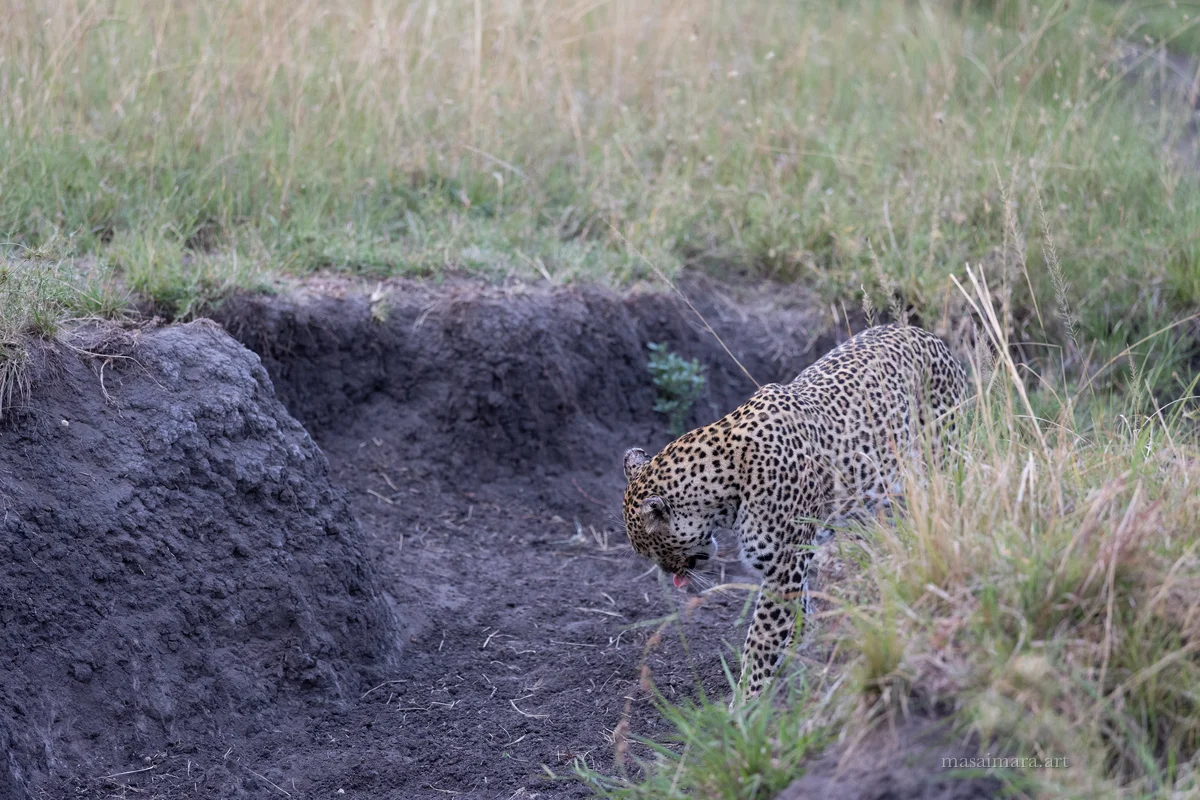
The gully. A small cut in the earth, the kind the rains write into the plain and leave for the dry season; she is at its rim with her head bent into the cleft. Drinking from a pocket of overnight water, or sniffing the bank — the camera does not insist on knowing.
Still at the cut. A different stretch of the same gully — the leopard at the rim, head down to the dirt face, mouth slightly open, body in profile against the bank. The morning lingers at the seam in the earth.
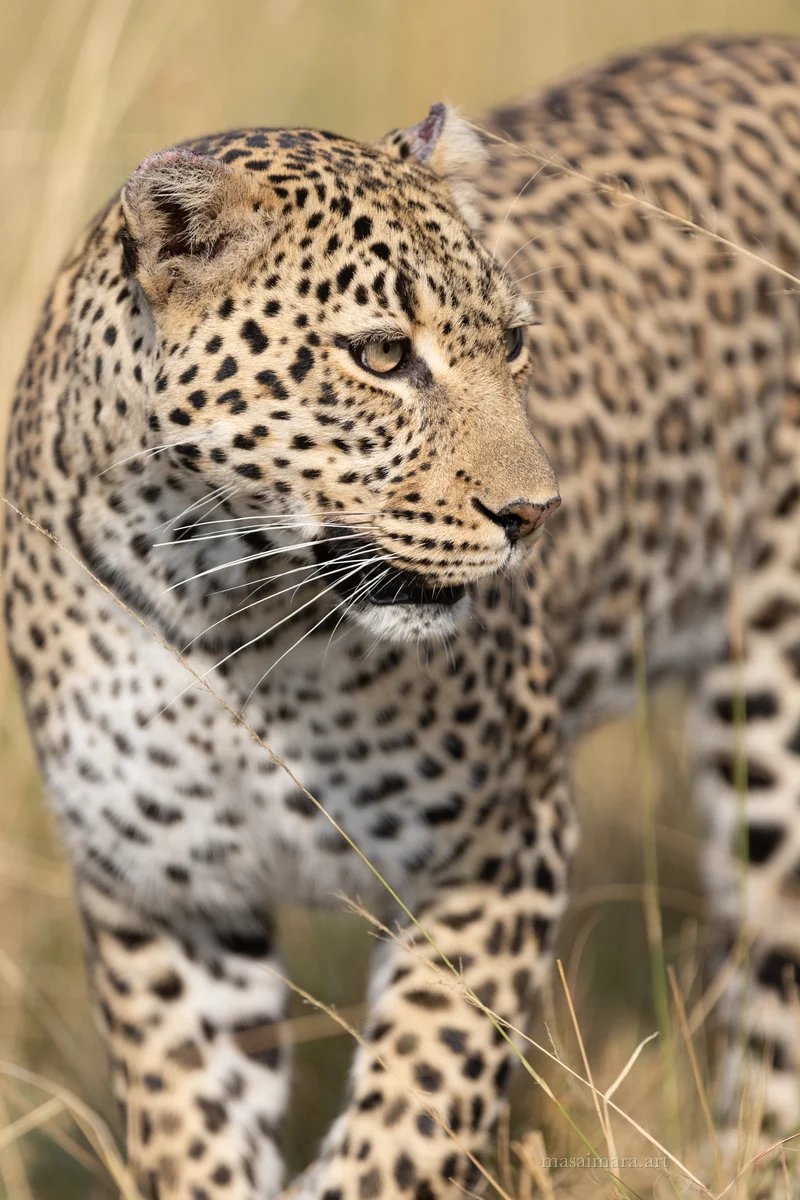
The closest portrait of her all morning. Head and chest only, body curling out the right edge of the frame, the whisker line clean against soft side-light. For one vertical, the encounter has finally got close.
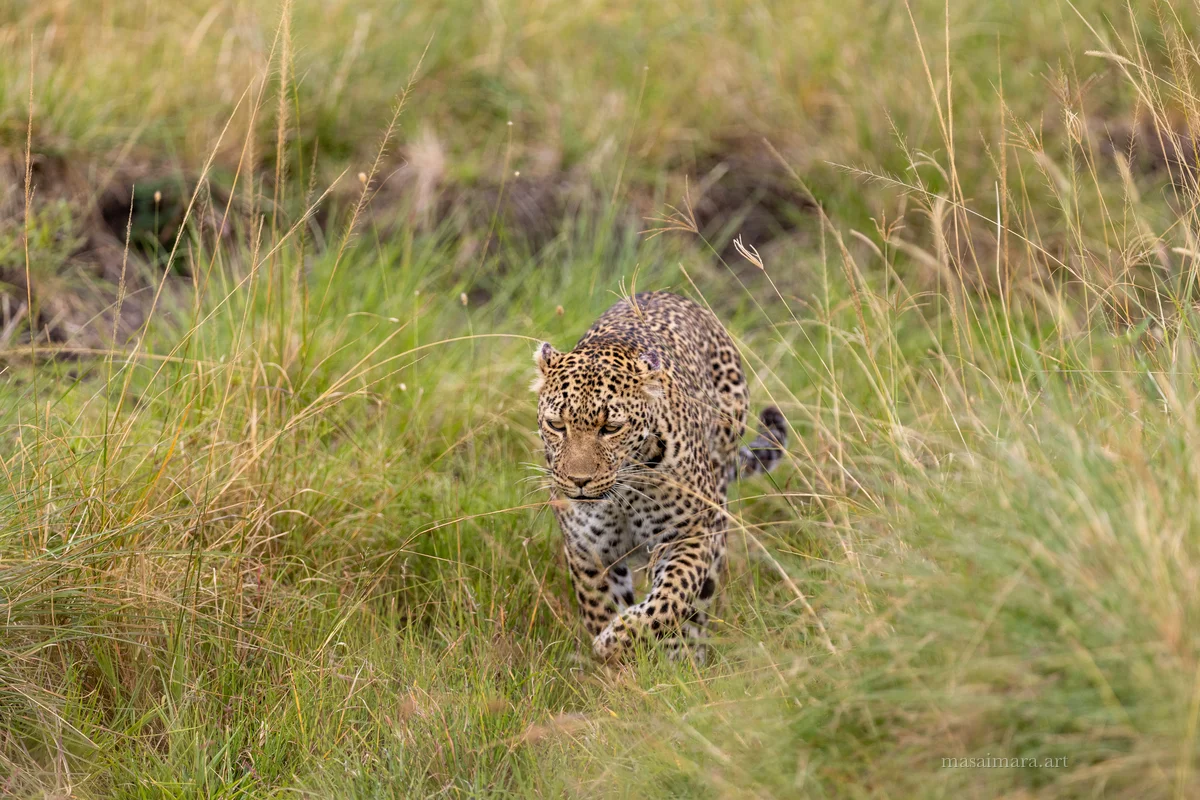
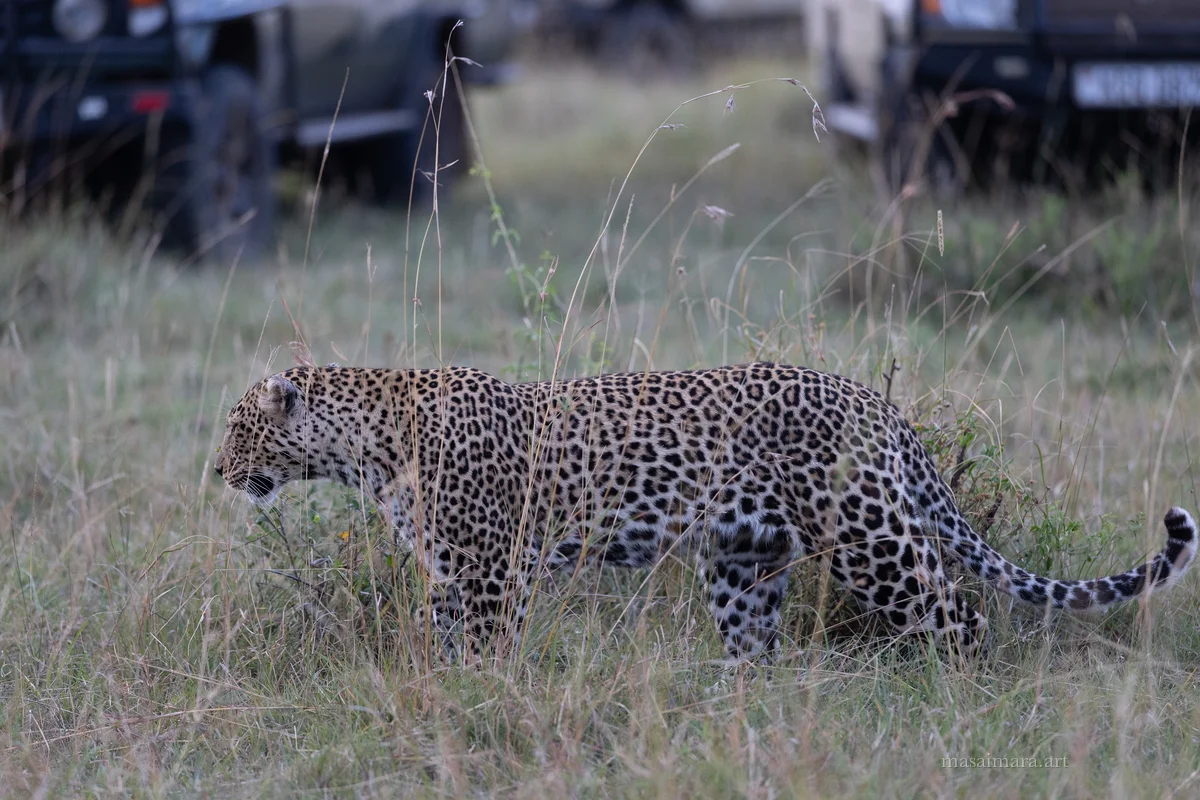
And the walk that comes with it. She comes past in profile through tall stalks, two safari trucks a soft grey wall at the edge of the frame, the spots crisp at the flank — the picture has finally got inside the encounter rather than across from it.
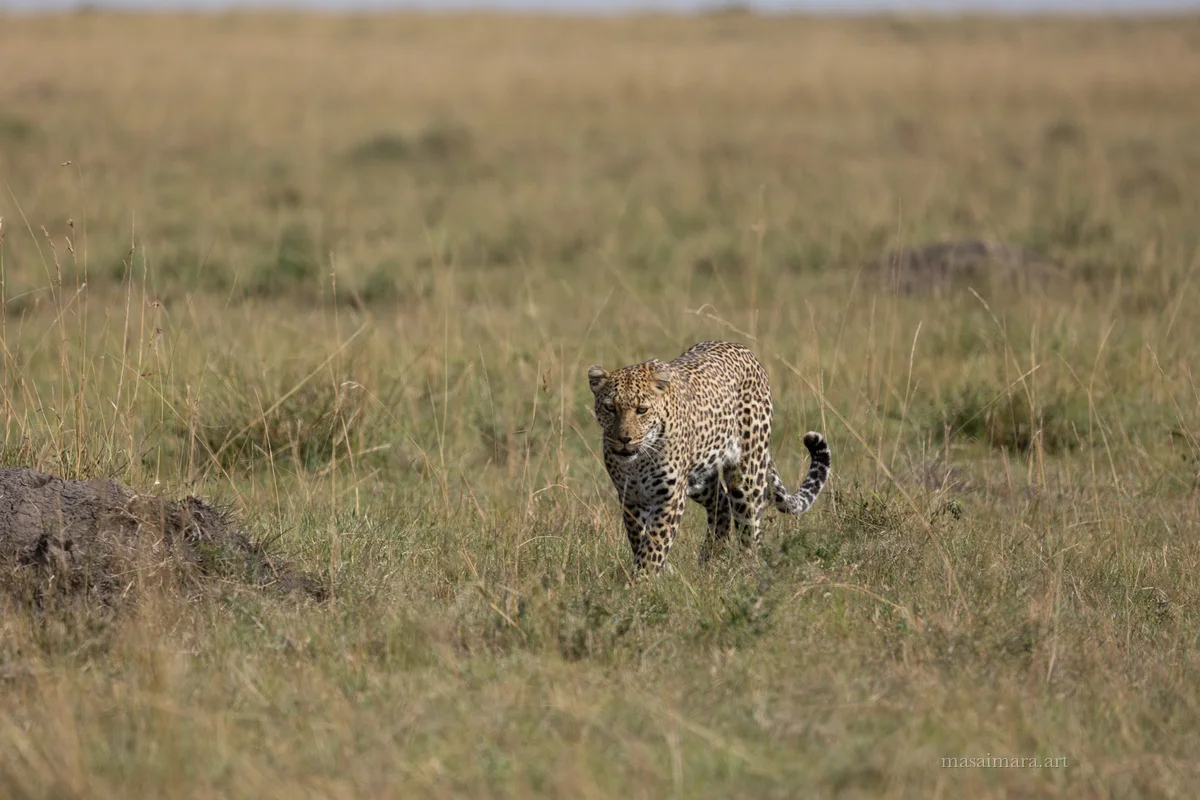
Out onto the plain in the white hour. The leopard walks forward through short open grass under hard high-angle light, the plain flattened to two tones, the cat the only shape with a third. The morning has finally turned over; the encounter has run its rooms; and the camera, for once, has nothing left to ask.
Cold dawn through a pink seam, into wet grass, into a thornbush, through an erosion gully, into the white flat hour after — one cat across five rooms of the same plain.
- Camera
- Canon EOS R5 Mark II · Canon EOS R6
- Lens
- Sigma 500mm f/4 DG OS HSM Sports · Canon RF 70–200mm f/2.8 L IS USM Z