first-light
The Walker
The mane is the constant. Everything else is the variable.
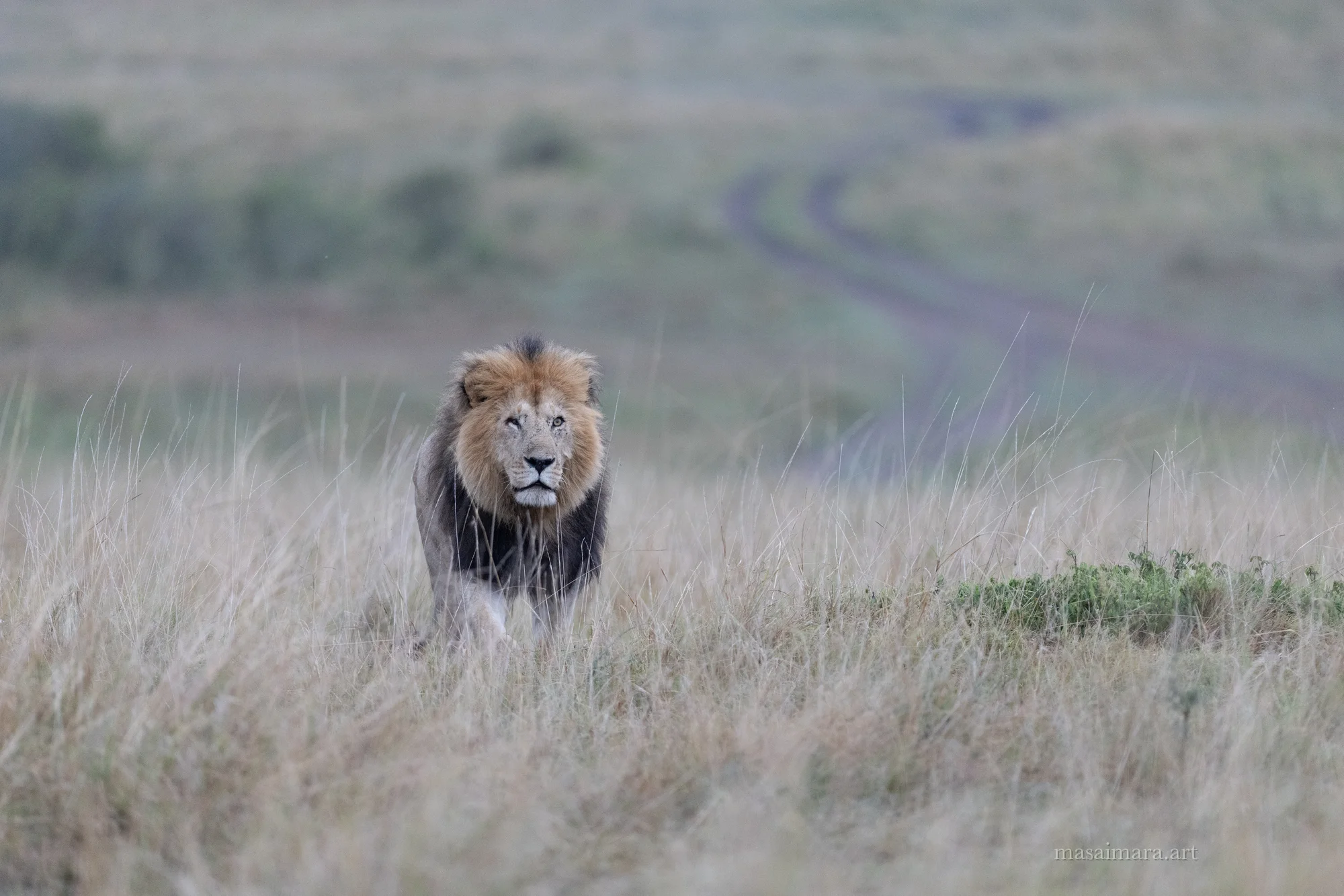
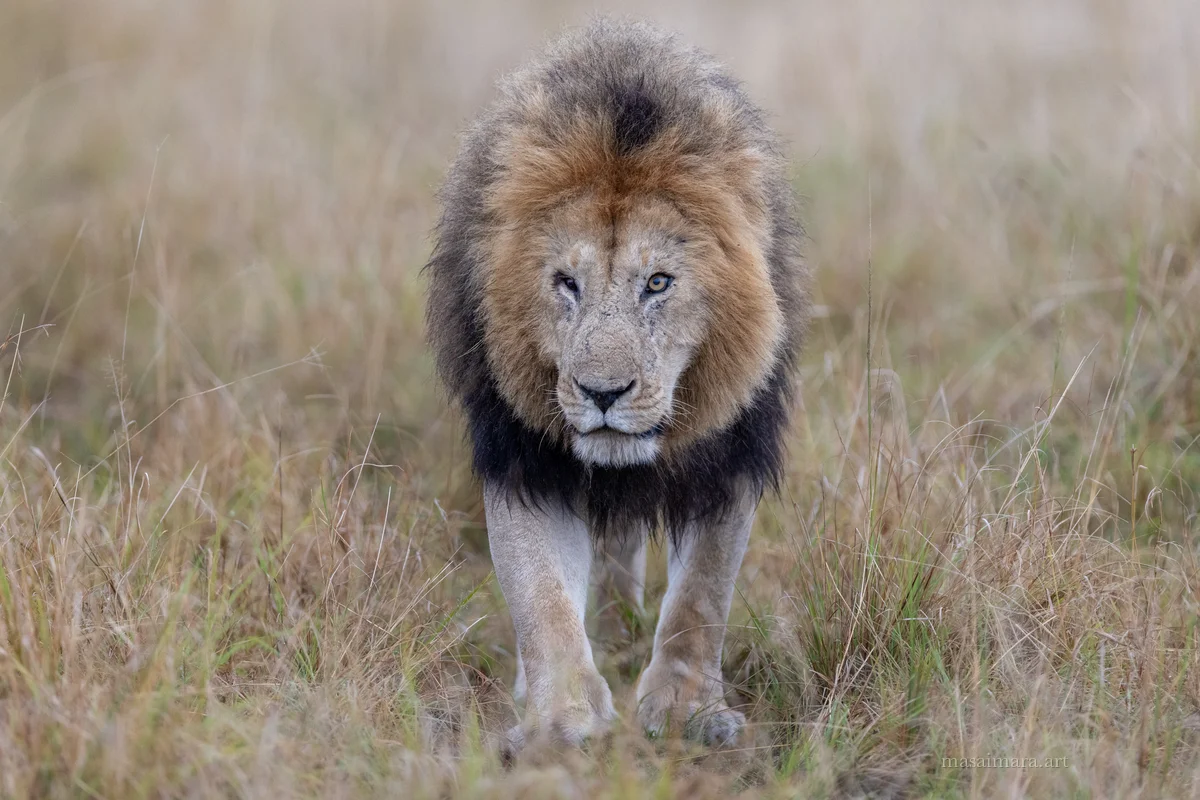
He comes through the grass head-on, the mane in motion at the shoulders, the rest of the morning still grey behind him. The picture is mostly grass, and the part of it that is not grass is a body that has covered a lot of ground already.
The first portrait the morning allows. Vertical, tight, head only — the dark mane edge-lit by what light has been admitted, the eye open and forward, the scars on the cheek the only writing the face carries.
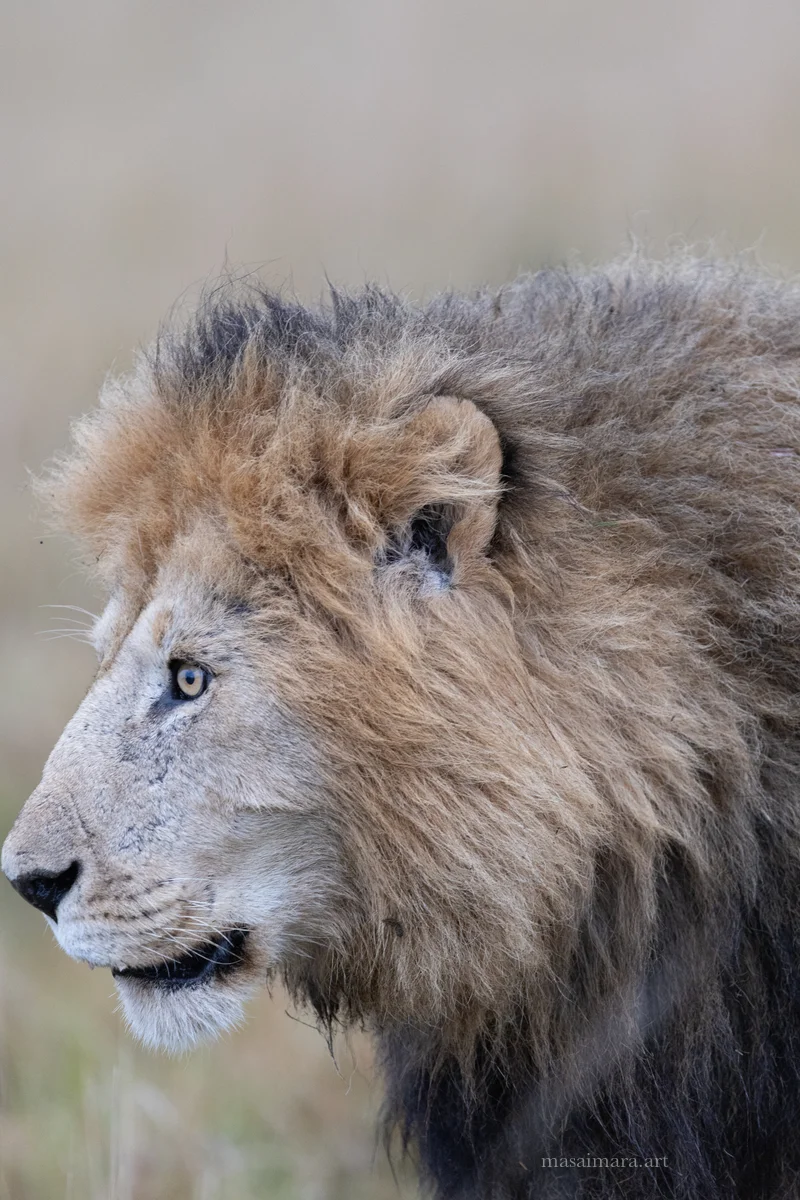
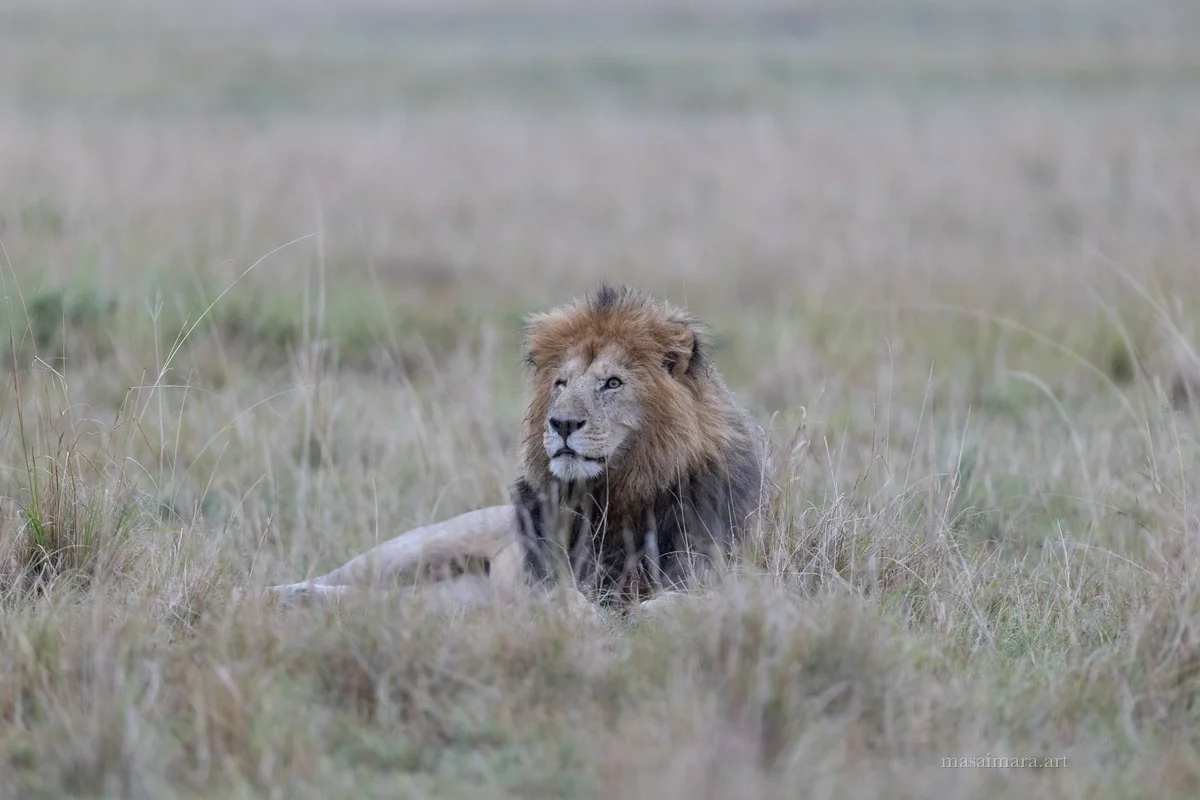
He has sat. Sphinx pose in the tall grass, mane heavy at the shoulder, eyes flat to the side. The only sit-up frame in the morning, held briefly between two walks, and then he is up again.
Closer. The mane catches the new light along its top edge; the gaze comes straight down the lens. He has not slowed for the picture; the picture has only moved a little to keep up.
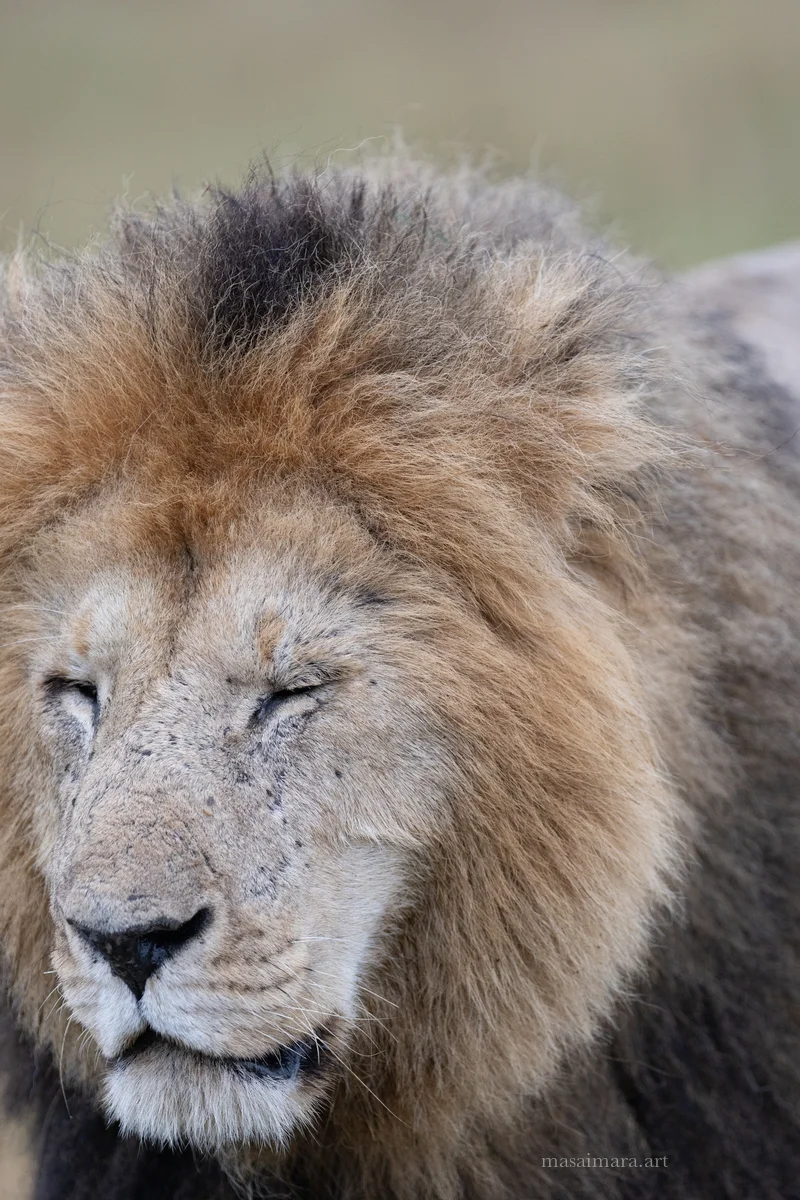
A vertical now, and intimate. Head filling the frame, eyes nearly closed, the mane around him like a halo too tired to bother being one. The kind of portrait a black-maned male gives one of in a morning, and gives without comment.
“He has not slowed for the picture. The picture has moved to keep up.
”
He turns. The grass thins; the plain widens around him; the picture pulls back to take it. The walking is no longer the subject; the field has decided to be it.
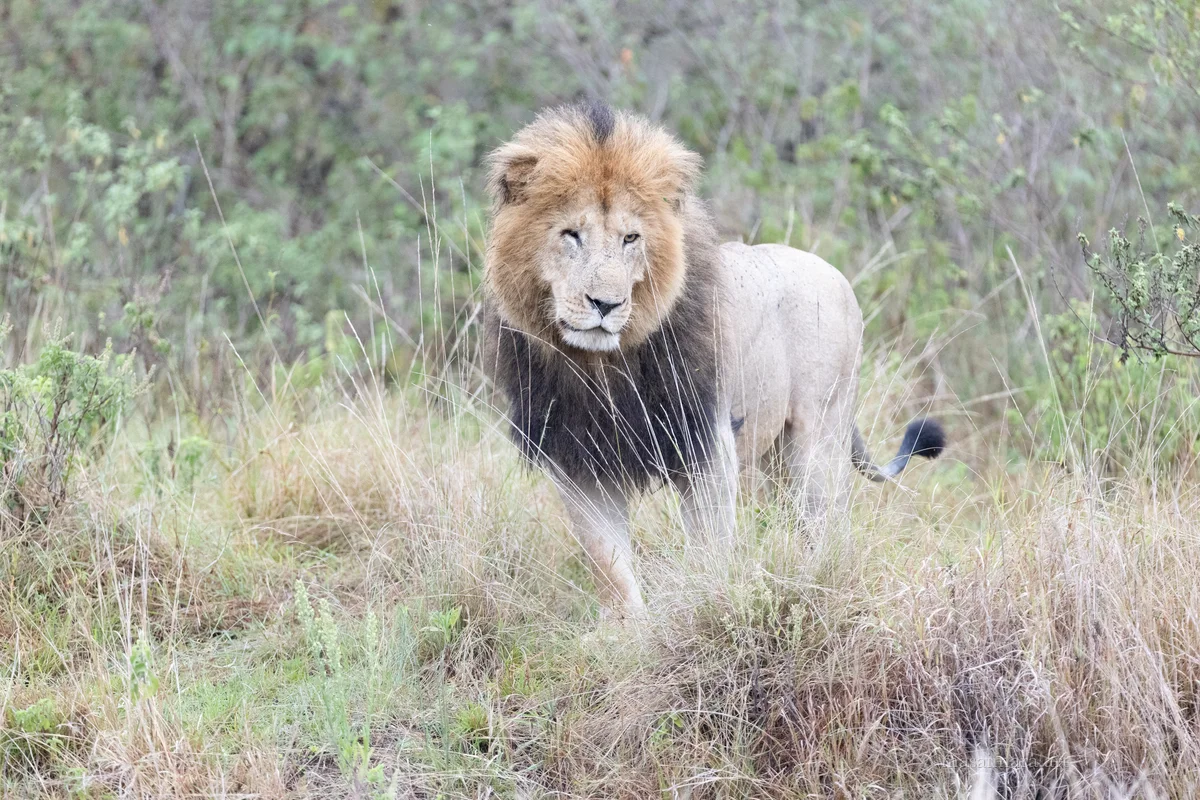
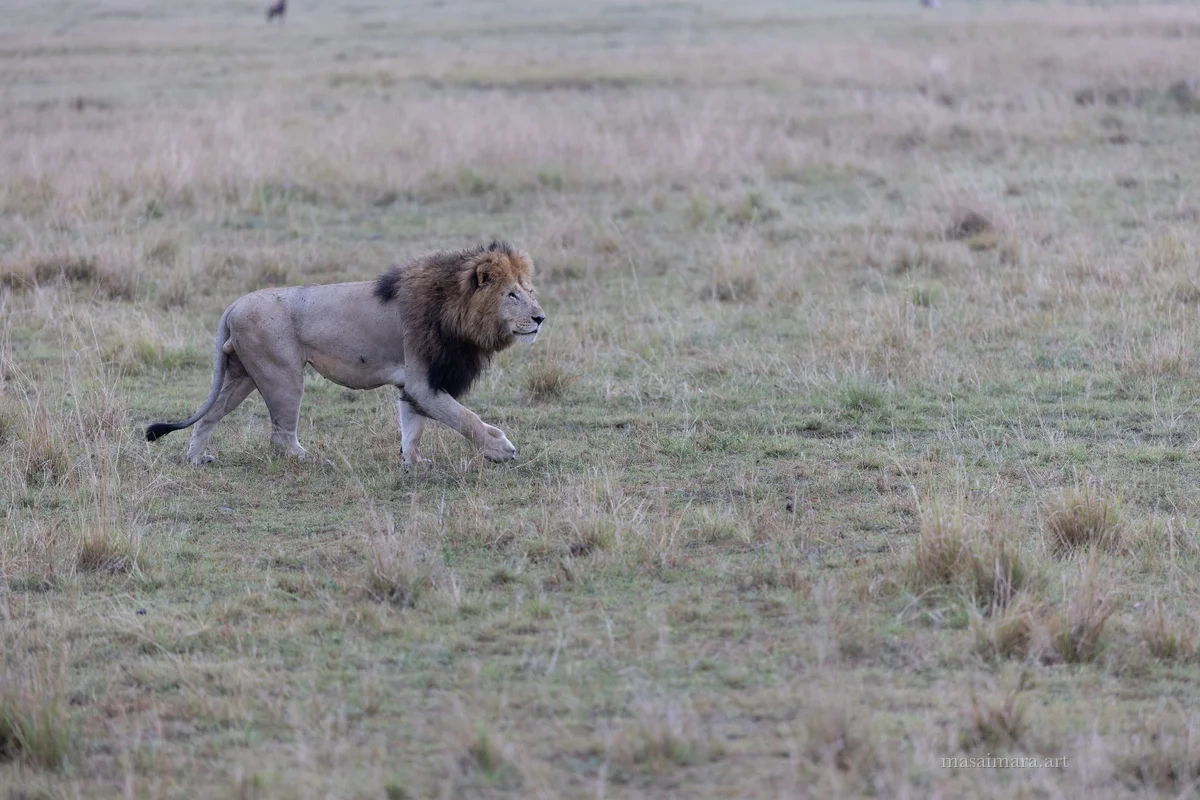
A while later. Different camera, same cat. He has not stopped covering ground. The light has strengthened; the haze has thickened; the body is the same body, walking at the same patient pace through what the morning has decided to provide.
The closing frame. He is standing on a low rise of green-edged grass, head turned to the lens, the pale plain pulling away into nothing in particular behind him. He has been the centre of the photograph for a long stretch. The morning is content to let him keep the centre, and the picture is content to let the morning agree.
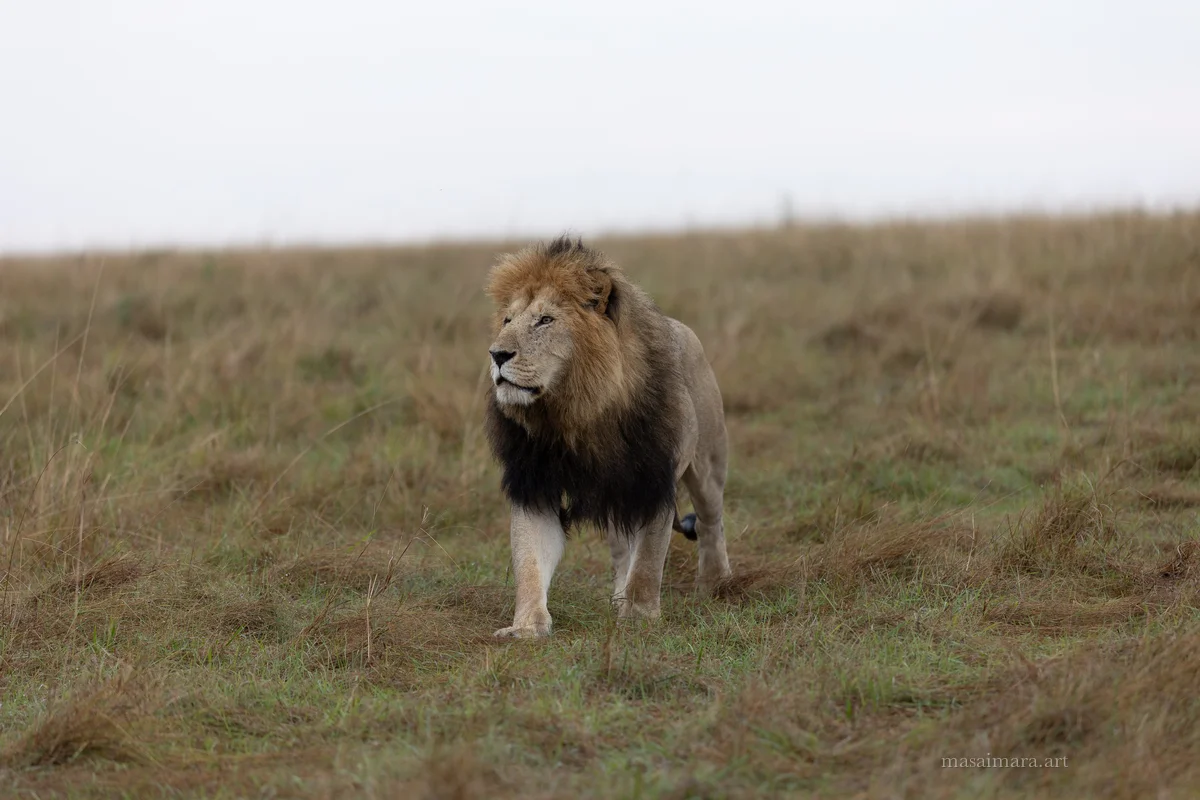
A long quiet patrol through strengthening light. The mane is the constant; everything else (haze, grass height, distance from the lens) is the variable. The Rekero pride.
- Camera
- Canon EOS R5 Mark II · Canon EOS R6
- Lens
- Sigma 500mm f/4 DG OS HSM Sports · Canon RF 70–200mm f/2.8 L IS USM Z