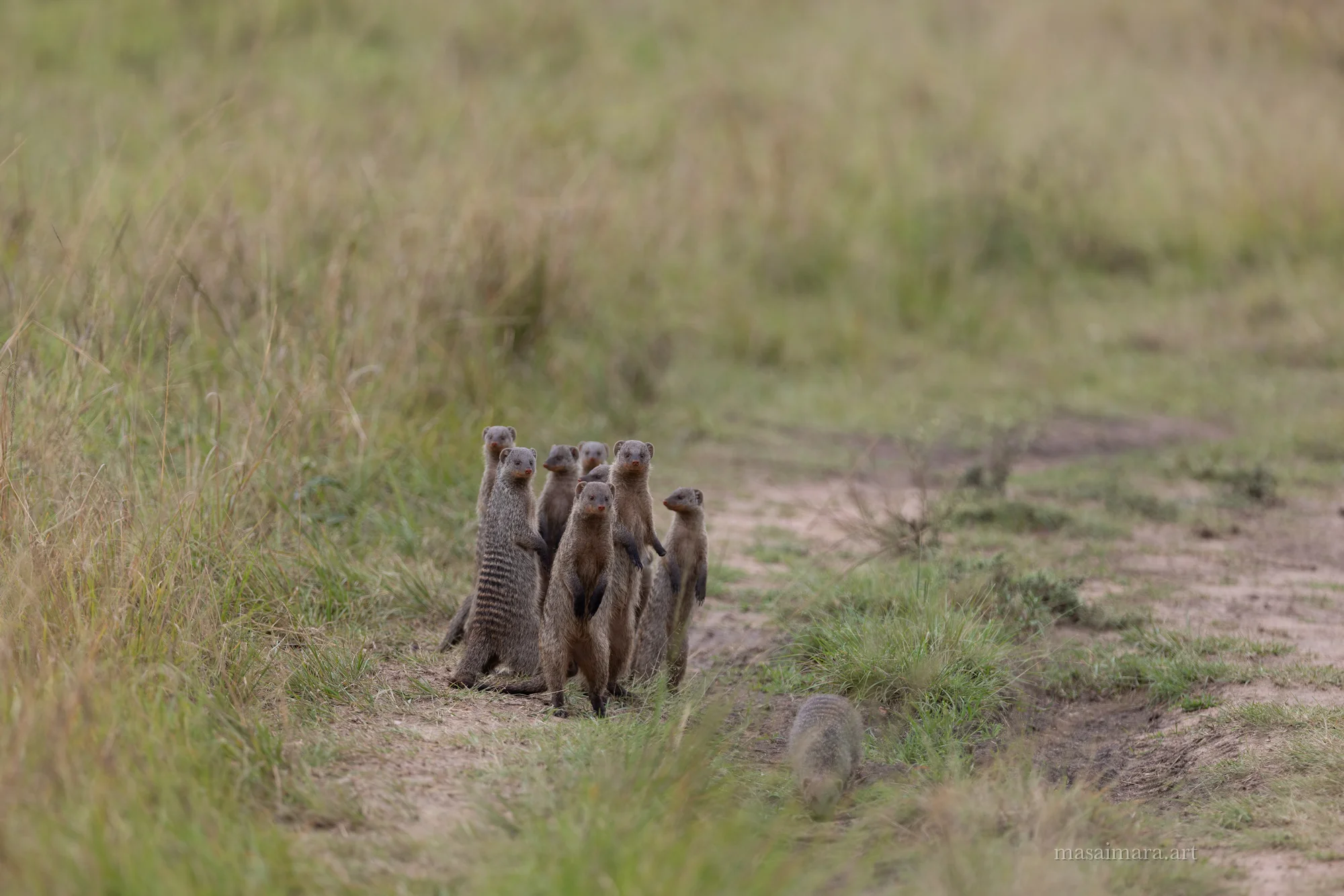
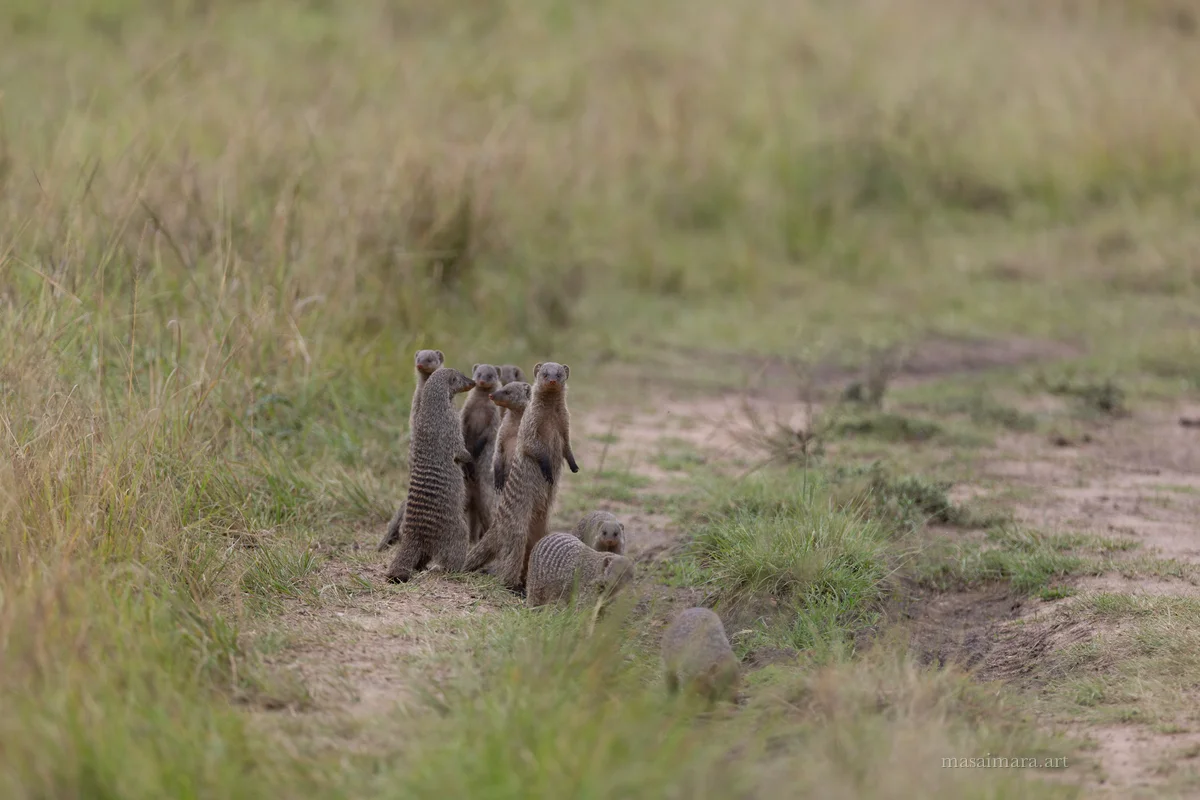
The mongoose is the photograph the rest of the morning is not looking for. A vehicle easy in the after-light, between larger sightings, passes a clearing in the bush and a small cast is there — five or six small bodies upright at the edge of the track, heads at one height, the unit moving as a single small organism. The shutter goes before the brain catches up. Two minutes on, the family has scattered and the picture is closed.
This is the working register of the banded mongoose. The pack does not arrive and stay. The pack arrives and is gone, and the lens has the duration of a held breath to do what it needs to do.
The family unit
A banded mongoose pack holds between ten and forty individuals, almost always related, with a flexible internal structure and remarkably little dominance hierarchy compared to most social mammals. Several females breed within the same week — synchronised oestrus — and the litters that result are reared communally, with all the lactating adults nursing all the pups without distinguishing their own. By two months the pups have no detectable preference for their biological mother over the rest of the lactating females, and the family is, in a literal sense, one collective unit.
The synchronisation is unusual enough that the species has become a touchstone in cooperative-breeding research. A mongoose pack is closer, in its working logic, to a colony than to a family.
The sentry
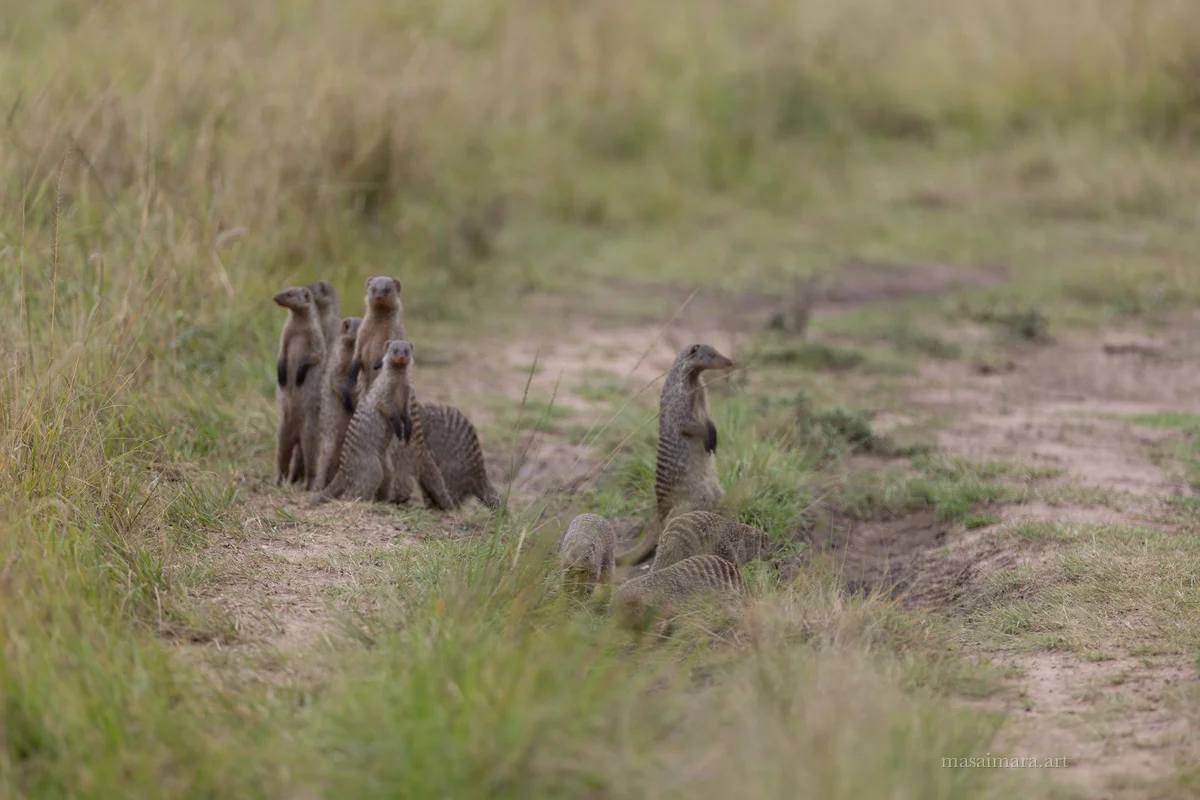
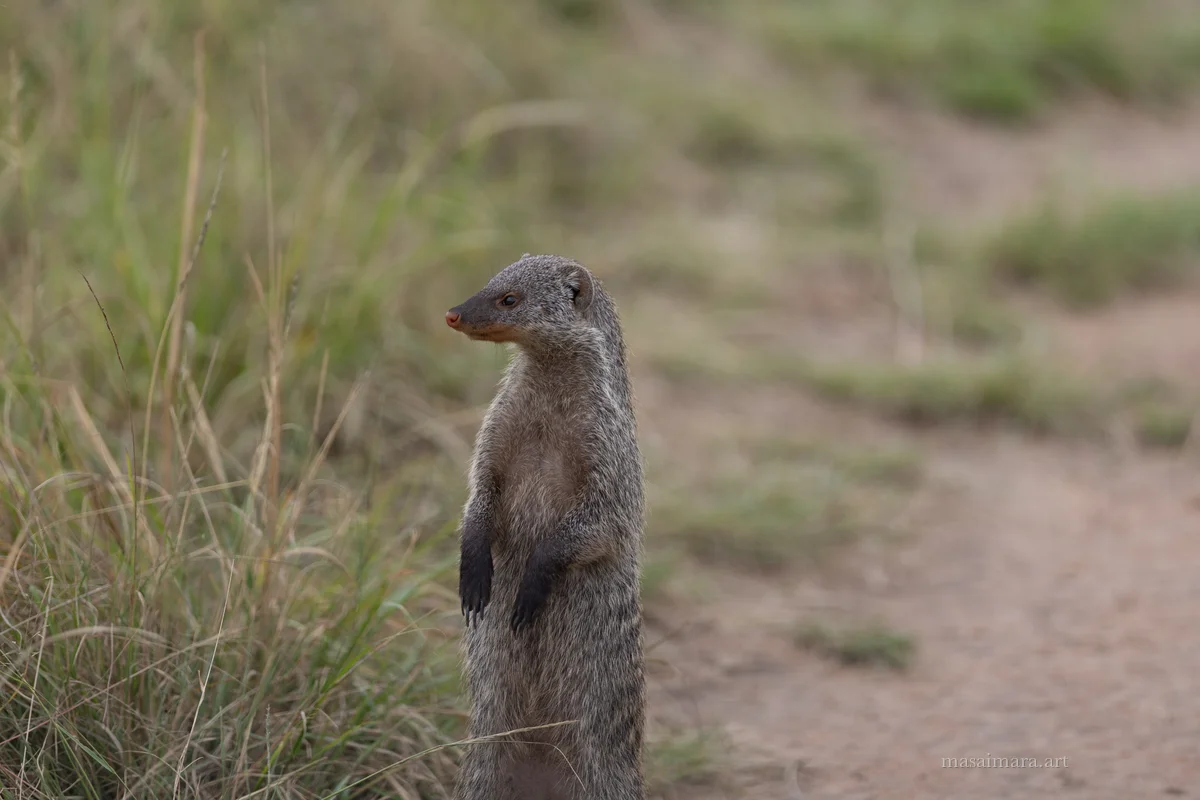
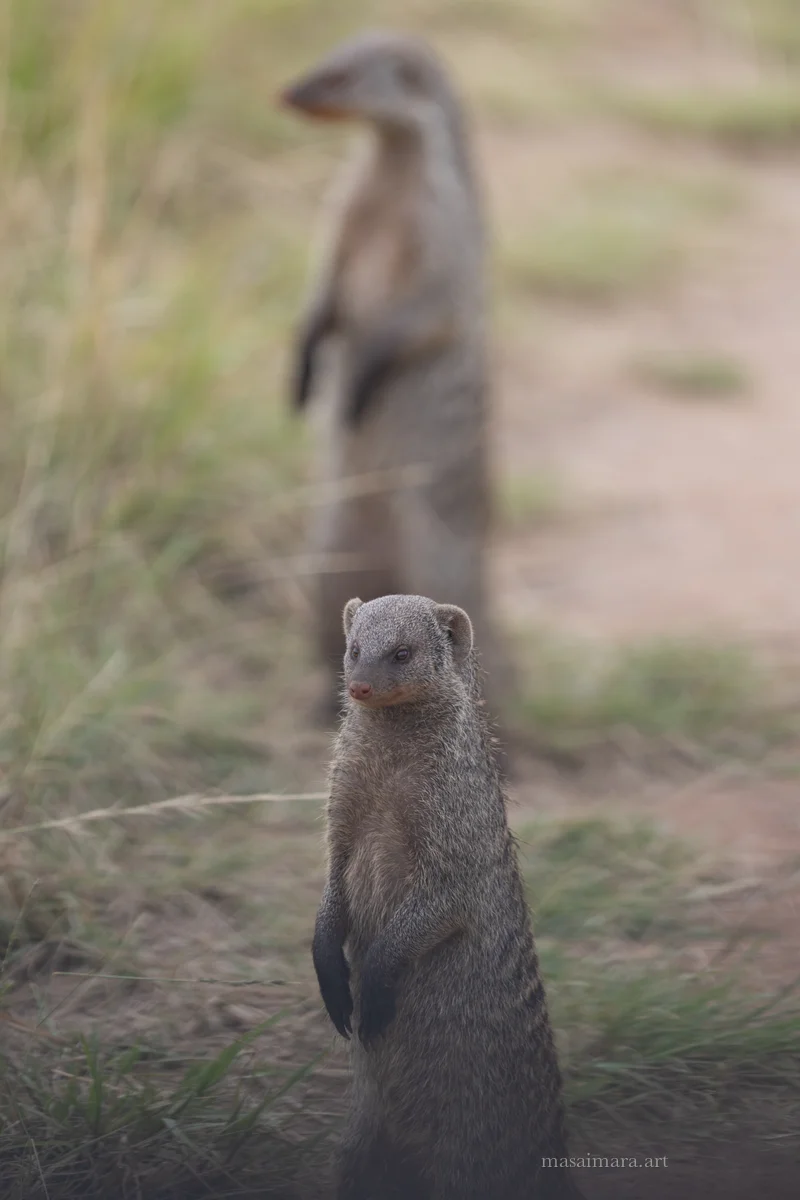
The banded mongoose's only fully composed posture is the upright sentry — body vertical, forepaws tucked at the chest, head still, chest forward. The posture is held for ten or fifteen seconds at a time, by one animal at the edge of the foraging pack, before being passed in a rotation that the family never visibly negotiates. The next sentry takes the next watch without ceremony.
The photographer's window is this posture. Everything else the family does — the foraging, the trotting, the chittering, the brief scuffles that resolve themselves before the lens can find them — is movement. Only the sentry is stillness, and only the sentry composes.
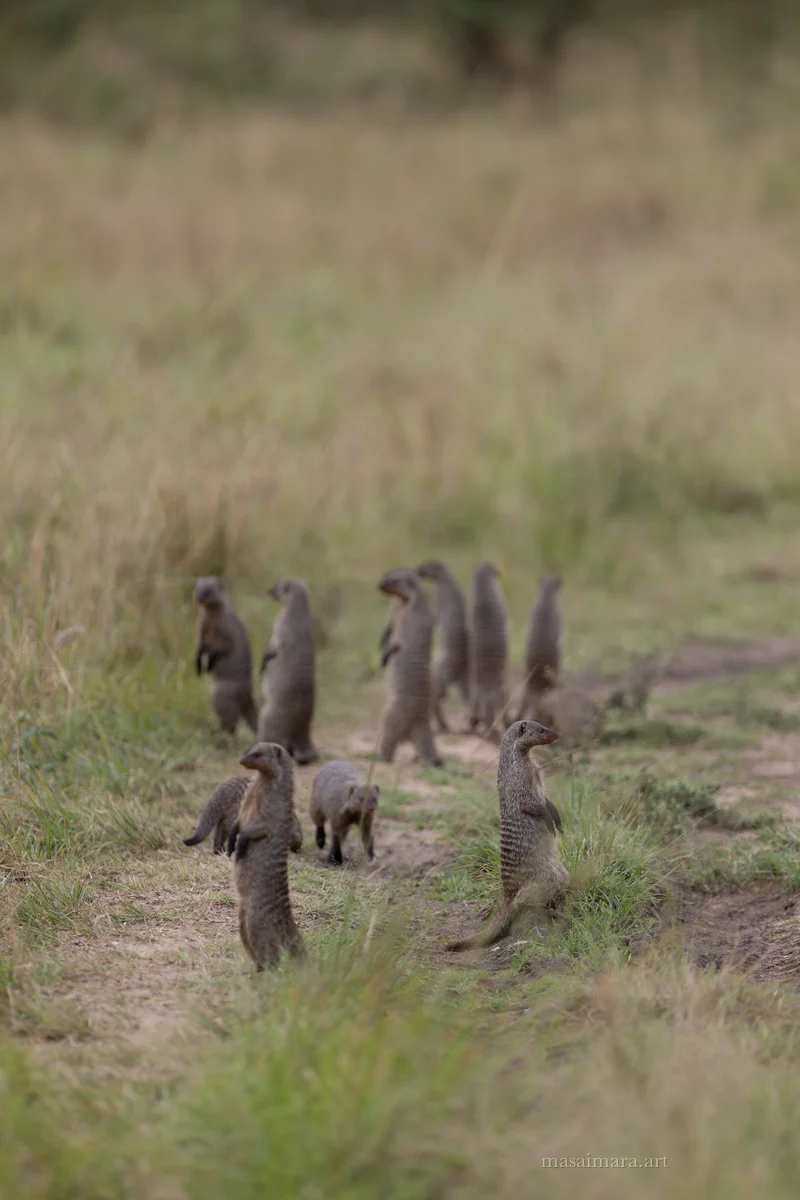
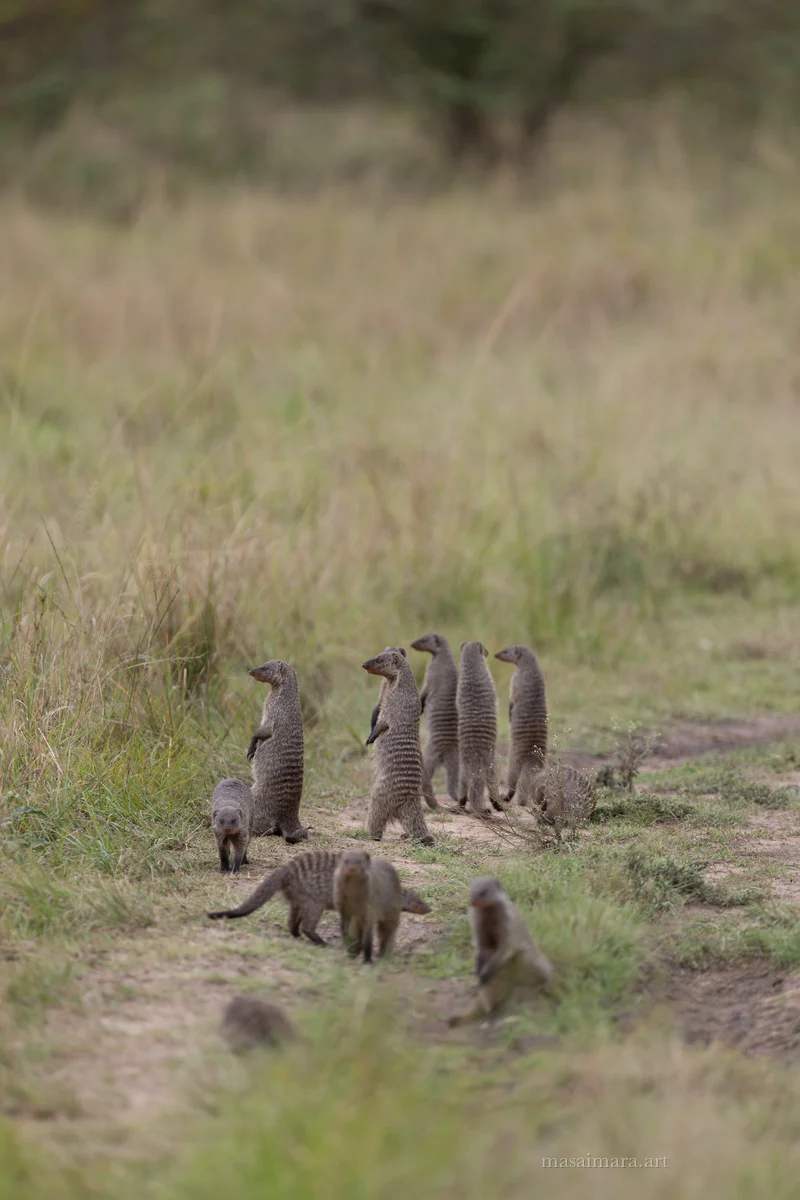
The family in motion — several upright in transit, others on all fours, the cast briefly resolved as a single small organism crossing the picture.
The foraging line
A mongoose pack feeds by walking. The line is loose but the direction is shared; the family moves through cover at a steady working pace, two or three metres apart, each animal turning over leaf litter and short grass for the dung beetles, ground beetles, termites, millipedes, scorpions, and occasional small reptiles that the bush has produced overnight. The whole pack covers somewhere between a kilometre and three kilometres of ground in a working morning, and a single animal in good condition has eaten close to a hundred grams of small prey by the end of it.
The line is the picture, when the picture is not the sentry. Several uprights, several on all fours, the cast briefly resolved as one organism moving through the frame.
Field note — On the short interval
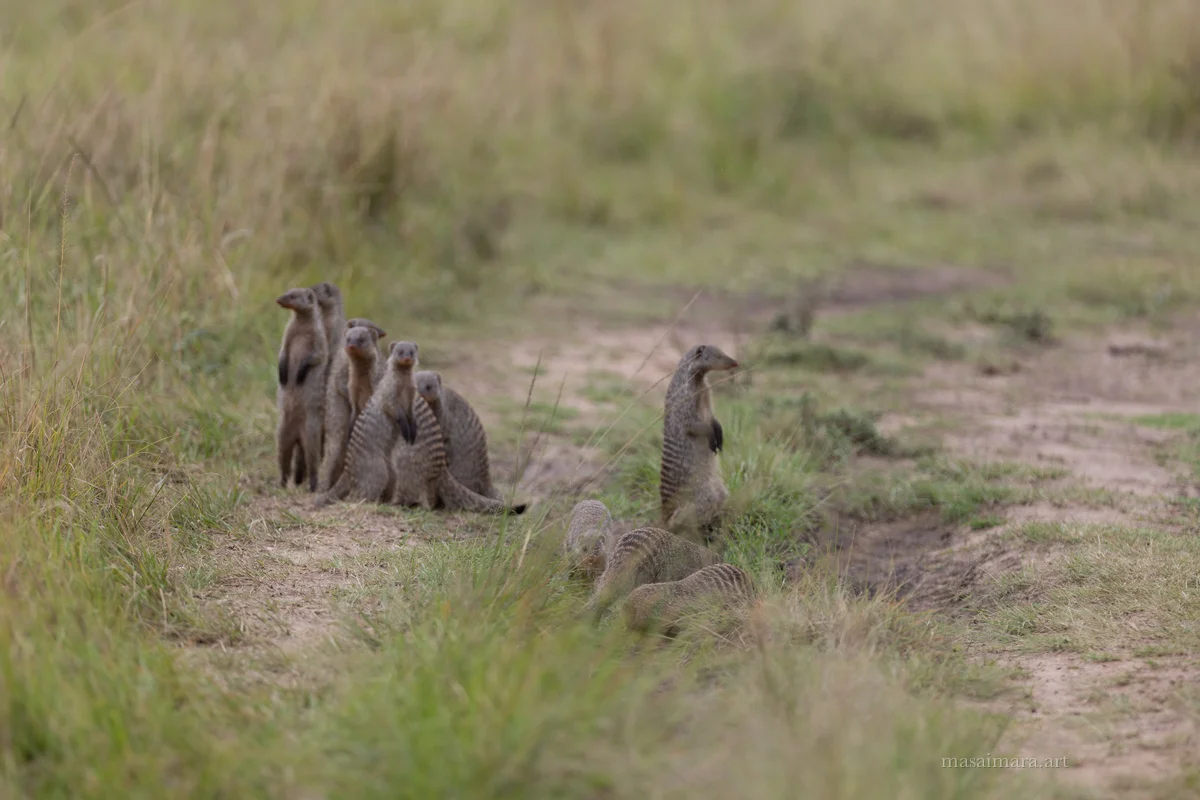
A vehicle in the after-light, half-asleep on the way back from somewhere larger, comes around a corner and a small family is on the track. Five or six bodies upright, heads at one height, the unit briefly one composition. The engine cuts. Two minutes of pictures, then the family breaks into pieces — one walking clear, another upright on the opposite side, two crossing the dirt between them — and a minute after that, the bush has collected them back.
The encounter closes with the same posture it opened with: a single watcher upright between two stretches of grass, the rest of the family no longer in the picture. The interval is the gift, and the bush takes it back. A lens returning the next day will not find the same family again.
The voice
A foraging pack vocalises almost continuously — a low, soft chittering that holds the line together in cover where the animals cannot see one another. The chatter is, in practical terms, the family's wireless. A pack that has gone silent has, in nearly every case, just registered a threat — a martial eagle's shadow, a serval at the edge of the grass, a vehicle that has approached too quickly — and is about to scatter into the nearest cover.
The lesson for the photographer is to listen, not look. The encounter ends when the chittering does. The pictures stop coming a beat before the family is no longer there.
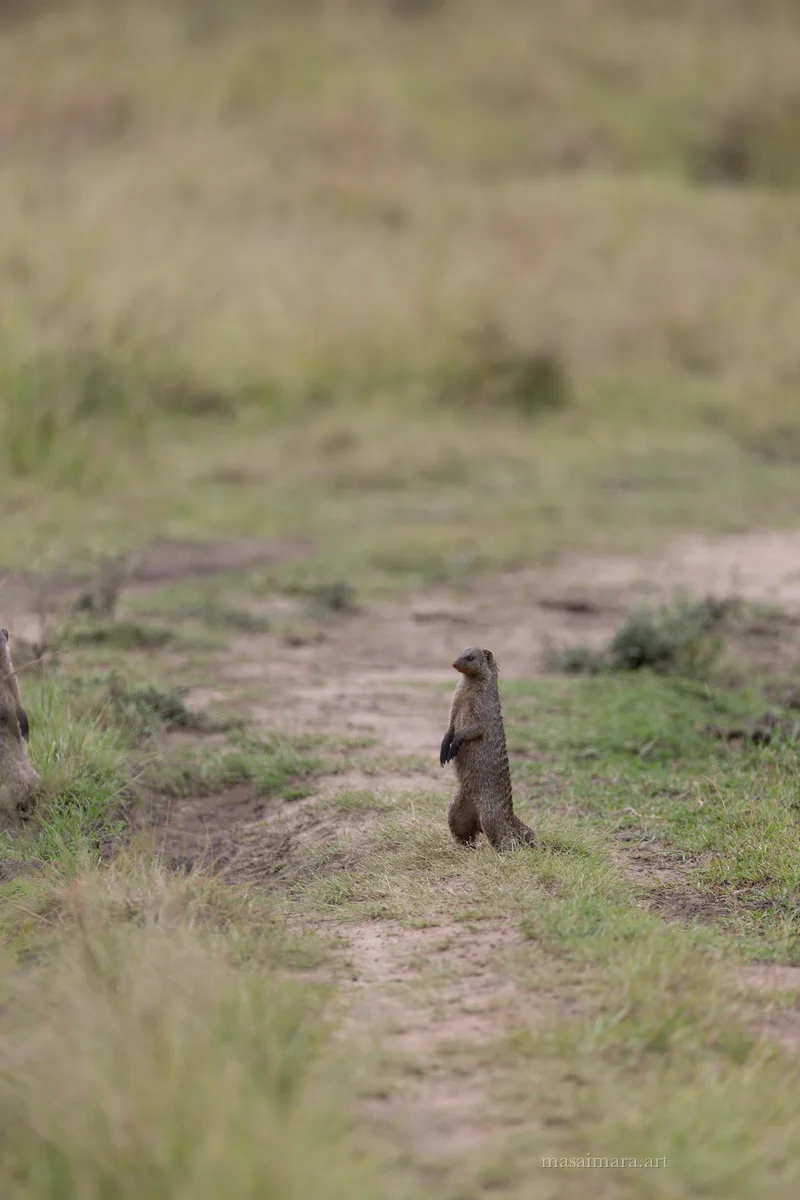
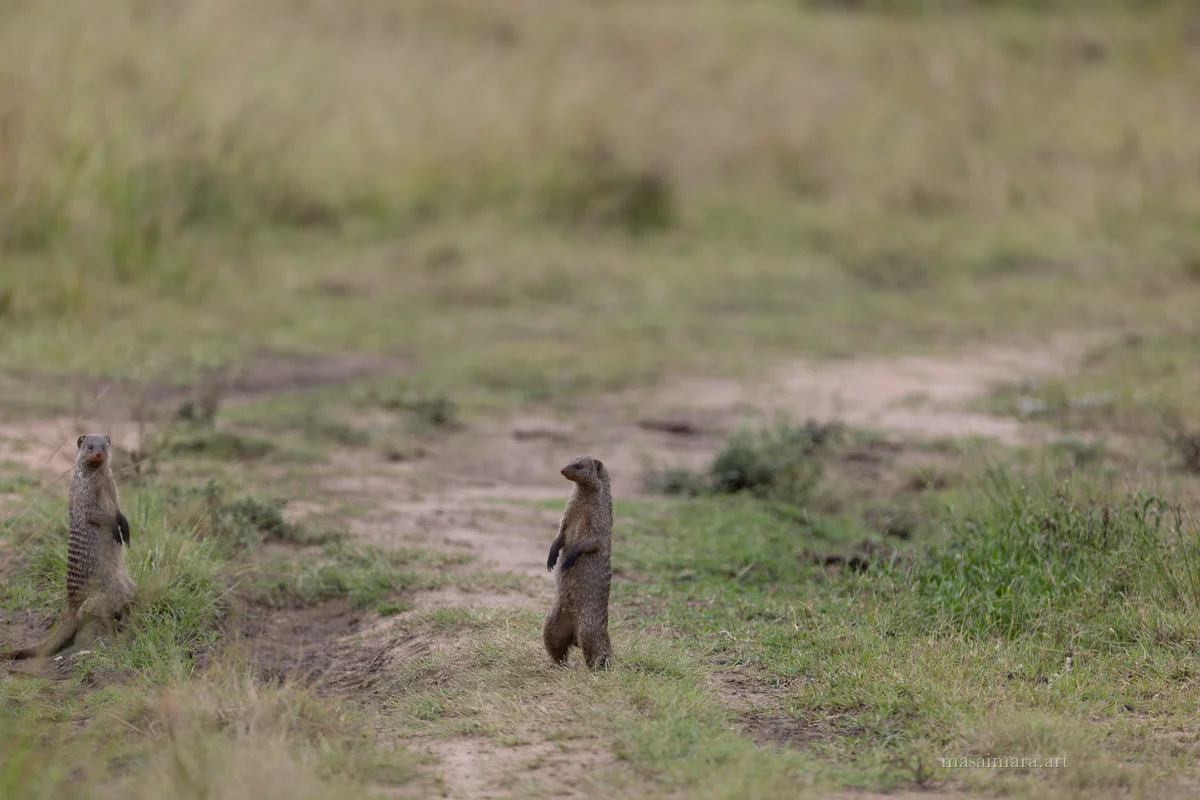
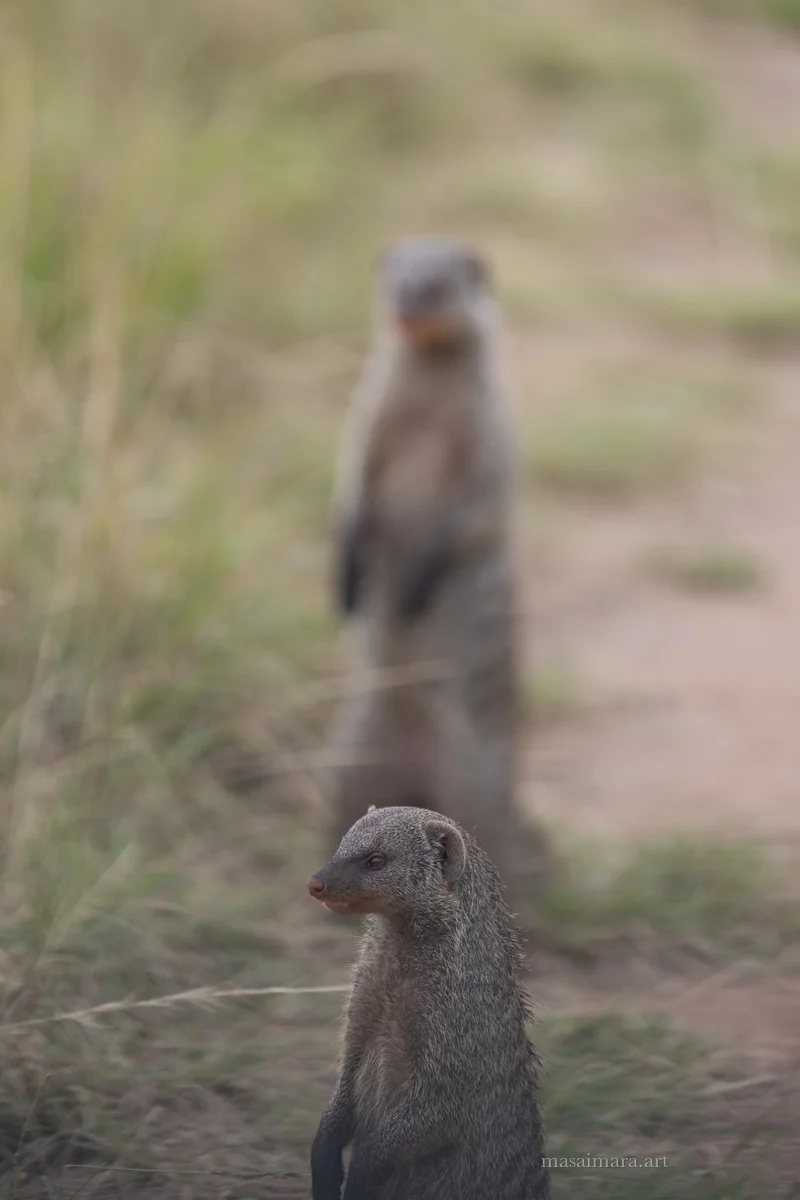
Two reads of the same minute — two uprights on the same stretch of path a body's length apart, and a profile foreground with a second body softer behind.
The pack and its hierarchy
The banded mongoose does not have the lion's structured hierarchy or the hyena's matriline. The pack has dominant individuals, but the dominance is loose, situational, and does not appear to map onto breeding access in any reliable way. A subordinate female who breeds in a synchronised oestrus rears her pups alongside the dominant's; a subordinate male contributes to the defence of the pack against rivals without any consistent return.
The result is a society without a queen. Most social mammals collapse without their lead animal; a mongoose pack reorganises in a week. The structure is in the number of individuals, not in any one of them.
The face
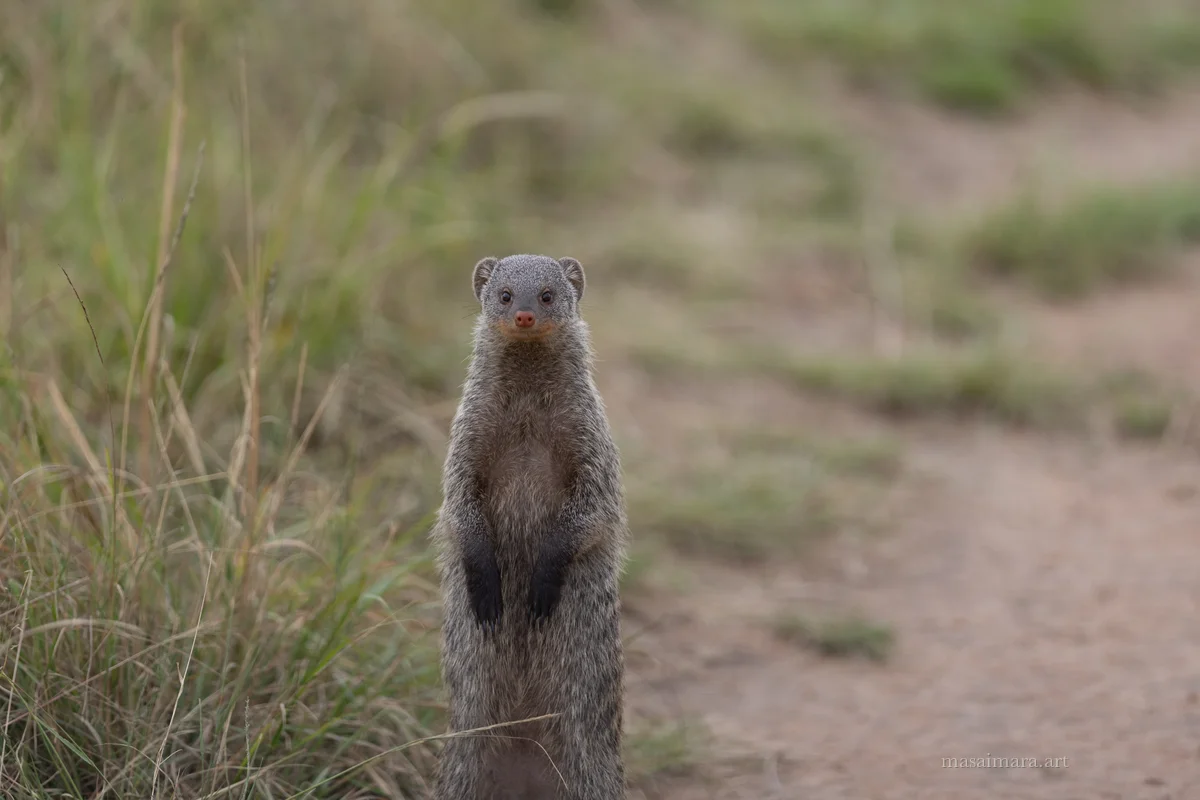
Up close, the banded mongoose has the small carnivore's universal face — black-rimmed eyes, short ears, the muzzle slightly elongated into a working snout. The body bands that give the species its name run vertically across the back from the shoulders to the rump, and are most legible from above; the picture taken at ground level rarely admits them, and the animal reads as a uniform brindled brown.
The photograph the family allows, head-on at door-level, is the tightest portrait the species offers. The forepaws are tucked. The eyes are on the lens. The bush behind has gone soft. For the duration of the held breath, the small animal is the whole of the picture.
“The bush gives the short interval. The bush takes it back.
”
Field notes
The dens
The pack uses several dens within a territory of roughly two to four square kilometres, rotating between them on a schedule the family appears to set collectively. Old termite mounds are the preferred architecture — the inner chambers cool and dry, the multiple entrances escape-friendly, the structure already abandoned by the termites that built it. A single mound can hold a pack of thirty for a month before they move on.
The den-watching morning is the photographer's other window. A known mound at dawn or dusk will produce the family as the family decides to come up, often in rapid sequence — first the sentry, then the line, then the pups, the last of them lagging out of the burrow by a beat. The photograph is the slow filling of the mound's upper slope. Half an hour of patience for two minutes of moving picture.
Mongoose
Mongoose
Mongoose
Mongoose
Mongoose
The mongoose is the photograph the rest of the day was not looking for. The bush gives the interval; the lens takes the picture; the bush collects them back. Two minutes is the whole exchange.
The mongoose family is a brief composition — five or six upright bodies at one height, given by the bush for a minute or two, then collected back. The picture is the interval.
- Camera
- Canon EOS R5 Mark II
- Lens
- Sigma 500mm f/4