The lions of the Greater Mara have been studied longer than almost any other population in Africa. They have names, and lineages, and reputations, and they appear in books that are sold in the souvenir shops of the Nairobi airport. None of that helps you find them.
What helps is the small things. A flick of a tail in the long grass at the far edge of the plain. The way a group of zebra suddenly tightens, then loosens. The unmistakeable smell of a kill that the wind brings half a minute before you see anything.
The lions do not perform. They sleep. They watch. They walk slowly to the next thing. The fieldwork is to be present, and slow, and quiet, and to give the morning enough hours to develop.
A social architecture
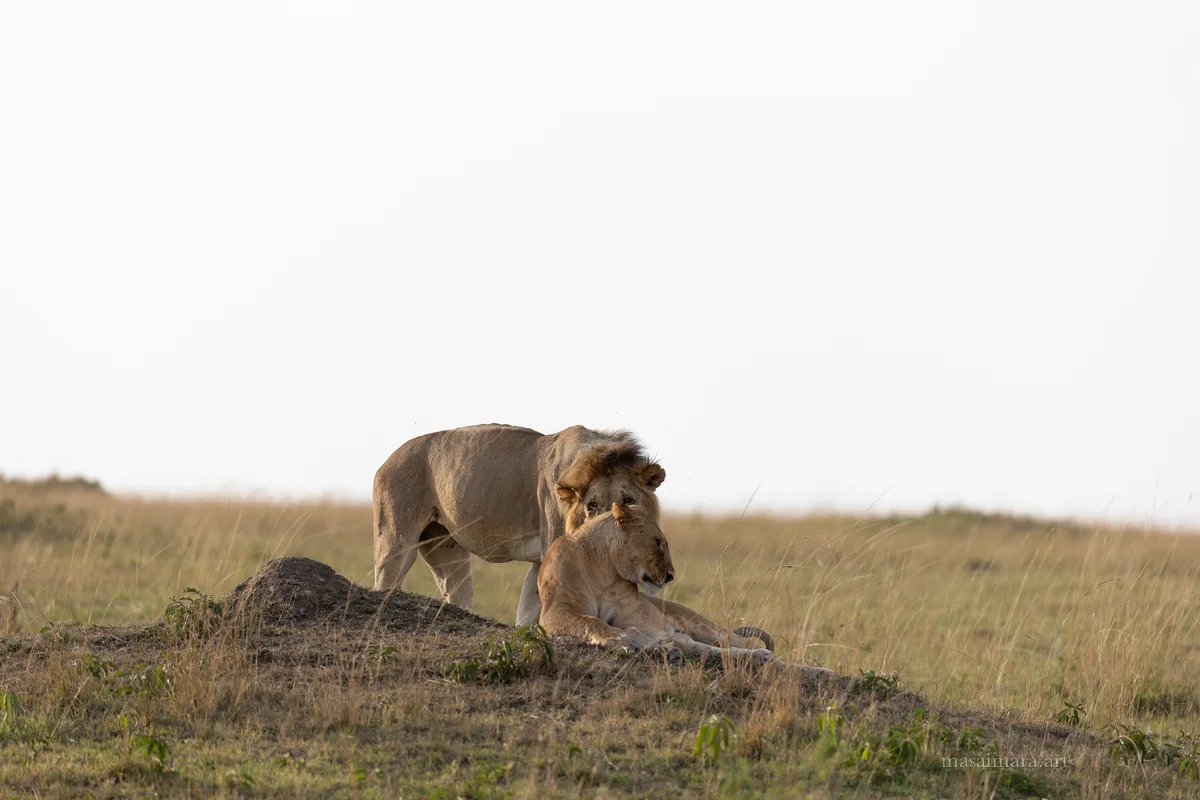
A typical Mara pride contains three to seven adult females, related to one another and to the cubs they raise cooperatively, and one or two adult males who have arrived from elsewhere and will, in three to five years, be displaced by other males arriving from elsewhere.
The females are the constant. They do most of the hunting. They make most of the decisions about where the pride will sleep, where it will move, when it will leave a kill. The males protect — sometimes — the territory and the cubs that are theirs.
It is the only social mammal on the savannah that operates this way, and the asymmetry — quiet female competence, loud male presence — is one of the things that gives a pride its weight in the landscape.
Cubs in the open
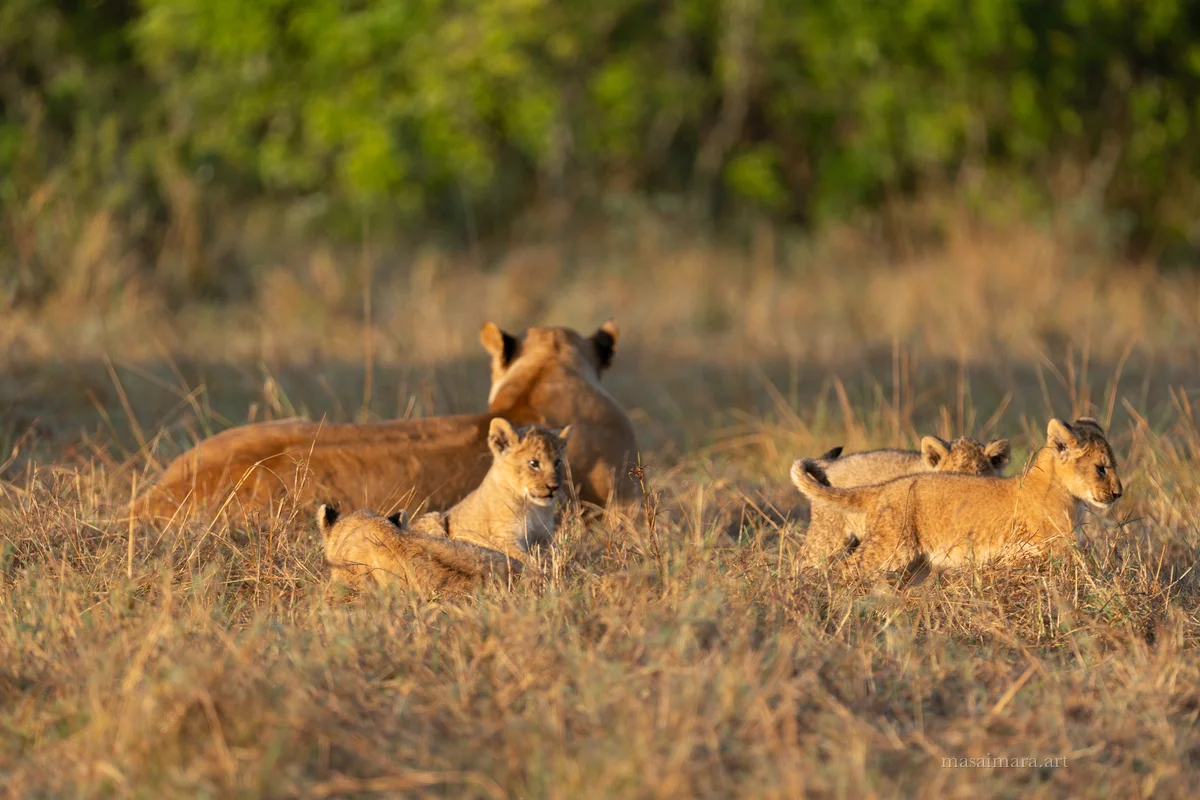
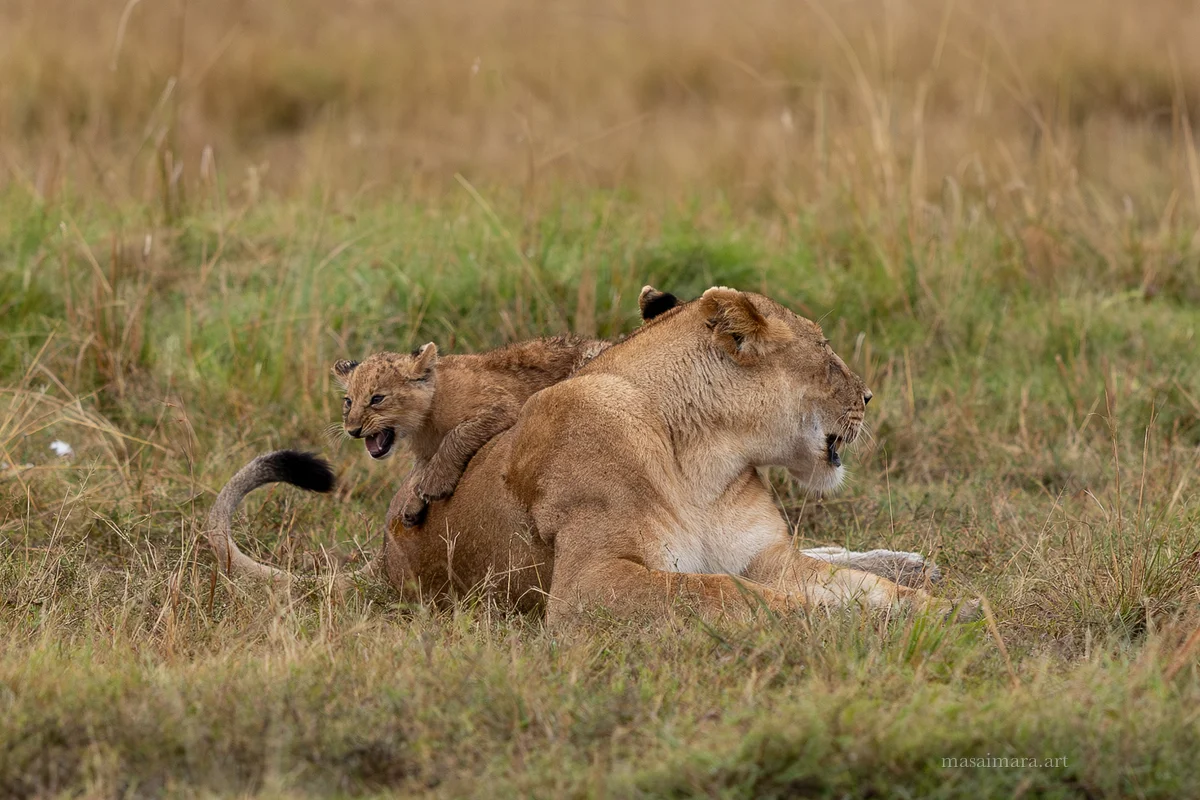
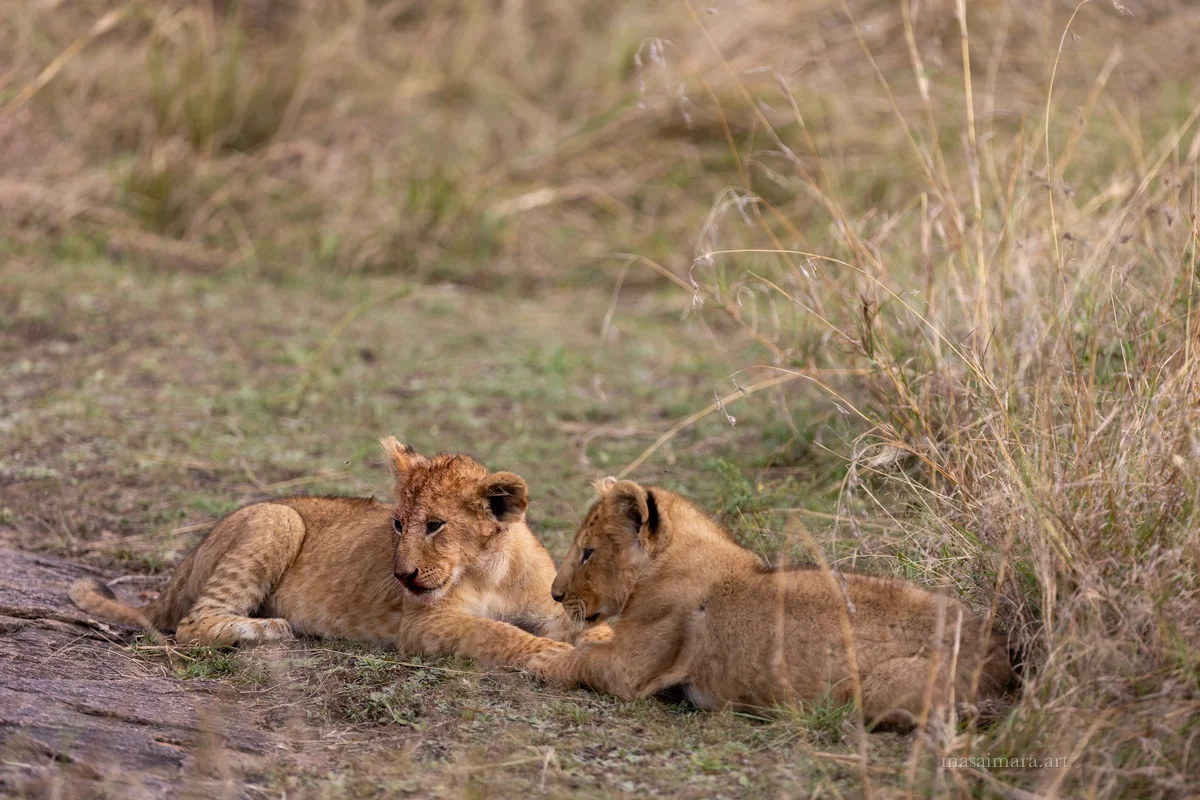
The Mara lioness gives birth in a den — a thicket, a rocky outcrop, a deep stand of grass — and keeps the cubs hidden for the first six to eight weeks of their lives. They are introduced to the pride only when the mother is confident the cubs can keep up.
Survival rates are not high. Half of cubs do not see their first year. Predation by other lions, by hyenas, by leopards; starvation when the mother fails on consecutive hunts; disease, particularly in years of higher rainfall.
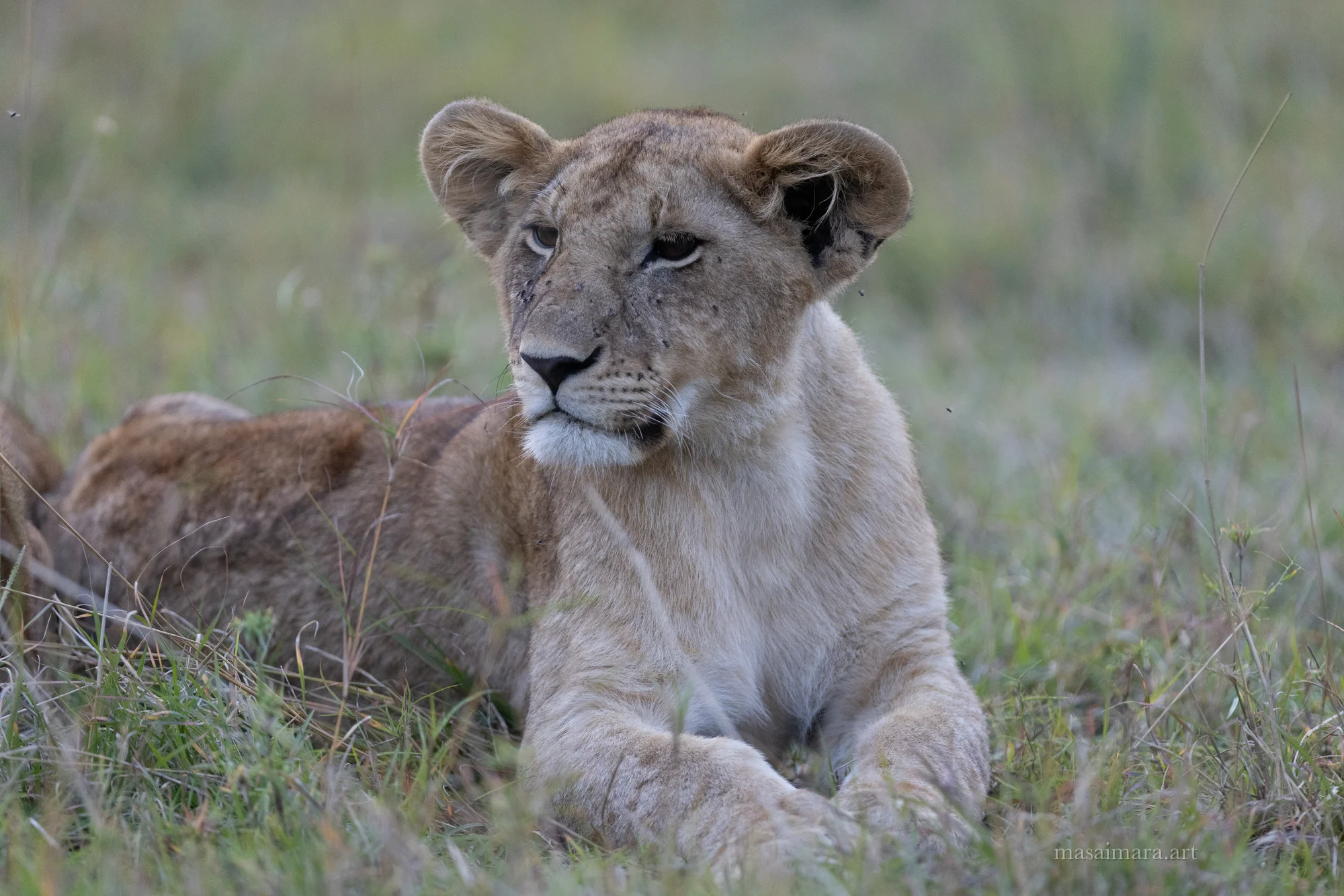
The cubs in the photograph above are roughly ten weeks old. Old enough to be carried by the pride; young enough that the mother has not yet stopped letting them climb on her.
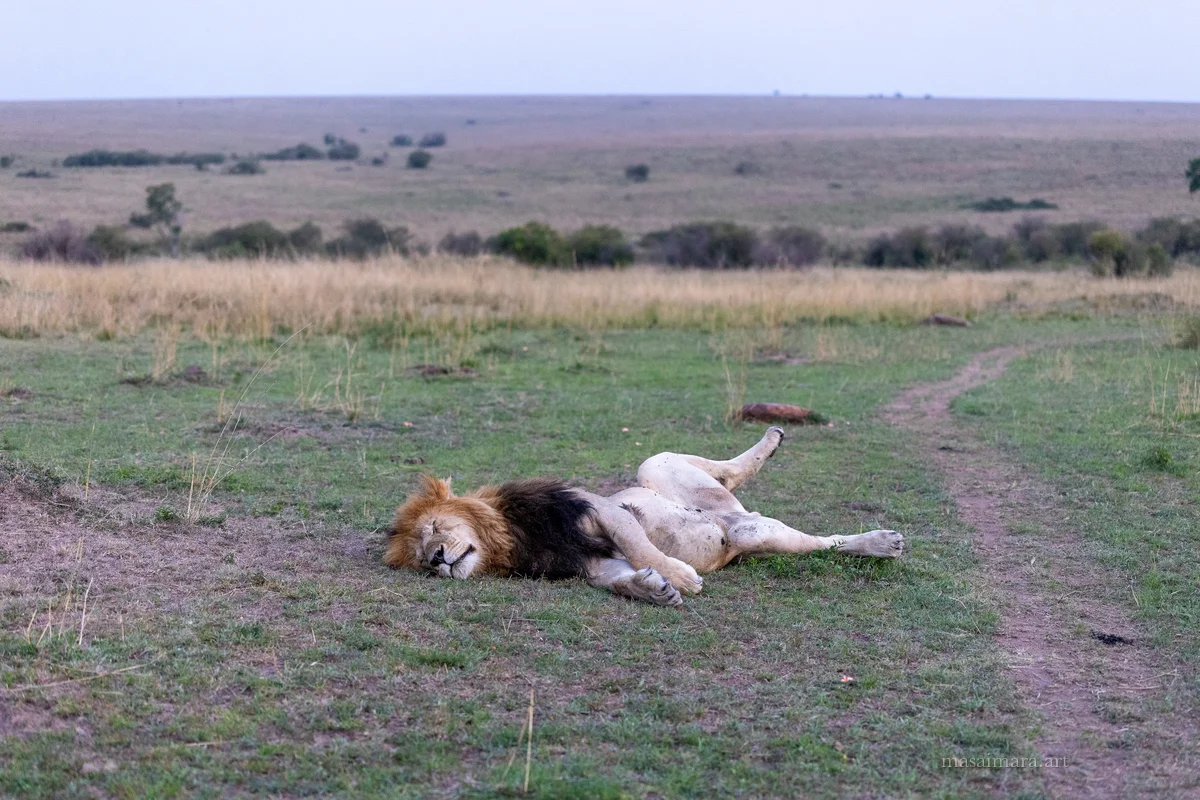
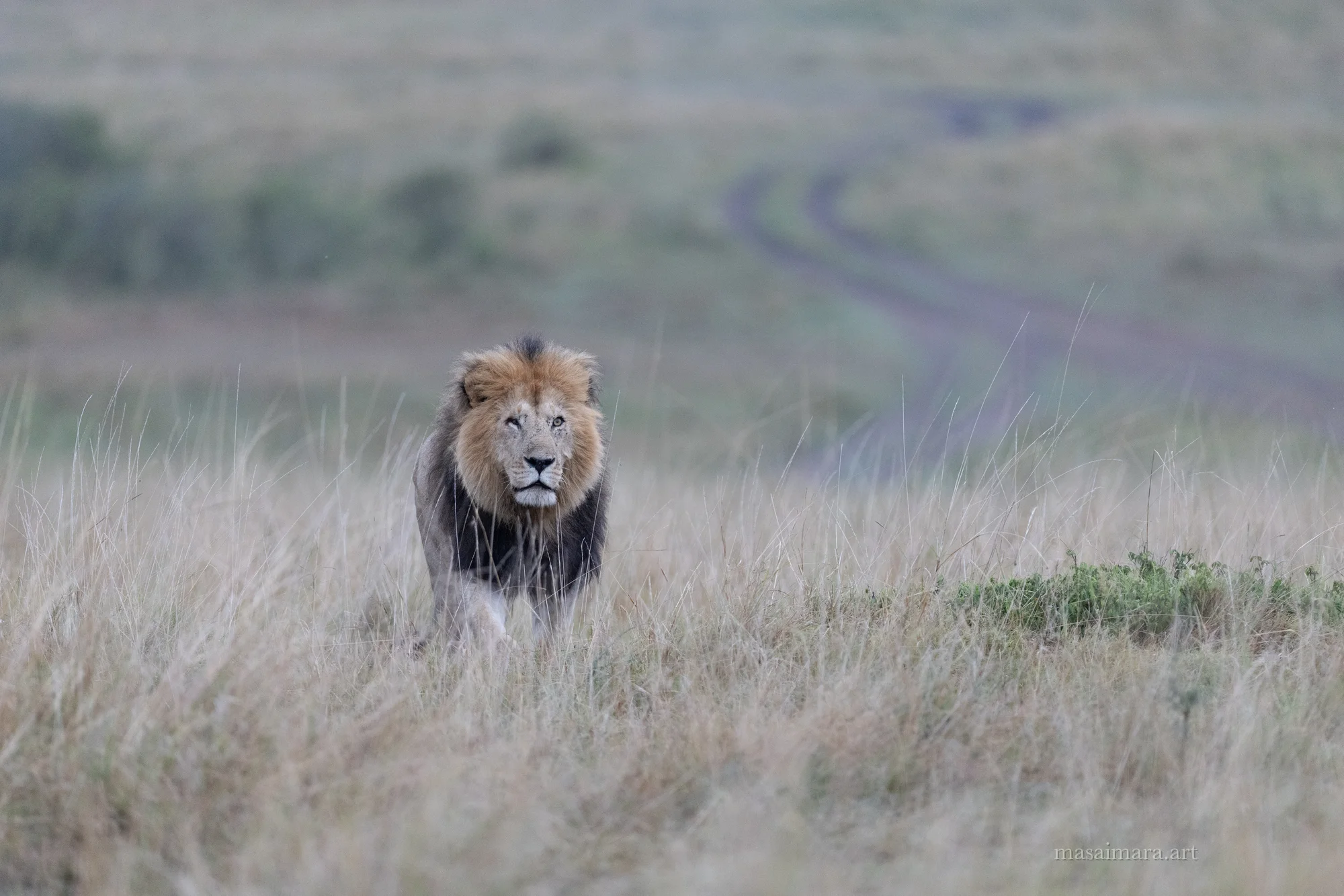
A male of the Rekero pride at dusk. The light gives out before he does.
The hunt is mostly waiting
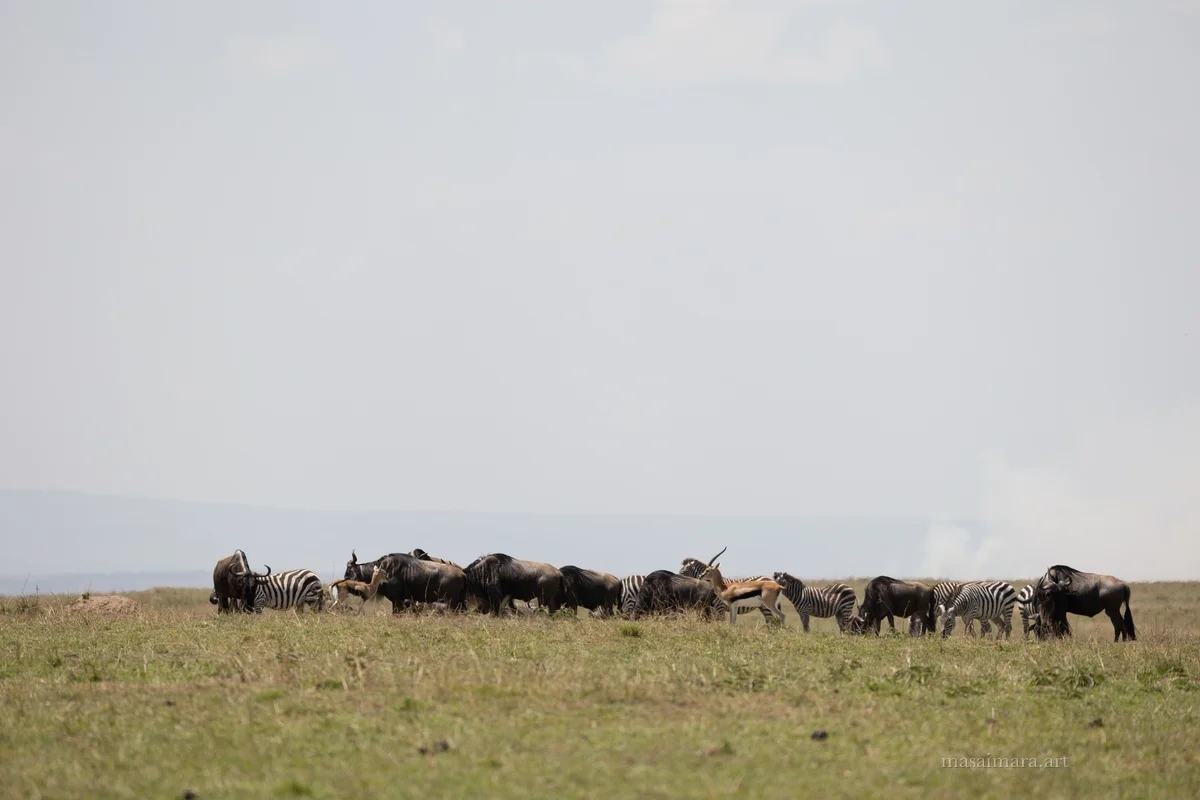
The plains favour the hunter that can be patient. Mara lionesses rarely chase — they wait, and they walk into ambush positions over the course of an afternoon, and they let the prey come. A successful hunt is, ninety per cent of the time, a hunt against an isolated animal. A zebra that has lost the herd. A wildebeest calf that has fallen behind. A young buffalo that has wandered too far from the bachelor group. The lions do not need spectacle. They need a single mistake.
When a chase does happen, it is brief — fifteen seconds, perhaps thirty — and the lions are very rarely the fastest animal in the chase.
Field note — On the prides
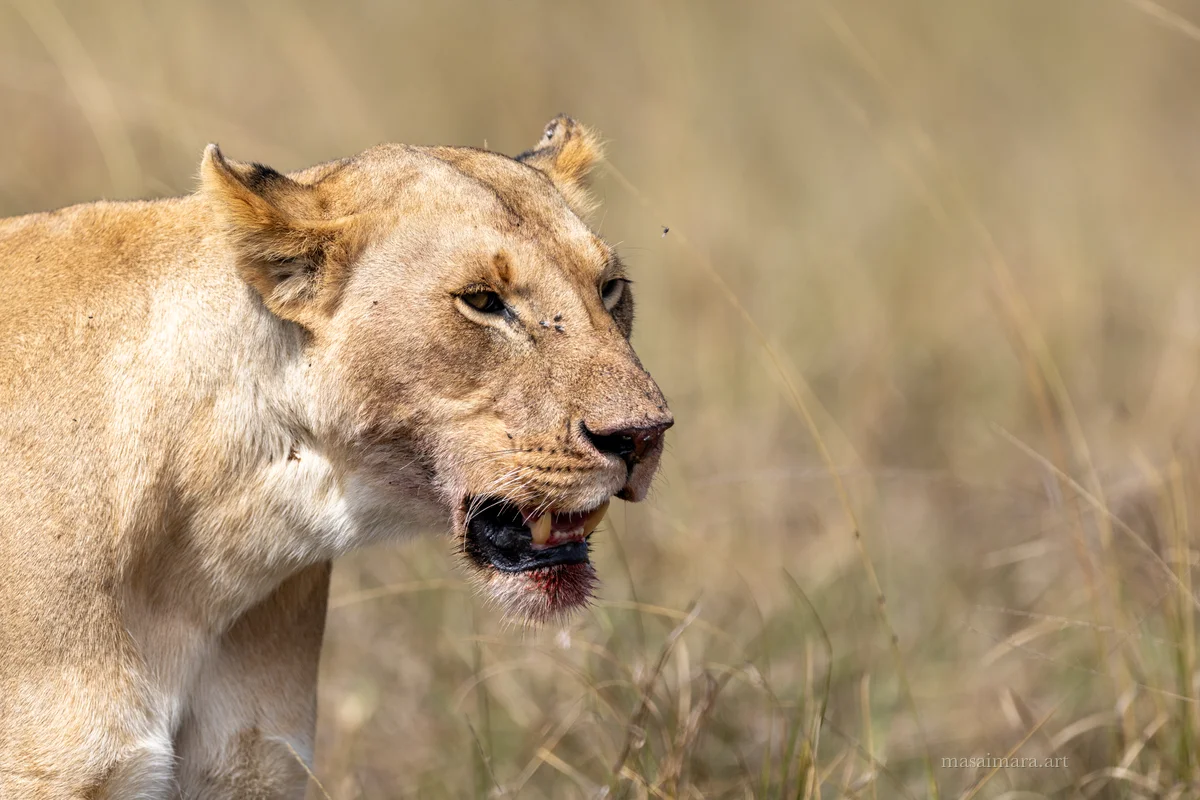
Five prides hold the working plains of the Mara Triangle — Rekero, Topi, Fig Tree, Lookout, Rongai. The males drift between them. The lionesses hold the territories. After a kill the cubs follow the adults from carcass to shade and back again, blood on every face, and none of them in a hurry about it. The afternoon does not hurry either.
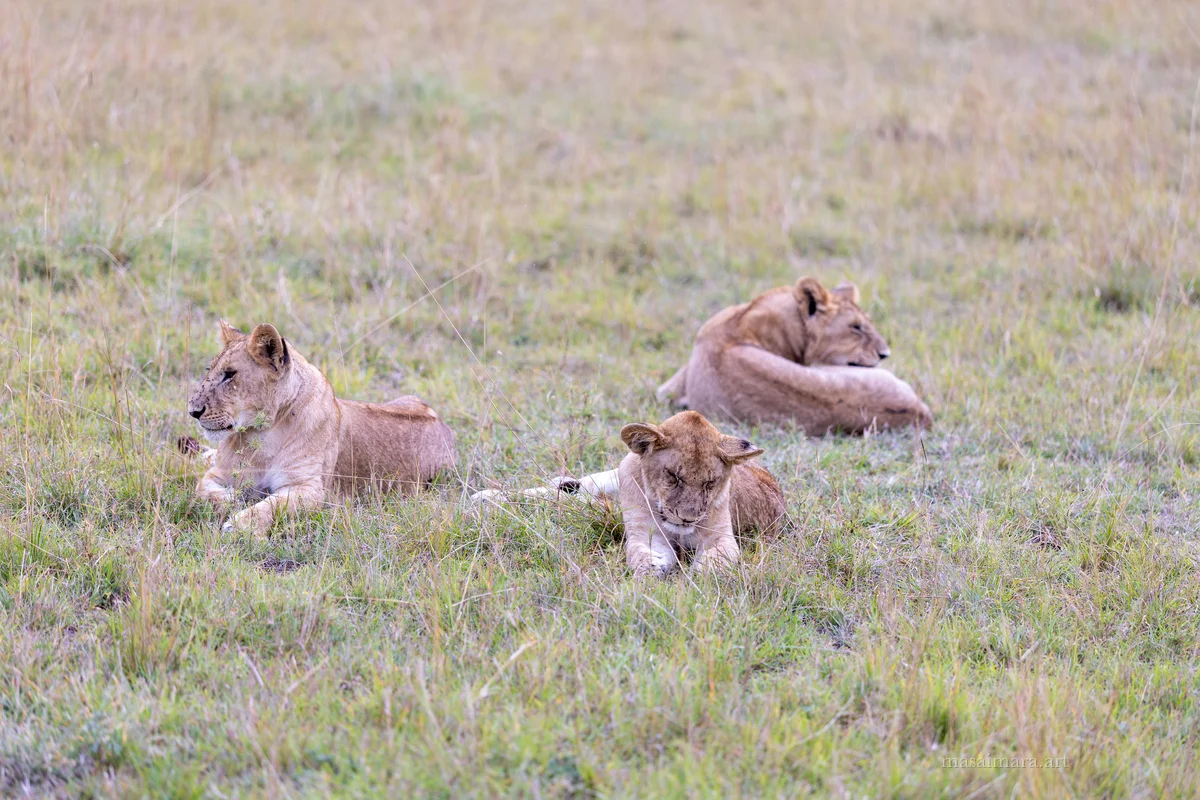
The frame on the right was made later, in soft light. The lioness is washing the cub. The cub is learning to be washed.
What the kill looks like, the morning after
The kill itself is the moment most photographers want and most field guides try, with varying success, to redirect attention away from. It is not because the kill is unfit for observation. It is unfit for performance. The actual moment is short, unbalanced, and often hidden by long grass and dust.
The hours after — the patient walk-in, the long lying-down with the carcass, the slow disassembly by hyena and vulture, the cubs nosing at what the adults have already eaten — are the parts that reveal the most about the system. The Mara is most cinematic when it is being least dramatic.
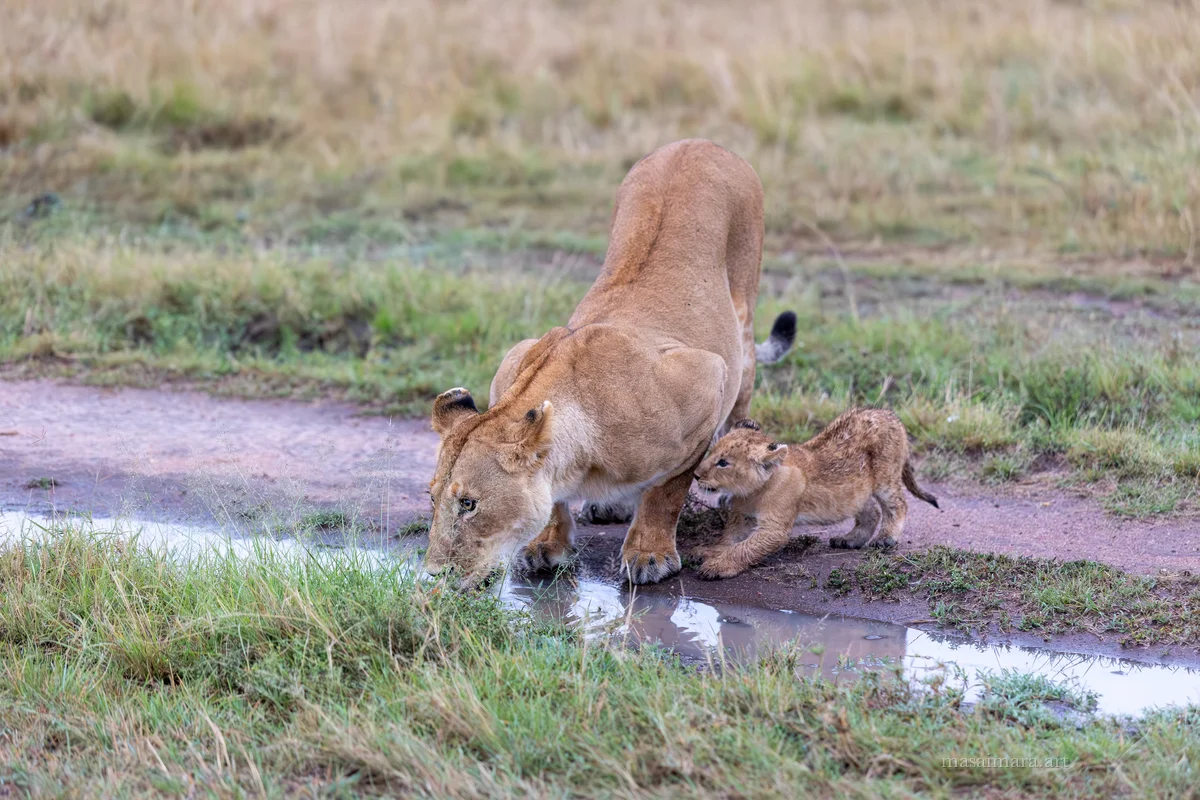
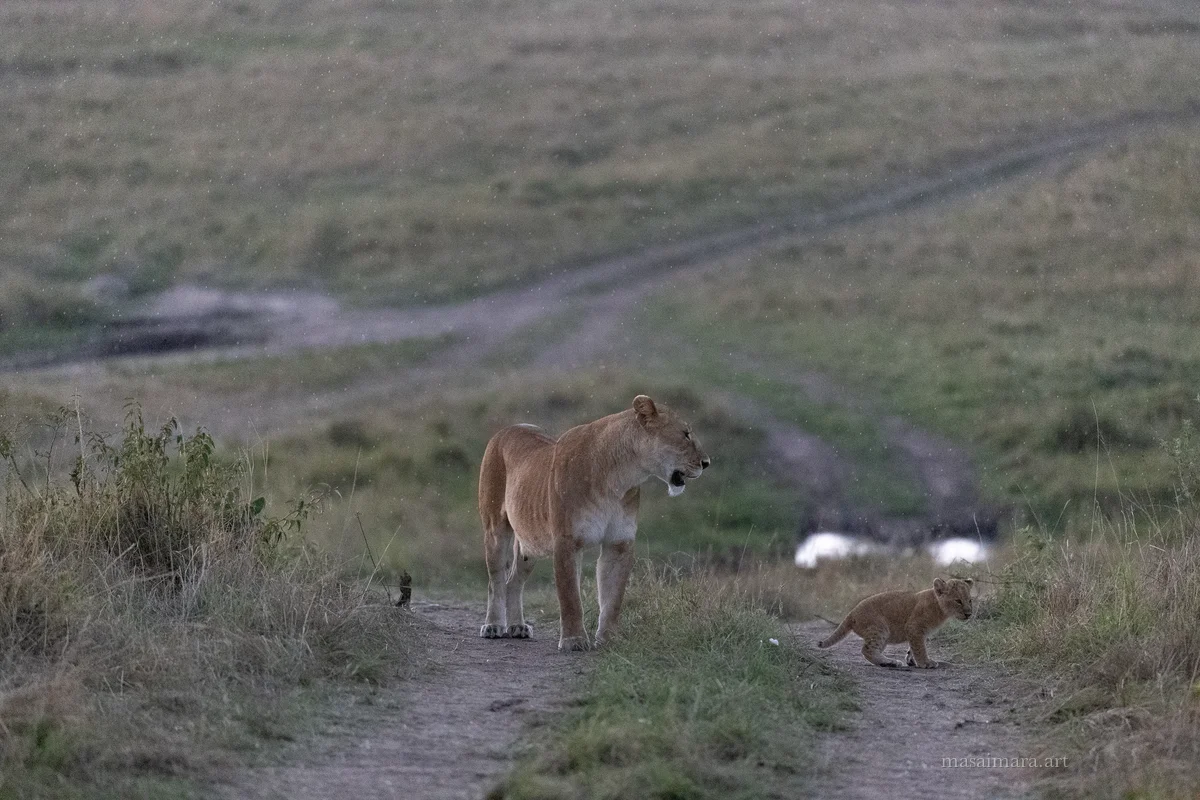
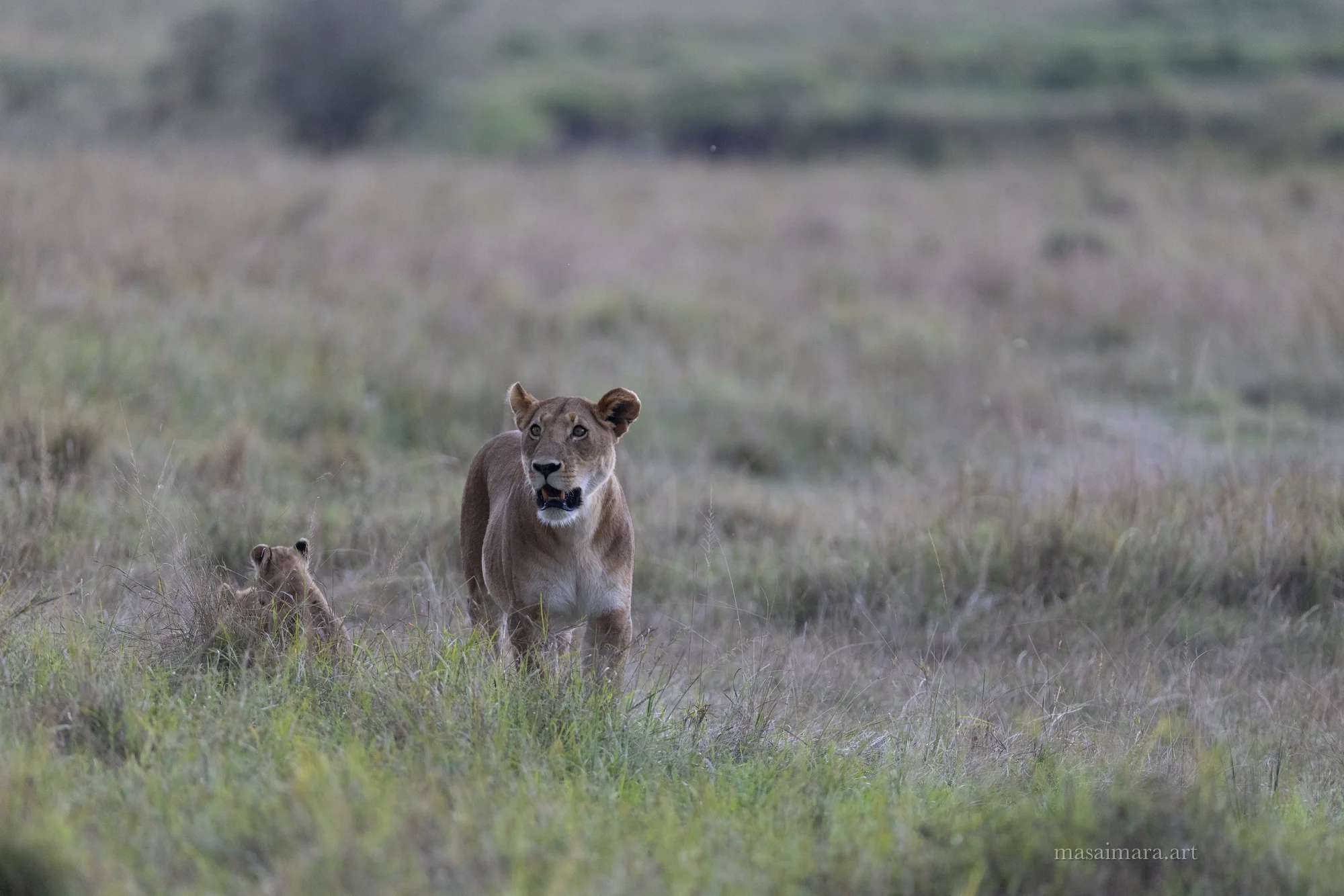
A Rekero mother at a roadside puddle, the cub at her side watching her drink — and an hour later, on the dusk track, the same kind of small distance between an adult and a cub, the family walking off into near-dark.
After the rain
When the short rains arrive, the plains soften overnight. The tracks puddle, and the cubs — who have never seen standing water — spend the morning experimenting with it.
The lions of the dust are not the lions of the short rains. The body language slows. The territories tighten. The cubs become bolder; the adults become more visible. For a photographer who has only ever seen the Mara dry, the wet weeks are an entirely different country.
The road is a room
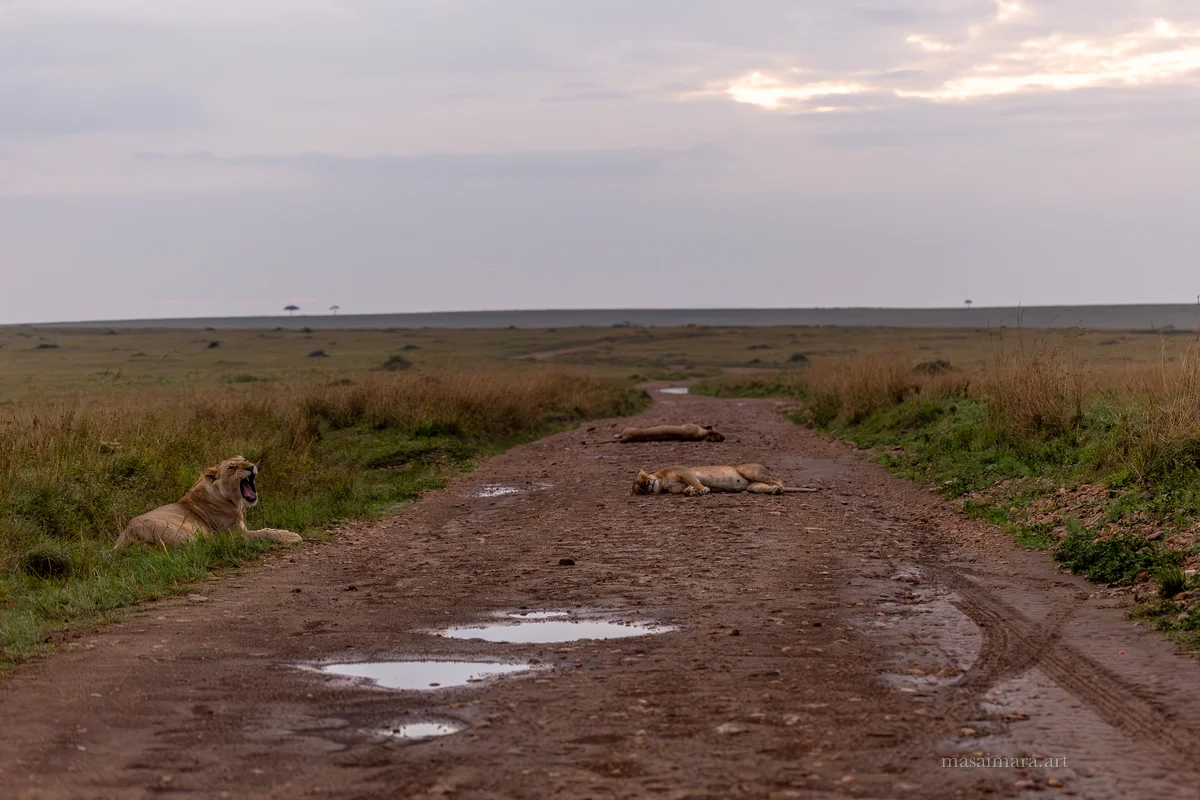
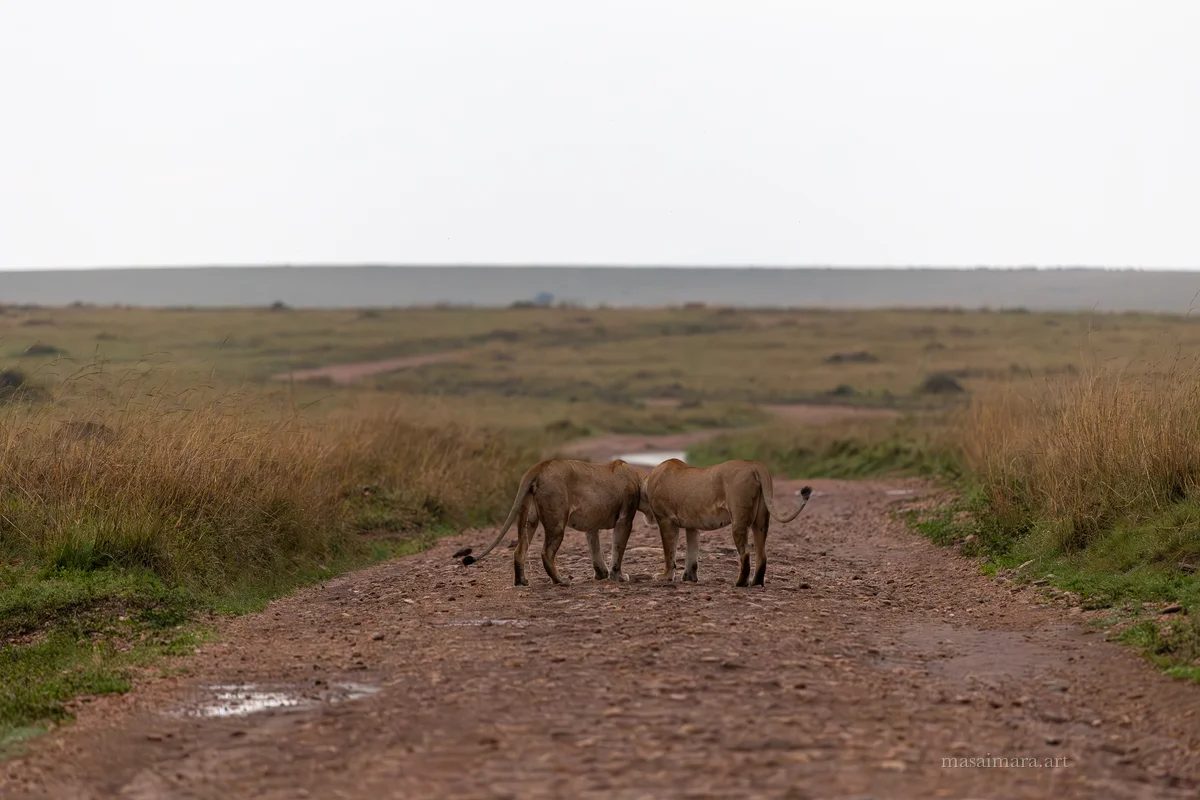
For visitors, the road is the room where the lion is most often met. Not the open plain, not the marsh, not the deep grass — the murram line between them.
The Lookout pride uses a particular stretch of track at first light the way the Rekero pride uses the marsh. The grass either side is too tall to walk through easily; the road is open; the lions are practical animals.
A vehicle that comes upon them at six in the morning is not an intrusion. The lions were going to be there at six anyway. The vehicle is the new feature in their morning, and they look at it the way they look at the rest of the morning — patiently, briefly, and then past it.
“The afternoon held its breath for the cub. The cub did not know what holding breath was for.
”
Field notes
The old males
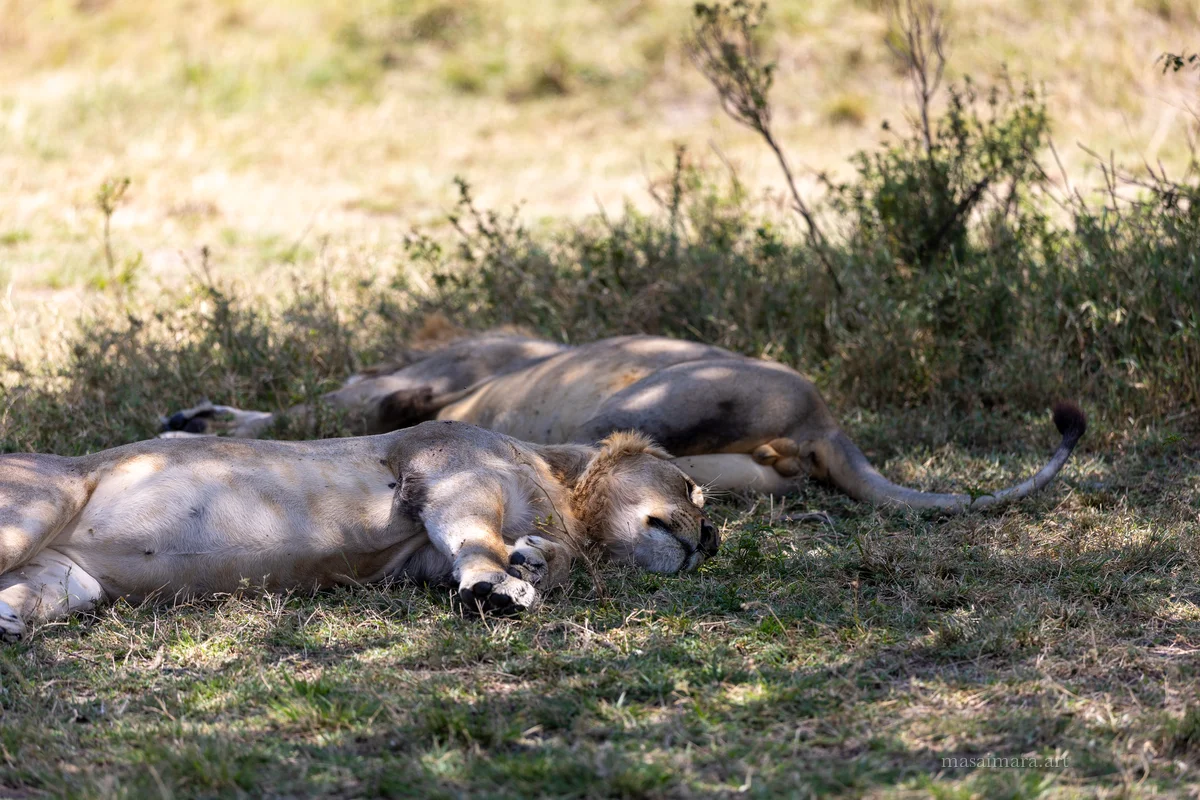
A pride male holds his territory, on average, for two to four years. The males who hold it longer become old — and the old males, in the Mara, become recognisable.
The animal above has been on the pride for the better part of two years. The scars across his muzzle are from his predecessor; the limp is from a buffalo he killed two months before the photograph; the rain on his back is from a storm that lasted six minutes.
In another year he will be displaced. The next males will arrive from the south. The cubs that are alive when that happens will, in most cases, not survive the transition.
The walk into evening
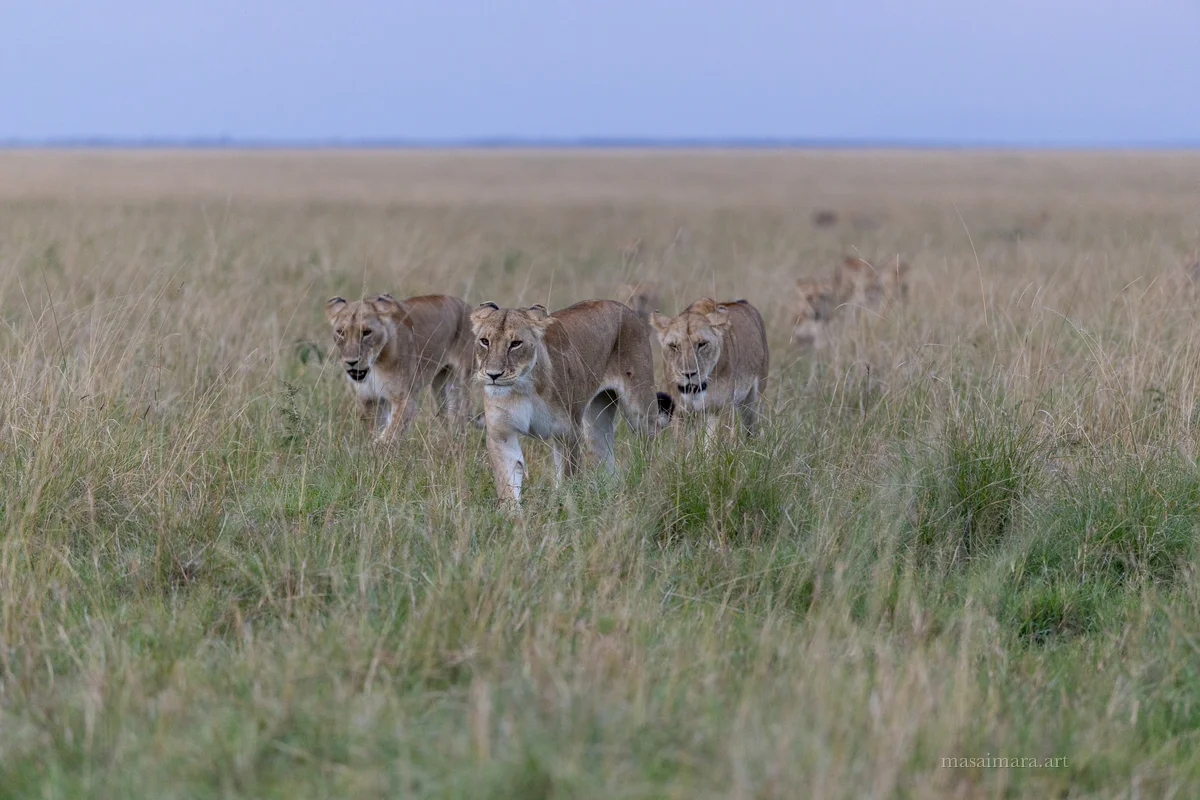
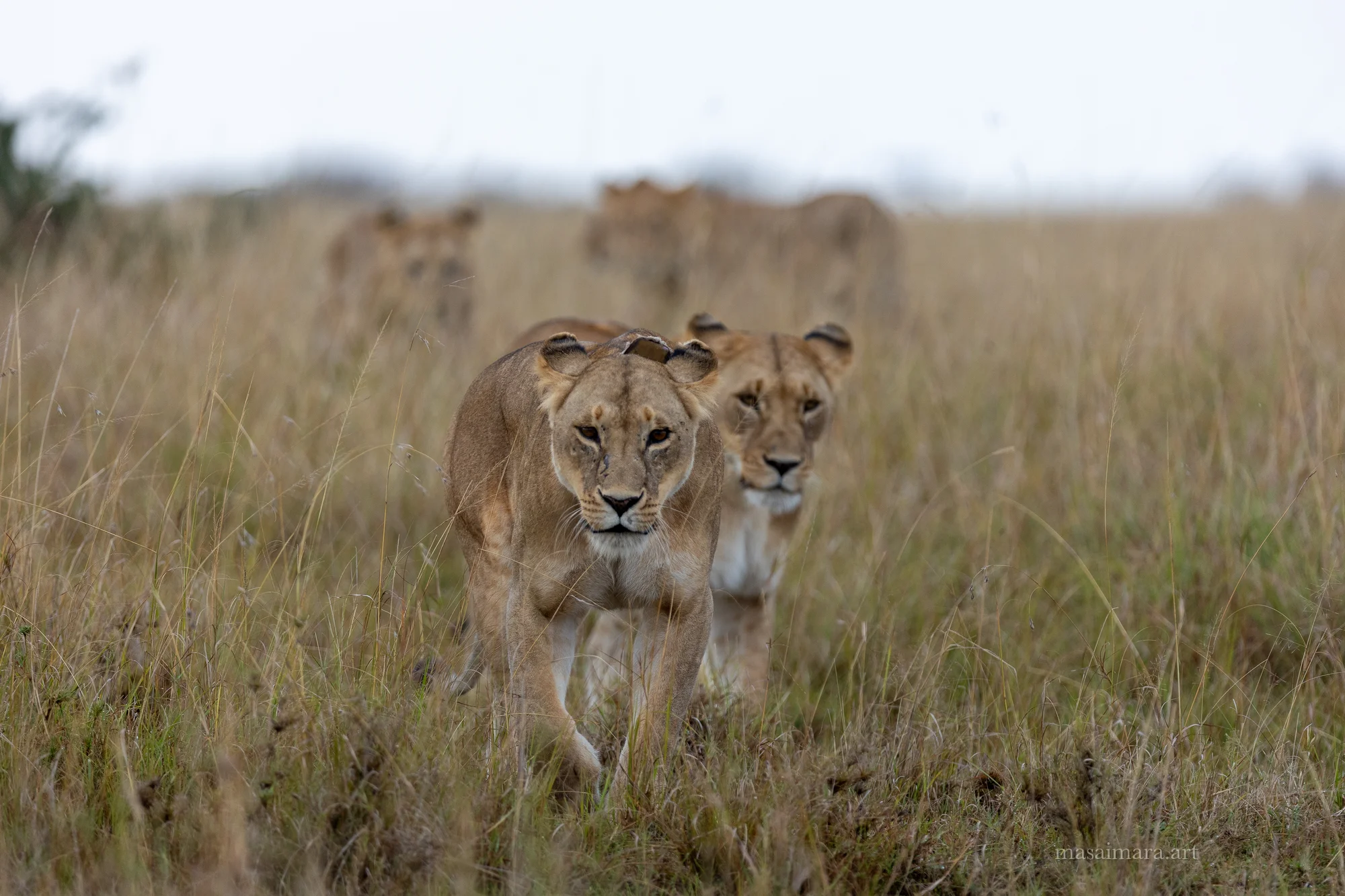
At last light the prides move. The lionesses come up out of whatever shade they have spent the day in, sit, look, then begin to walk in lines — threes and fours, spaced across the plain. The cubs follow.
The Rongai pride does this on a particular slope at the eastern edge of the reserve — almost thirteen animals in a single evening, more lions than most visitors see in a week. They rise out of grass that has hidden them for hours, and walk forward, and the camera that has been waiting for them since five o'clock has now perhaps a minute of usable light.
The frames that come back from that minute are noisier than every other frame of the day. The grain is part of the photograph. The walk is the photograph.
The Pride
Puddle
Long Light
In The Bush
Buffalo
The lion is the species the Mara is most often photographed for. She is also the species most willing to be photographed on her own terms — the long sleep, the slow morning, the lioness already looking past the camera. The picture is the patience the morning was already practicing before the lens arrived.
Five prides hold the Mara plains — Rekero, Topi, Fig Tree, Lookout, Rongai. The males drift between them. The lionesses are the ground.
- Camera
- Canon EOS R5 Mark II · EOS R6
- Lens
- Sigma 500mm f/4 · Canon RF 70–200mm f/2.8